




What Is Alveolar membrane?
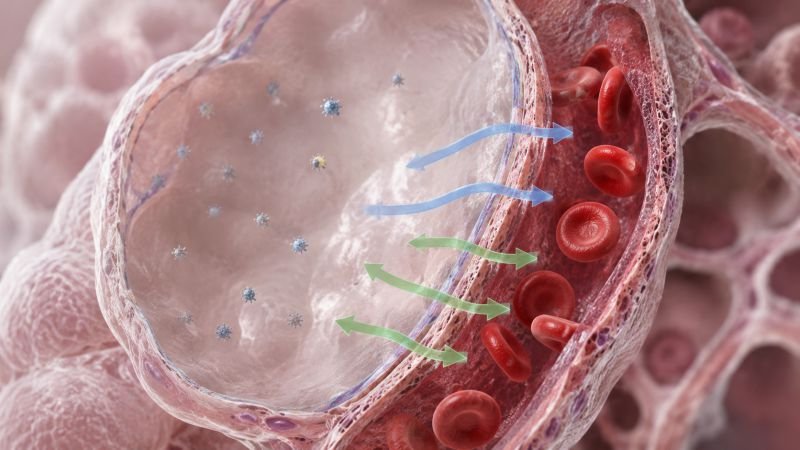
Alveolar membrane is the thin barrier between air inside the alveoli and blood in the surrounding pulmonary capillaries, where oxygen enters blood and carbon dioxide leaves it. Gas transfer follows diffusion relations such as J = D x Delta C / L, so permeability, area, and thickness all shape exchange rate. The membrane therefore links lung structure directly to respiratory function.
In living tissue, it includes alveolar epithelium, fused basement membrane regions, and capillary endothelium arranged for very short diffusion distance. It is central to respiratory exposure science when fine particles or gases reach the deepest lung spaces. Used in devices include ventilators, aerosol drug inhalers, pulse-oximetry systems, and inhalation toxicology setups that depend on predictable gas exchange and deposition behavior.
The concept matters in physiology, pulmonary medicine, and inhalation toxicology because damage, thickening, or fluid buildup across this barrier reduces oxygen transfer and can increase respiratory distress. It also helps explain why very small airborne particles can have whole-body effects after they penetrate deeply enough to interact with lung tissue and the bloodstream. Membrane thickness changes can rapidly reduce diffusion reserve during disease.
Example:
During severe inflammation, fluid across the alveolar membrane can lengthen diffusion distance and reduce blood oxygenation.
Related Terms:
- Gas Exchange
- Fine Particulate Matter
- Pulmonary Diffusion
NoSuchDevice is a free archive of machines that do not exist yet but already have a shadow in physics. I research and write every entry alone, with no ads. Take a look around the archive, or help keep it free.