
In Ulaanbaatar in January, the temperature drops to minus thirty Celsius and the city burns coal. Not just in power plants. The ger districts, traditional felt-tent neighborhoods covering a third of the city, run individual household stoves through the night because stopping means freezing. The smoke has nowhere to go. A thermal inversion layer, cold air sealed under warmer air above, sits like a lid over the valley. By morning, PM2.5 concentrations regularly exceed 900 micrograms per cubic meter. The World Health Organization considers anything above 15 a health concern. Ulaanbaatar, for weeks at a time, lives at sixty times that number.
The short version: Air pollution is a mixture of fine solid particles, liquid droplets, and reactive gases produced by combustion, industrial activity, and atmospheric chemistry. The smallest particles, classified as PM2.5, are small enough to cross the lung membrane and enter the circulatory system directly. Around 7 million people die from air pollution exposure each year, more than from malaria, tuberculosis, and AIDS combined. Engineering has learned to remove most major pollutants at the point of emission. The harder problem is the secondary chemistry that creates new pollutants from compounds that leave the smokestack looking clean.
Table of Contents
The Chemistry That Makes Air Pollution: Combustion, Industry, and Agriculture
Air pollution is not one thing. It is a changing mixture of dozens of compounds, some emitted directly by burning fuel or industrial activity, others formed afterward when those primary emissions react with sunlight, water, and oxygen high above the street.
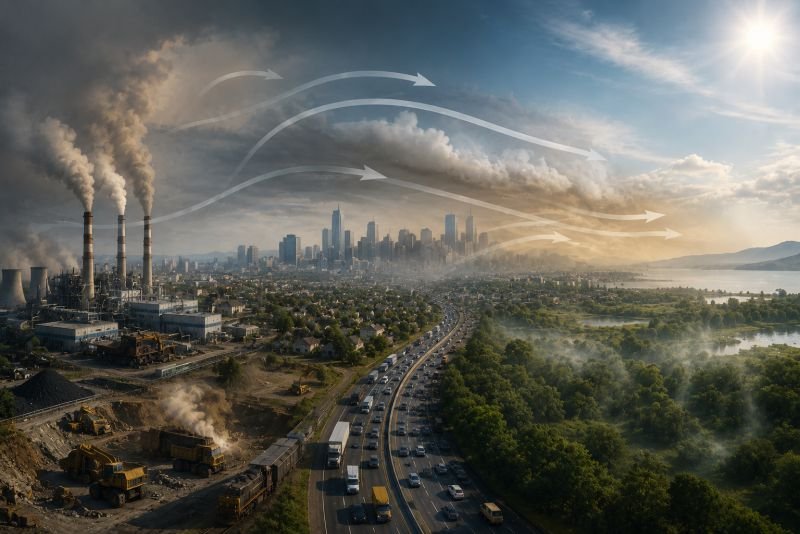
Primary emitters are well-documented at this point. Internal combustion engines produce nitrogen oxides, carbon monoxide, unburned hydrocarbons, and fine particulate matter. Coal-fired power plants add sulfur dioxide to that list, along with heavy metal particles and fly ash. Agricultural activity contributes ammonia from livestock waste and nitrogen fertilizers at concentrations that have been rising steadily for decades. Wildfires, cement kilns, and solvent evaporation from paints and adhesives each add their own compounds to the mix. The atmosphere over any major city is receiving dozens of different inputs simultaneously, from hundreds of different sources, and the chemistry starts immediately.
Particulate Matter: The Fraction That Reaches the Blood
Particles are classified by diameter. PM10 covers everything below 10 micrometers. PM2.5 covers the fraction below 2.5 micrometers, roughly thirty times narrower than a human hair. The distinction is not administrative, it is biological. The respiratory system filters larger particles through mechanical processes: nasal hairs, mucus, and the sweeping motion of cilia trap and remove most of what is larger than 5 micrometers before it reaches the lung. PM2.5 passes through all of that. It reaches the alveoli, the deep lung sacs where gas exchange happens, deposits there, and in sufficient quantities crosses the alveolar membrane directly into the circulatory system. Once it is in the blood, the body has no mechanism for removing it.
Combustion produces particles in two ways. Some form directly as solid residue from incomplete burning. Others nucleate in the exhaust plume as gases cool and organic compounds condense into tiny droplets that eventually solidify. A diesel engine with a properly maintained particulate filter removes roughly 99% of emitted particles by mass. Without a filter, that same engine emits between 50 and 150 milligrams of PM2.5 per kilometer driven.
Secondary Pollutants: The Problem Created After the Smokestack
Some of the most damaging air pollution compounds do not exist at the point of emission. Ground-level ozone is the clearest example. Nitrogen dioxide from vehicle exhaust absorbs ultraviolet radiation in the atmosphere and breaks apart, releasing an atomic oxygen radical. That radical combines with molecular oxygen to produce ozone. This is not the same ozone that protects against UV radiation in the stratosphere. At ground level, ozone damages lung tissue, inflames airways, and reduces crop productivity at concentrations that are common in many urban and even rural areas on summer afternoons.
The combination of ground-level ozone, fine particles, and other secondary compounds is what most people recognize as photochemical smog. Los Angeles spent decades as the reference case for this problem. The city’s geography, a coastal basin ringed by mountains, and its early adoption of automobile culture created a natural laboratory for secondary pollution chemistry that took researchers most of the 1950s and 1960s to fully understand. The key insight was that controlling direct emissions was not enough. The atmosphere was generating its own pollutants from the precursors being emitted.
How Temperature Inversions Trap Air Pollution and Turn Cities Into Gas Chambers
Under normal atmospheric conditions, temperature decreases with altitude. Warm air near the surface rises, carries pollutants upward with it, and disperses them through convective mixing into the broader atmosphere. The system is imperfect but functional enough that most cities with moderate sources do not accumulate dangerous concentrations under ordinary conditions.
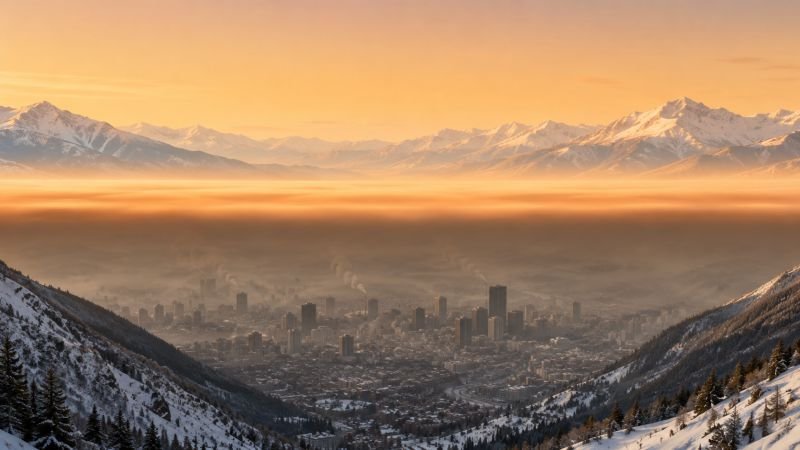
Temperature inversions reverse this gradient. A layer of warmer air forms above cooler surface air. The cold air is denser and stays put. Pollution emitted at ground level has nowhere to go. Concentrations build through the day and through the night, and any new emissions pile on top of what is already trapped below the inversion ceiling.
Inversions occur naturally through radiative cooling on still nights, through terrain that channels cold air into valleys, and through large-scale atmospheric subsidence where descending air compresses and warms. Ulaanbaatar’s valley geography makes inversions frequent and persistent through the winter months. London’s flat geography made the December 1952 smog event possible: five days under a stationary anticyclone combined with cold foggy air and coal smoke from millions of household fires. Estimates put the death toll at 12,000 people in those five days, with another 8,000 dying in the following weeks from complications. The event eventually produced the UK Clean Air Act of 1956. In air pollution policy, catastrophe tends to precede legislation rather than follow it.
Measuring Air Pollution: What the AQI Formula Is Actually Calculating
Governments communicate air quality through the Air Quality Index (AQI), a single number between 0 and 500 that translates pollutant concentrations into a public health message. The number is computed separately for each regulated pollutant and the highest single-pollutant result becomes the reported AQI for that day.
The calculation uses a piecewise linear formula:
AQI = [(IHi – ILo) / (BPHi – BPLo)] x (Cp – BPLo) + ILo
Here Cp is the measured pollutant concentration, BPHi and BPLo are the upper and lower concentration breakpoints bracketing Cp from the regulatory table, and IHi and ILo are the corresponding index values for that bracket.
A worked example makes this concrete. A PM2.5 reading of 55.4 micrograms per cubic meter falls in the bracket where BPLo is 35.5, BPHi is 55.4, ILo is 101, and IHi is 150. The formula gives:
AQI = [(150 – 101) / (55.4 – 35.5)] x (55.4 – 35.5) + 101 = 150
That puts the air in the “Unhealthy” category on the US EPA scale. Everyone who exercises outdoors at that concentration is accumulating measurable health risk. Sensitive groups, children, the elderly, anyone with asthma or cardiovascular disease, are advised to stay inside regardless of activity level.
What the AQI does not communicate is the chemical identity of the problem. A reading of 150 driven by ozone is a different biological situation from a reading of 150 driven by PM2.5, even though both carry the same public guidance. The index is designed for communication, not diagnosis.
| AQI Range | Category | Who Is Affected |
|---|---|---|
| 0-50 | Good | No health risk for the general population |
| 51-100 | Moderate | Sensitive individuals should reduce prolonged outdoor exertion |
| 101-150 | Unhealthy for Sensitive Groups | Children and adults with lung or heart disease should limit outdoor activity |
| 151-200 | Unhealthy | Everyone may experience health effects; sensitive groups at serious risk |
| 201-300 | Very Unhealthy | Emergency conditions; the entire population is affected |
Everything here is free. Readers are the reason it stays that way.
I make all of it alone, with no ads. If it is worth a coffee a month to you, that keeps the next one coming.
Keep it alive →What Chronic Air Pollution Exposure Does to Human Physiology
A single high-pollution day produces measurable effects in otherwise healthy adults: reduced lung function, airway inflammation, slightly elevated blood pressure. Over years, the exposure reshapes cardiovascular physiology in ways that do not fully reverse when the person moves to cleaner air.
PM2.5 particles that cross the alveolar membrane trigger systemic inflammation. The immune response to persistent particulate intrusion is the same underlying mechanism that drives atherosclerosis, the progressive narrowing and hardening of arteries that leads to heart attacks and strokes. Air pollution research has gradually established that the cardiovascular burden of PM2.5 exposure is comparable in scale to the respiratory burden, something that surprised researchers when the epidemiological data first accumulated in the 1990s.
Nitrogen dioxide at chronic low concentrations impairs the lung’s immune defenses and raises susceptibility to respiratory infections. Children exposed to elevated NO2 during development show measurably smaller lung volumes at adulthood compared to children raised in cleaner air, and those differences persist. Long-term ozone exposure is associated with increased mortality from respiratory causes through mechanisms that are dose-dependent in ways epidemiologists can now quantify from decades of matched city-level health records and air quality measurements.
The global figure that appears in policy documents is 7 million deaths annually attributable to air pollution exposure. Roughly 4.2 million come from outdoor sources; the rest from indoor burning of solid fuels for cooking in regions without access to gas or electricity. The burden falls disproportionately on low- and middle-income countries where industrial regulation, vehicle emission standards, and fuel quality are all lower and the population has less access to healthcare when symptoms appear.
Engineering Tools That Remove Air Pollution Before It Reaches the Atmosphere
Clean air engineering operates on a principle that sounds straightforward: intercept the pollutant before it leaves the exhaust stream. The mechanisms vary depending on what is being removed and from what kind of source.
Catalytic Converters and the Chemistry of Exhaust Reduction
Automotive catalytic converters became mandatory in most high-income countries between the 1970s and 1990s. The device contains a ceramic honeycomb coated with platinum, palladium, and rhodium. Exhaust gases flowing through the honeycomb contact the catalyst surface and react. Carbon monoxide and unburned hydrocarbons are oxidized to carbon dioxide and water. Nitrogen oxides are reduced to nitrogen and oxygen. The catalyst enables all of these reactions without being consumed by them.
At operating temperature, around 400 to 600 degrees Celsius, a modern three-way catalytic converter removes more than 98% of carbon monoxide, 98% of hydrocarbons, and 95% of nitrogen oxides from the exhaust stream. Cold start is where the system fails: in the first 60 to 90 seconds before the catalyst reaches operating temperature, most of the remaining tailpipe emissions occur. For short urban trips, a significant fraction of the total drive takes place during that cold start window.
Electrostatic Precipitators in Industrial Stacks
Large stationary sources, coal power plants, cement kilns, aluminum smelters, use a different approach. Electrostatic precipitators charge particles in the exhaust gas using a high-voltage corona discharge, typically between 30,000 and 100,000 volts. The charged particles migrate toward grounded collection plates under the electric field and deposit there. Periodically the plates are mechanically rapped to dislodge the accumulated material into hoppers below for disposal.
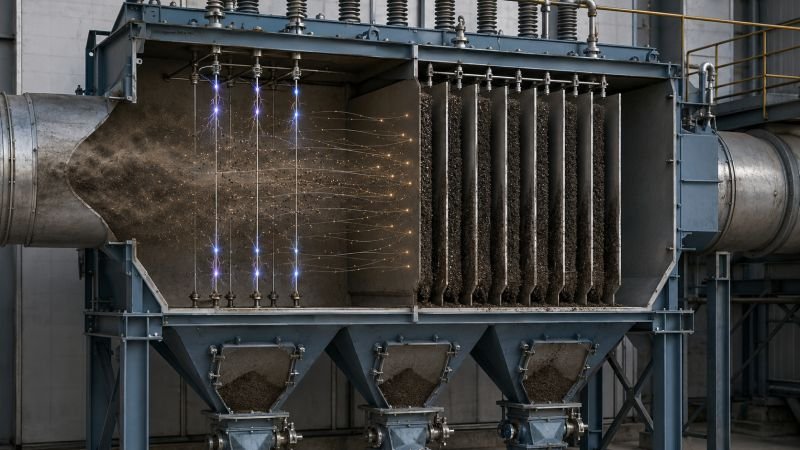
Collection efficiency for PM10 in well-maintained industrial precipitators routinely exceeds 99%. For PM2.5, the performance drops because smaller particles have lower electrical mobility and drift toward the collection plates more slowly. Modern high-efficiency precipitators with improved electrode geometry and stronger charging fields bring PM2.5 collection above 95%, but the last few percent of ultrafine particles remain technically difficult and expensive to capture.
Where Air Pollution Mitigation Runs Into Its Real Limits
Source control works reliably when the source is large, stationary, and financially regulated. Coal plant operators respond to emissions standards because the alternative is legal liability and shutdown orders. Vehicle manufacturers comply with catalytic converter mandates because the penalty structure makes noncompliance economically irrational. The leverage point is clear and the compliance mechanism is functional.
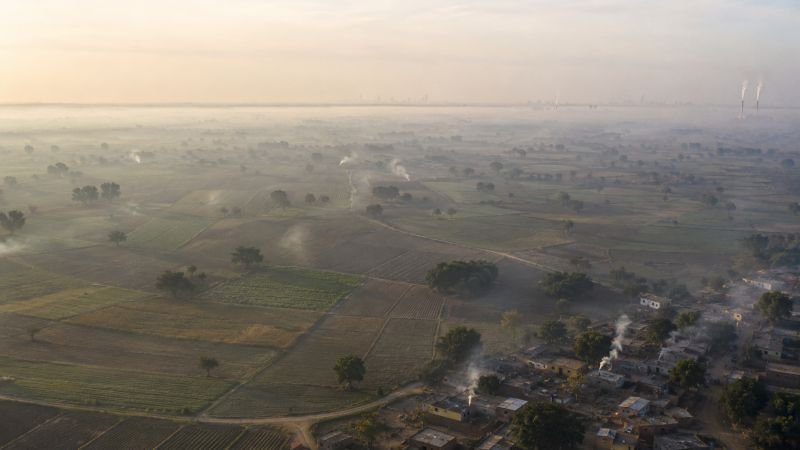
Diffuse sources do not have this leverage point. Millions of small diesel generators across West Africa, Southeast Asia, and South Asia run without any emission controls because they fall below regulatory thresholds and operate in markets where enforcement is not feasible. Agricultural ammonia from fertilizer application and livestock waste has no practical source control technology at the necessary scale. Road dust, tire wear particles, and brake wear are mechanical processes that filters cannot address and catalysts cannot touch. Some atmospheric modeling studies suggest that even if all combustion emissions were eliminated immediately, non-combustion particle sources alone, road dust, agricultural activity, and sea salt, would still push urban PM2.5 above WHO guideline levels in many of the world’s largest cities.
Secondary air pollution presents a structural challenge that source control cannot fully address. The nitrogen oxides that eventually produce ozone may leave the tailpipe clean according to the catalytic converter measurement, then react in the atmosphere 50 kilometers downwind under sunlight. Engineering at the point of emission has limited leverage over atmospheric chemistry. Managing ozone across a regional airshed requires coordinating vehicle emission standards, agricultural nitrogen management, and industrial operating limits across political boundaries that rarely share either data or enforcement capacity. That is a different kind of problem from fitting a filter to a smokestack.
The View From NoSuchDevice
I find air pollution unusual as a technology problem because the engineering is largely solved and the problem persists anyway. Catalytic converters work. Electrostatic precipitators work. High-efficiency particulate filters work. The gap between what the technology can do and what actually enters the atmosphere in most of the world is almost entirely a function of economic and political decisions, not physics.
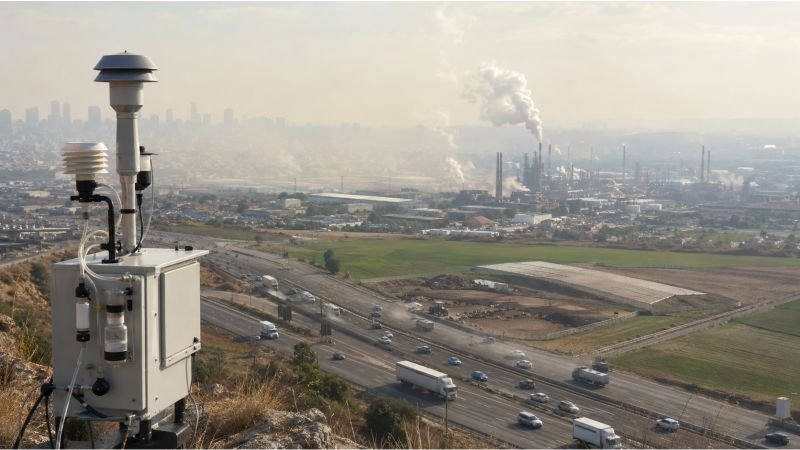
What I think will actually move the needle in the coming decades is not a new filtration mechanism. It is cheap, dense sensor networks that make local air quality visible to individuals and communities in real time. The Ulaanbaatar coal stove problem persisted partly because people burning coal had no alternative and partly because there was no granular data on where the worst concentrations formed and when. Satellite data and low-cost ground sensors changed both of those conditions between roughly 2015 and 2022, and government policy shifted as a consequence. Measurement turned out to be the intervention.
The secondary pollution problem is genuinely harder and I do not see a clean engineering answer to it. Photocatalytic building materials that decompose NOx under sunlight have been tested in Italy and Japan. They work at the margins. The ozone precursor problem across large regional airsheds still has no engineering solution that does not require something closer to coordinated political governance across multiple jurisdictions. That is a device this site cannot describe.
Technologies Related to This Concept
| Technology | Concept |
|---|---|
| Atmospheric Pollution Dissolvers | Concept: Devices that convert air pollutants into harmless compounds using advanced photolytic processes. |
| Solar-Powered Air Scrubbers | Concept: Airborne devices that use solar energy to filter and clean the atmosphere. |
| Atmospheric Bio-Filters with Sensors | Concept: Filters that clean air pollution and monitor environmental data. |
| Smart Traffic Pollution Monitors | Concept: Sensors in vehicles and roads to monitor emissions and optimize traffic flow. |
| Nano-Mesh Air Filters | Concept: Ultra-fine mesh filters that trap airborne particles at the nanoscale. |
You read the whole thing.
That is rarer than it should be, and it is the exact kind of attention I built this archive for. I make every piece alone, with no ads and no investor deciding what gets written. If you want the next machine taken apart like this one, you can help me make it.
A coffee a month is enough to keep it free for everyone.
Prefer crypto or a one time gift? Other ways to give →