





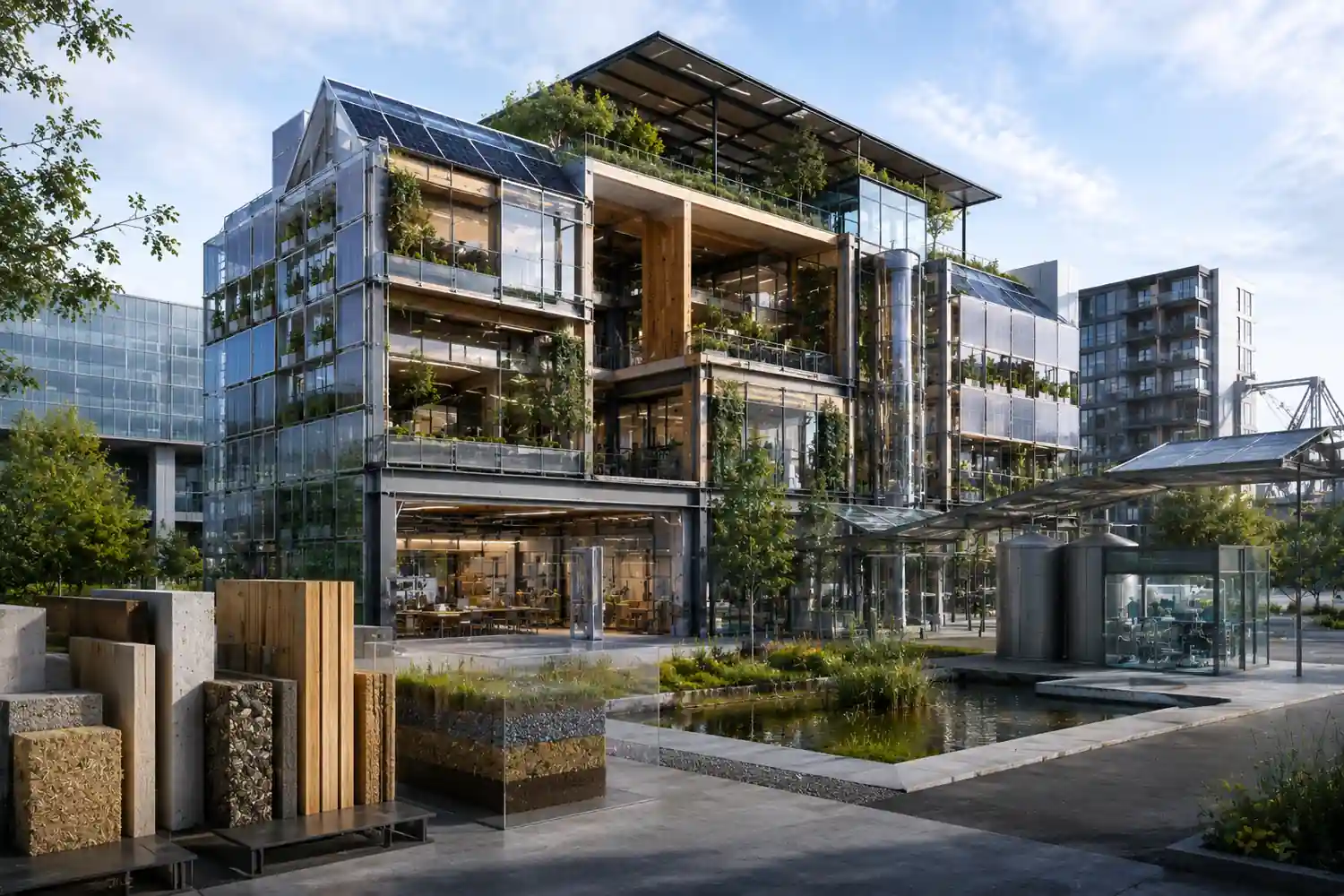
When the Bullitt Center opened on Capitol Hill in Seattle in 2013, its designers published something most architects never bother with: a full accounting of the carbon embedded in the building before anyone arrived for work. The concrete, the steel, the glass, the insulation – all of it together represented approximately 1,800 tonnes of CO2 equivalent released into the atmosphere during extraction, processing, and manufacturing. The building had not yet turned on a single light, and it was already 1.8 million kilograms of carbon in debt.
That number was not an embarrassment. It was the starting point. The Bullitt Center was designed to save roughly 180 tonnes of carbon per year through solar generation and high-performance mechanical systems, compared to a conventional office building of the same size in the same climate zone. Divide 1,800 by 180 and the payback period is 10 years. For a building designed to stand 250 years, that is a tractable problem. The same calculation applied to a building with a 45-year payback period and a planned 30-year lifespan produces a different verdict entirely.
That ledger – honest, numerical, uncomfortable in what it reveals – is what distinguishes sustainable design principles from aesthetic preference or policy compliance.
The short version: Sustainable design is a set of engineering principles that measure and minimize environmental impact across a product or building’s entire life. The core tool is lifecycle assessment, which tracks carbon emissions from raw material extraction through disposal. Buildings applying these principles typically reduce lifecycle carbon by 40 to 70 percent compared to conventional construction. The critical insight is that the energy and emissions embedded in materials before they arrive on site often outweigh operational savings over the first decade of use.
Table of Contents
Why Sustainable Design Is a Physics Problem Before It Is an Ethics One
Sustainable design principles rest on thermodynamics. Every manufactured object required energy to produce: energy to extract ore from rock, energy to smelt metal, energy to fire ceramic, energy to pump water uphill. Those energy transactions follow the first and second laws without exception. Energy is conserved, but its useful quality degrades with every conversion, and the carbon emitted by fossil-powered conversions does not un-emit when the object reaches a certified green building.
A phone running on renewable electricity still carries the emissions of its lithium refinery, its semiconductor fabrication, and the coal-fired grid that powered its assembly plant. Sustainable design principles make that invisible accounting visible and then set about reducing it through material choice, structural geometry, energy source selection, and end-of-life planning.
What makes this genuinely interesting as a discipline is that it forces accounting across time horizons that most engineering projects quietly avoid. A structural engineer designs for a building’s operational life. A sustainable design engineer asks what happens when it comes down.
Lifecycle Assessment and the Full Carbon Cost of Sustainable Design
The primary analytical tool for sustainable design is lifecycle assessment, abbreviated LCA. The methodology was formalized in the early 1990s by the Society of Environmental Toxicology and Chemistry, though industrial energy audits from the chemical sector in the 1960s contain most of the underlying logic. An LCA traces every material and energy input through four phases: raw material extraction, manufacturing and processing, use phase, and end of life.
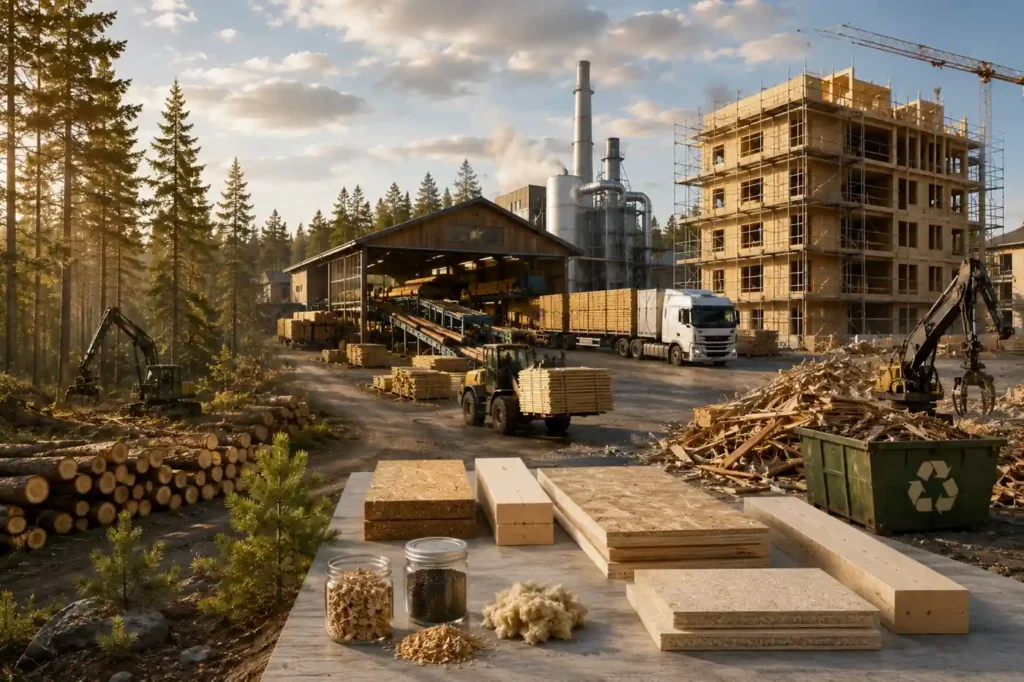
Consider a standard engineered timber floor panel. The wood fibers absorbed CO2 as the trees grew, which registers as a carbon credit. But the sawmill, the kiln-drying chamber, the adhesive resins, and the freight runs all register as debits. Whether the panel finishes its lifecycle carbon-positive or carbon-negative depends on every number in that chain, including what the building owner does with it in 40 years. Sent to landfill, the timber releases its stored carbon slowly as it decomposes. Incorporated into a new building, the carbon stays locked. Burned for biomass energy, the carbon releases immediately but displaces fossil fuel use elsewhere in the grid. Every one of those paths produces a different total, which is why sustainable design principles require the designer to choose the end-of-life path before the product is manufactured.
LCA results are expressed in CO2 equivalent, a unit that converts all greenhouse gases into their equivalent warming effect measured against carbon dioxide. A well-documented residential building in northern Europe currently carries a lifecycle carbon figure somewhere between 300 and 600 kg CO2e per square metre of floor area. The range is wide because the two most influential variables – structural material choice and regional grid carbon intensity – vary enormously between projects.
Embodied Carbon, the Payback Formula, and the Numbers Sustainable Design Refuses to Hide
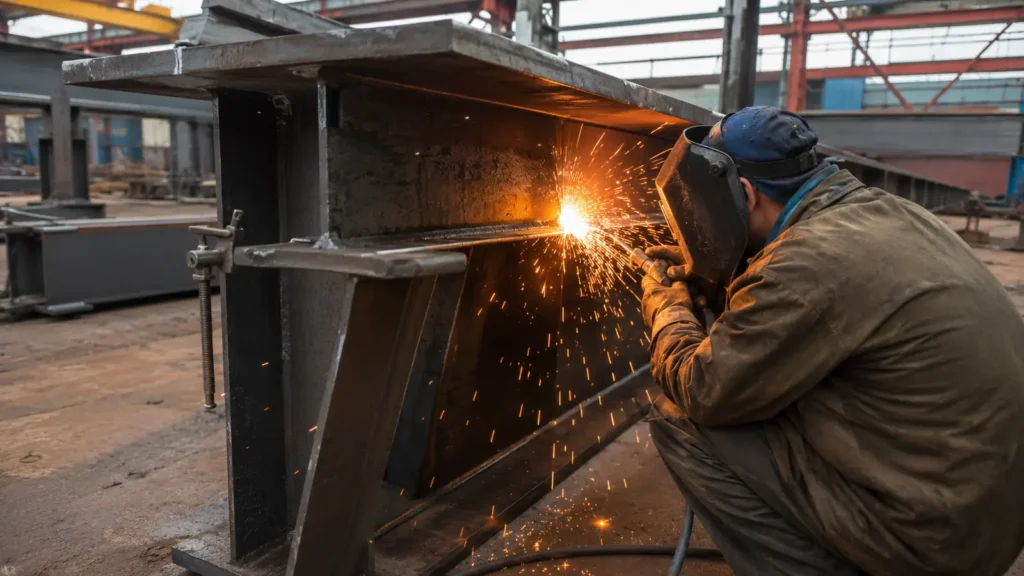
Every construction project opens its life with a carbon deficit. The chemistry of Portland cement alone releases roughly 0.83 kg of CO2 per kilogram of clinker produced, as calcium carbonate breaks down in the kiln. Global cement production accounts for approximately 8 percent of annual CO2 emissions. Steel production adds another 7 to 9 percent. A large commercial building can carry an embodied carbon load of several thousand tonnes before its first occupant walks through the door.
How long before operational savings close that gap? Sustainable design principles answer with a formula that is arithmetically simple but practically confrontational:
Carbon Payback Period = Embodied Carbon (kg CO2e) / Annual Carbon Savings (kg CO2e/year)
For the Bullitt Center in Seattle: embodied carbon of approximately 1,800,000 kg CO2e, annual operational saving of roughly 180,000 kg CO2e versus a conventional baseline building in the same climate.
1,800,000 / 180,000 = 10 years
Ten years is defensible for a building targeting a 250-year lifespan. Apply the same formula to a building with a 60-year payback period and a planned 50-year lifespan, and the project never reaches net-zero regardless of how efficiently it operates year to year. Sustainable design principles therefore treat longevity as a carbon strategy in its own right – a building that lasts twice as long at the same operational efficiency halves its lifecycle carbon per year occupied.
The formula also surfaces a less comfortable conclusion: on many projects, the most defensible carbon decision is to adapt what already exists. Demolishing a functional concrete building to replace it with a high-performance timber structure typically produces a carbon deficit that takes 20 to 40 years to recover, during which time the new building is a net emitter compared to leaving the old one standing and upgrading its mechanical systems.
That 10-year payback calculation is the kind of number this archive exists to find – the one that turns a slogan into arithmetic.
I make all of it alone, with no ads. If it is worth a coffee a month to you, that keeps the next one coming.
Keep it alive →How Sustainable Design Handles Material Efficiency and the Limits of Circular Economy Thinking
Circular economy principles in sustainable design attempt to keep materials at their highest useful quality for as long as thermodynamically possible, deferring the entropy increase that accompanies every processing cycle. The logic is sound. The practical limits are real.
Recycled concrete aggregate is structurally weaker than virgin aggregate and carries contamination from adhesives and surface coatings that limits its substitution ratio in new structural mixes. Steel recycled through electric arc furnaces accumulates trace elements from consumer products and automotive scrap, restricting high-specification structural use. Material quality does degrade with each cycle, and circular economy design works within that constraint by directing high-quality materials toward high-quality recapture streams and lower-quality streams toward lower-specification applications.
Design for disassembly is the practical expression of this thinking. A building whose components are bolted rather than welded, mechanically fixed rather than chemically bonded, can be deconstructed at end of life with material quality largely intact. The contrast with conventional construction is significant. A typical concrete frame building is demolished rather than deconstructed, and the resulting crushed aggregate is used for road sub-base, a low-specification application that permanently destroys the embodied energy investment of the original structure.
| Design Approach | Lifecycle Carbon Reduction | Primary Requirement |
|---|---|---|
| High-recycled-content steel | 40 to 70 percent embodied reduction | Electric arc furnace steelmaking on low-carbon grid |
| Mass timber structure | 50 to 80 percent vs concrete equivalent | Certified timber supply with chain-of-custody documentation |
| Passive house thermal envelope | 70 to 90 percent operational reduction | Airtight construction with heat recovery ventilation |
| Design for disassembly | Avoids end-of-life carbon loss | Reversible mechanical connections throughout structure |
| Cradle-to-Cradle certified materials | Lifecycle-verified, variable by product | Materials designed for full recapture at known purity |
Source reduction – using less material to achieve the same structural result – remains the most thermodynamically clean approach available. Hollow steel sections carry comparable loads to solid sections at a fraction of the embodied carbon. Optimized timber frames can match the thermal performance of concrete walls at roughly one-fifth of the carbon intensity. The numbers favor lightness in most applications, which explains why the shift toward engineered timber in mid-rise construction has moved faster than most industry forecasts from 2010 predicted.
Biomimicry and What Natural Systems Know About Sustainable Design That Engineering Is Still Catching Up To
Biology has been optimizing material and energy systems under thermodynamic constraints for approximately 3.8 billion years. The solutions it has arrived at are frequently more efficient than anything produced by deliberate human engineering, and sustainable design principles increasingly treat natural systems as a reference library rather than a backdrop.
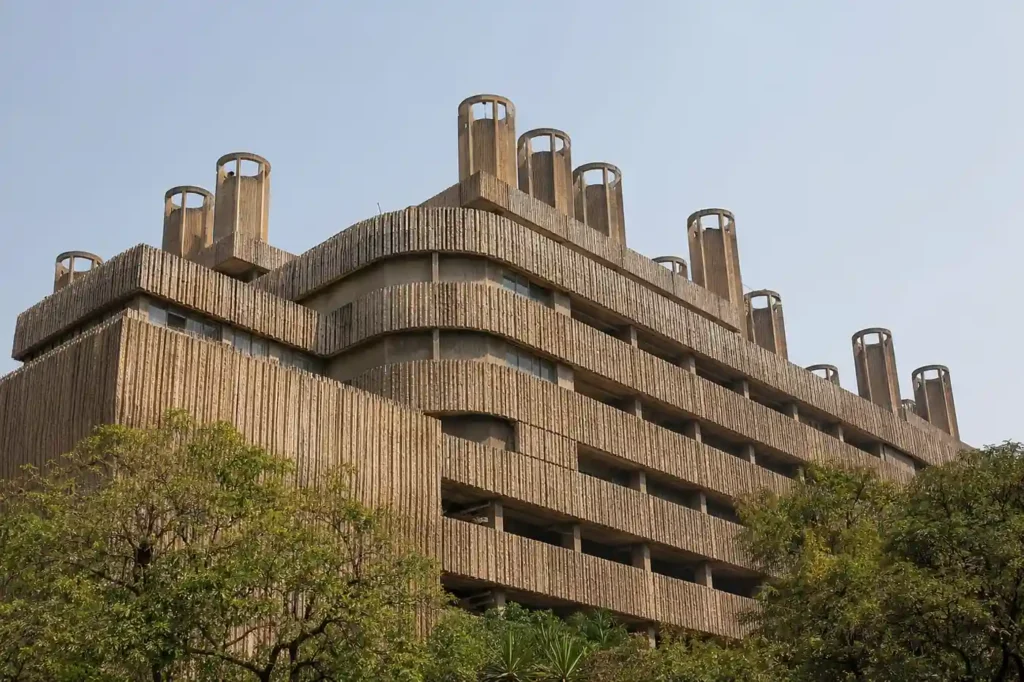
Termite mounds in Zimbabwe maintain interior temperatures within 1 degree Celsius of their target despite external fluctuations of 20 degrees or more, using passive convective airflow through a branched channel network that functions as a distributed thermal regulation system. Architect Mick Pearce applied a version of this principle to the Eastgate Centre in Harare in 1996, a mid-rise commercial building that operates without conventional air conditioning in a climate that would normally demand substantial mechanical cooling. Energy consumption in the building runs at approximately 10 percent of a conventionally conditioned equivalent of the same floor area.
Lotus leaf surfaces repel water and particulate contamination through microscale wax crystal geometry rather than chemical surface treatments. Facade coatings derived from this property allow exterior surfaces to self-clean in rainfall, removing the maintenance energy and chemical consumption of conventional cleaning programs. Spider silk achieves higher tensile strength-to-weight ratios than structural steel while requiring no high-temperature industrial processing to produce. The research into structural fibers inspired by this property is ongoing, though no commercial building product has yet matched natural silk at scale.
The honest limitation of biomimicry in sustainable design is translation. Biological mechanisms operate at scales and with material systems that do not transfer to construction without significant adaptation. What transferred from the termite mound to the Eastgate Centre was not the mound’s architecture but its underlying physical principle – stack-effect ventilation driven by localized temperature differential – reinterpreted in human structural terms. Biomimicry in sustainable design practice is informed analogy, not direct imitation, and the engineering translation step is where most of the difficulty lives.
The View From NoSuchDevice
I find sustainable design principles interesting for a reason that has less to do with the environment and more to do with what the methodology reveals about how conventional engineering handles costs.
Standard engineering practice optimizes for what happens inside the use phase. Material is minimized where load analysis permits. Operational energy is reduced where the client budget supports it. The emissions that preceded the product’s first use, and the emissions that will follow its last, are externalized – paid by the atmosphere and the landfill rather than by the project budget. Sustainable design principles are, at their mechanical core, an accounting reform. They demand that the full ledger be visible before any design decision is made.
That accounting produces conclusions that sit poorly with how the construction industry earns money. The most defensible carbon decision on a significant number of projects is not to build something new. Adapting an existing structure, upgrading its mechanical systems, extending its serviceable life by two or three decades – that path carries a fraction of the embodied carbon of new construction and often outperforms a shiny certified replacement on a 50-year lifecycle calculation. An industry that profits from new construction has limited institutional interest in recommending this, regardless of what the numbers show.
I think the real value of sustainable design over the next 20 years is not any individual certified building. It is the normalization of lifecycle thinking as a default methodology in procurement. Buyers who require a lifecycle carbon figure before signing a construction contract change what architects and engineers put in their proposals. That is where the principles land with real force, and it has nothing to do with how good the underlying science is. The science has been adequate for 30 years. The institutional adoption is what has been slow.
That is a political problem wearing the clothes of an engineering problem. The physics is already on the table.
You read the whole thing.
That is rarer than it should be. A discipline that insists on counting emissions across 250 years of a building’s life is doing something most engineering fields quietly refuse to do. I make every piece alone, with no ads and no investor deciding what gets written. If you want the next machine taken apart like this one, you can help me make it.
A coffee a month is enough to keep it free for everyone.
Prefer crypto or a one time gift? Other ways to give →
Technologies Related to This Concept
| Technology | Concept |
|---|---|
| Gravity-Defying Vertical Parks | Parks built vertically with gravity manipulation, maximizing green space. |
| Atmospheric Carbon Capture 3D Printers | Devices that capture carbon dioxide and convert it into printable materials. |
| Recycled Glass Infrastructure | Using crushed glass waste in road and building construction. |
| Waste-Based Geopolymers | Using waste to create geopolymer materials for construction. |
| Bio-Reactive Building Materials | Construction materials that absorb pollutants from the air over time. |