





What Is Borosilicate Glass?
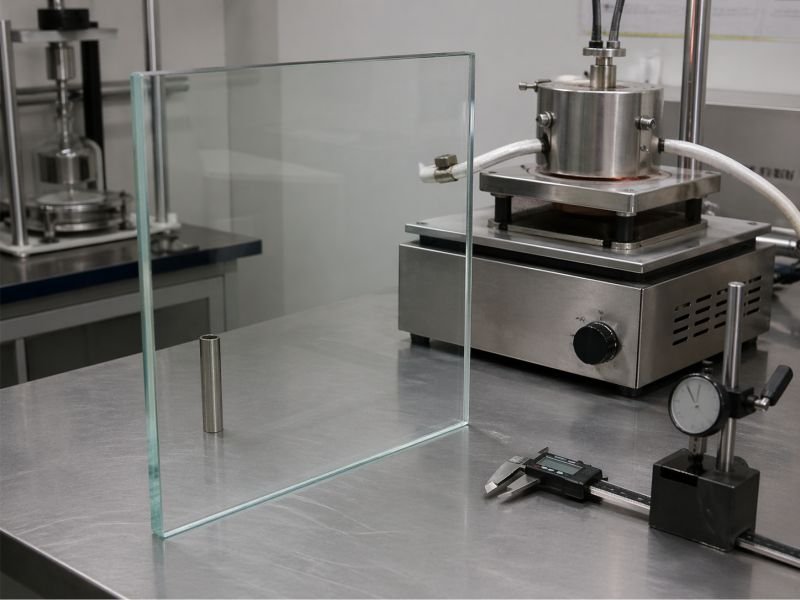
Borosilicate glass is a silica-based glass that includes boron oxide to reduce thermal expansion and improve chemical durability. Compared with ordinary soda-lime glass, it changes dimension less when heated or cooled, so it resists thermal shock more effectively. A common relation is deltaL = alphaLdeltaT, where a lower thermal expansion coefficient reduces length change for the same temperature swing.
In real engineering systems, borosilicate glass is used where transparency, surface hardness, and temperature tolerance must coexist. Its composition makes it suitable for repeated heating cycles, exposure to many chemicals, and optical transmission through protective covers or vessels. In durable solar infrastructure, it can serve as a transparent protective layer that passes light while helping the assembly survive mechanical and thermal stress.
This material matters because many devices fail at interfaces where heat, moisture, and impact act together over time. Borosilicate glass offers a practical compromise between clarity, dimensional stability, and manufacturability, which is why it appears across laboratory, industrial, and energy applications. Used in devices include reactor sight glasses, laboratory vessels, optical covers, and photovoltaic protective panels. Engineers choose it when thermal reliability matters more than the lowest-cost transparent material.
Example:
A solar tile cover can use borosilicate glass to transmit light while tolerating rapid temperature changes between cold rain and heated pavement.
Related Terms:
- Thermal Expansion
- Tempered Glass
- Chemical Durability
NoSuchDevice is a free archive of machines that do not exist yet but already have a shadow in physics. I research and write every entry alone, with no ads. Take a look around the archive, or help keep it free.