



What Is Charge Separation?
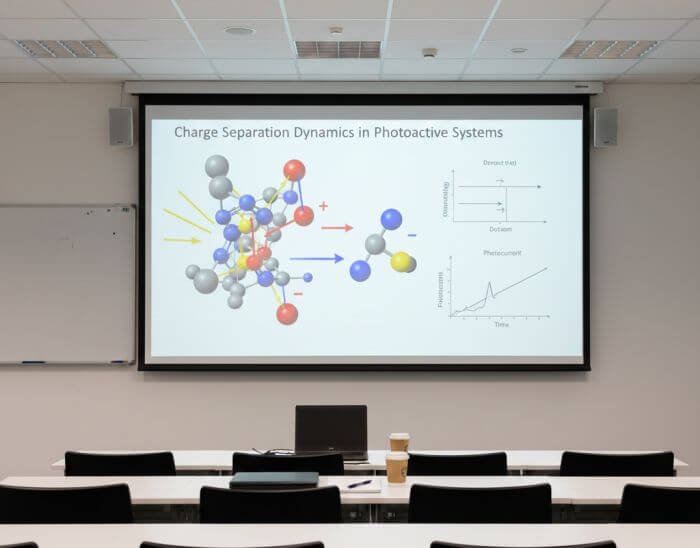
Charge separation is the process in which an absorbed photon triggers the formation of a positively charged site and a negatively charged site within a molecular or solid-state structure. This division of charge initiates directed energy flow and underpins many light-driven reactions in natural and engineered environments.
Its function depends on how efficiently excitation energy reaches reaction sites, a behaviour shaped by molecular geometry, electronic coupling, and local field effects. In advanced cellular energy architectures, charge separation creates the electrochemical gradients that drive downstream energy conversion.
In engineered systems, controlled charge separation is essential for turning absorbed light into usable electrical or chemical output, and its performance limits often determine overall device efficiency.
Example:
Charge separation underpins the initial step in many photoactive materials, enabling directed electron flow toward catalytic or electrical pathways.
Related Concepts:
- Exciton
- Redox potential gradients
- Photochemical charge transfer
NoSuchDevice is a free archive of machines that do not exist yet but already have a shadow in physics. I research and write every entry alone, with no ads. Take a look around the archive, or help keep it free.