





What Is Closed-cycle OTEC?
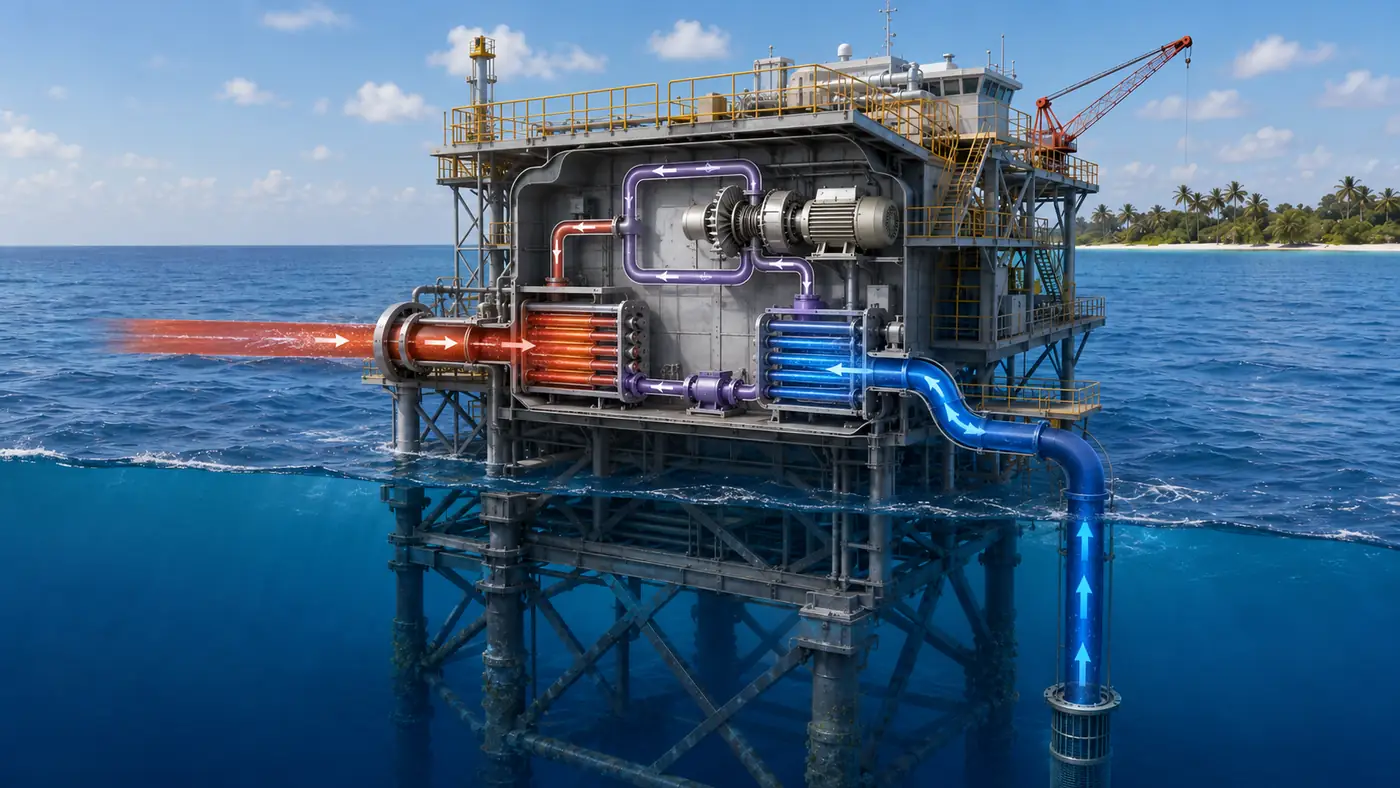
Closed-cycle OTEC is an ocean thermal energy conversion process that keeps a low-boiling working fluid sealed inside a loop. Warm surface seawater vaporizes the fluid in an evaporator, the vapor drives a turbine, and cold deep seawater condenses it back to liquid. The upper efficiency limit is eta_max = 1 – T_cold/T_hot.
In real systems, ammonia or another working fluid circulates through heat exchangers without mixing with seawater. The cycle avoids direct seawater vapor turbines, but it requires large heat-transfer surfaces because the temperature difference is small. Used in devices include offshore baseload platforms, tropical island power systems, and marine heat-engine test rigs.
The concept matters because it provides the most compact turbine path for turning ocean temperature differences into electricity. In ocean thermal power generation, closed-cycle OTEC prioritizes contained working-fluid control, heat exchanger efficiency, and pumping losses. Its practical value depends on corrosion resistance, biofouling control, and safe fluid containment.
Engineers track working-fluid pressure, condenser approach temperature, seawater flow rate, and turbine output. These values reveal whether heat exchangers are fouling, pumps are consuming too much power, or the sealed loop is losing performance.
Example:
A closed-cycle plant can boil ammonia with warm seawater, expand the vapor through a turbine, and condense it with cold deep seawater.
Related Terms:
- Rankine Cycle
- Carnot Efficiency
- Thermal Gradient
NoSuchDevice is a free archive of machines that do not exist yet but already have a shadow in physics. I research and write every entry alone, with no ads. Take a look around the archive, or help keep it free.