

The Sun sheds roughly 1.5 million tonnes of plasma per second. By the time that plasma reaches Earth’s orbit, it has been moving at 400 to 800 kilometers per second for about four days. Then Earth’s magnetic field deflects nearly all of it around the planet. The stream continues outward past Jupiter, past Saturn, past every receiver humanity has placed in space, until it dissipates at the heliopause. Every second, a continuous river of kinetic energy passes through Earth’s orbital neighborhood and no ground-based instrument catches a watt of it.
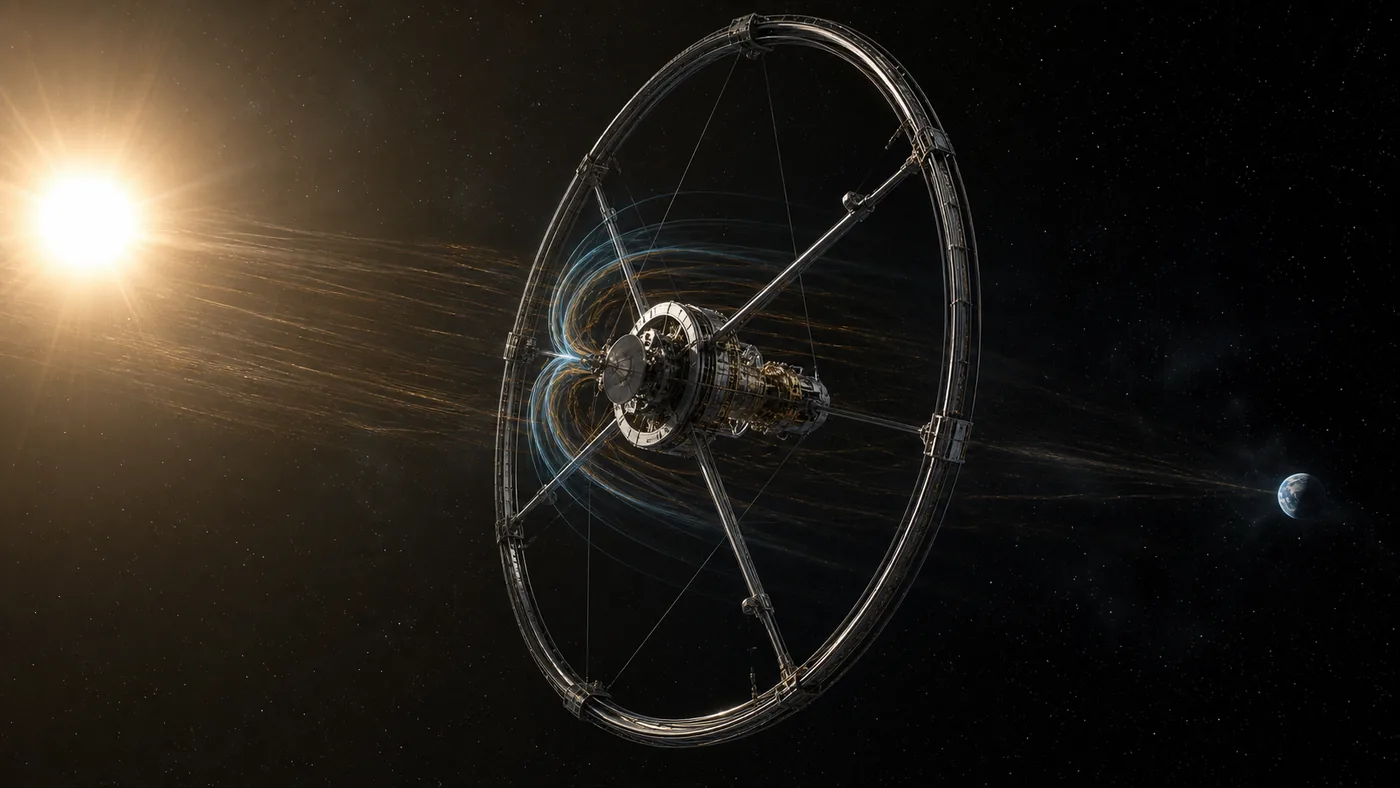
A Solar Wind Energy Satellite is positioned at the L1 Lagrange point, 1.5 million kilometers upstream of Earth, and it intercepts the plasma stream before the magnetosphere has had a chance to redirect it. A superconducting ring generates a magnetic field large enough to deflect and slow incoming charged particles. A magnetohydrodynamic generator converts that interaction into electricity. A microwave link beams the power back toward a rectenna array on the ground.
The short version: A Solar Wind Energy Satellite uses a magnetic sail at L1 to capture solar wind plasma before Earth’s magnetosphere deflects it, converts particle kinetic energy through magnetohydrodynamic generation, and transmits the result back to Earth. Steady-state solar wind delivers roughly 0.6 mW/m² at 1 AU – far below solar photons – but the magnetic sail’s effective capture cross-section is orders of magnitude larger than its physical footprint, and during coronal mass ejection events that figure climbs above 100 mW/m².
Key Takeaways
- The solar wind carries kinetic energy past Earth continuously, and the magnetosphere deflects essentially all of it before anything can touch it – which is why the satellite must be 1.5 million kilometers upstream
- Solar wind power density is about 2 million times weaker than sunlight per square meter, but a magnetic sail’s effective cross-section can be hundreds to thousands of times its physical size
- During a strong coronal mass ejection, solar wind flux spikes to 200 times normal – brief and unpredictable, but a satellite at L1 can produce 4 gigawatts at peak and feed it directly into grid-scale storage
- The most compelling case for this device is not powering Earth but powering the Moon, Mars, and deep space habitats where there is no magnetosphere redirecting the plasma stream away from the habitat
- Platforms near the Sun at 0.1 AU, where solar wind density is 100 times higher than at Earth’s orbit, are where this concept class eventually reaches power figures that matter at civilizational scale
Table of Contents
The Plasma Stream That Slips Past Every Energy System on Earth
Earth intercepts sunlight, impounds rivers, and catches atmospheric wind in rotor blades. What it does not do is catch the solar wind, and the reason is architectural: the magnetosphere extends roughly 60,000 kilometers toward the Sun on the dayside and bends the charged particle stream around the planet rather than allowing it through.
The geometry of this problem points directly to L1. At 1.5 million kilometers sunward, the plasma stream has not yet encountered the bow shock where the magnetosphere begins to dominate. The wind arrives there with the full velocity and density the Sun launched it at – uncollected and carrying all its original kinetic energy. DSCOVR, the Deep Space Climate Observatory, has maintained position near L1 since 2015, demonstrating the orbital mechanics that make that address viable.
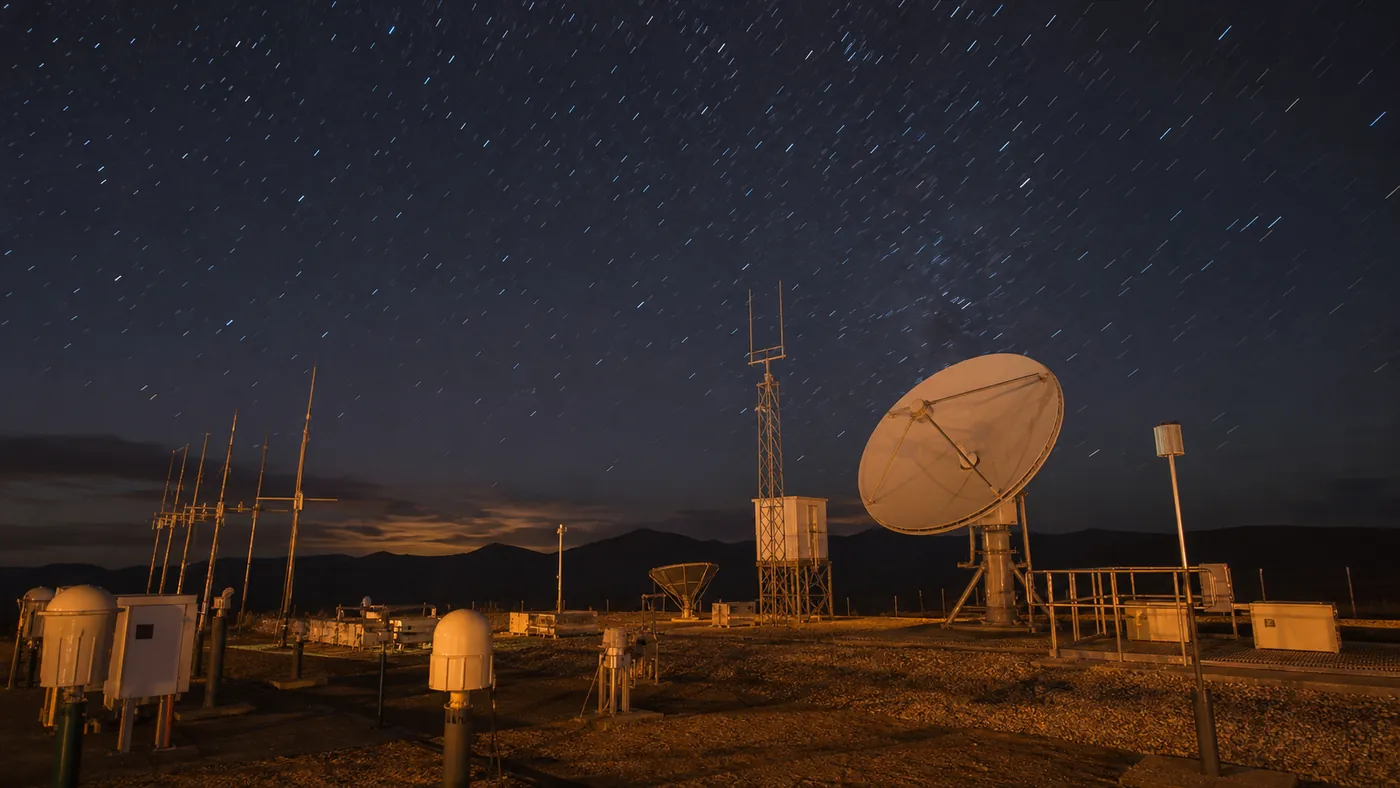
How a Solar Wind Energy Satellite Captures a Plasma Stream
Three functional layers give this satellite its operating logic, each addressing a different version of the same physical problem: how do you extract energy from something moving at half a million kilometers per second that would incinerate any physical collector it touched directly?
The Magnetic Sail: Building a Field the Wind Cannot Cross
A Solar Wind Energy Satellite does not intercept the solar wind the way a sail catches atmospheric air. At 450 km/s, the particle stream would ablate any solid material within hours. The satellite generates a magnetic field large enough that the wind never reaches the hardware.
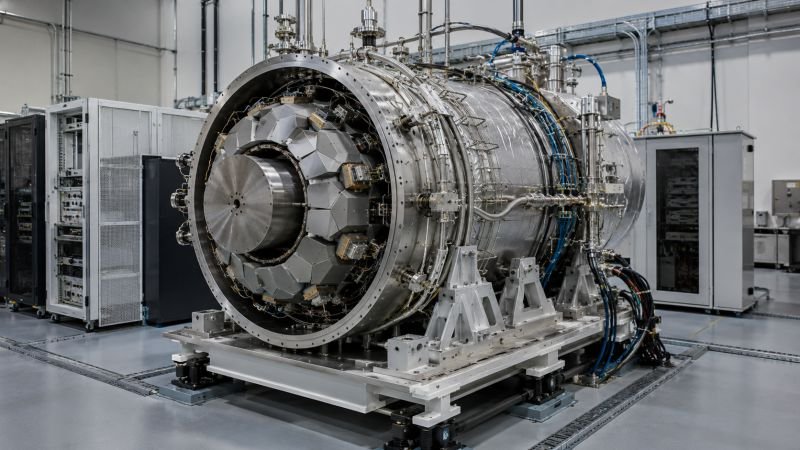
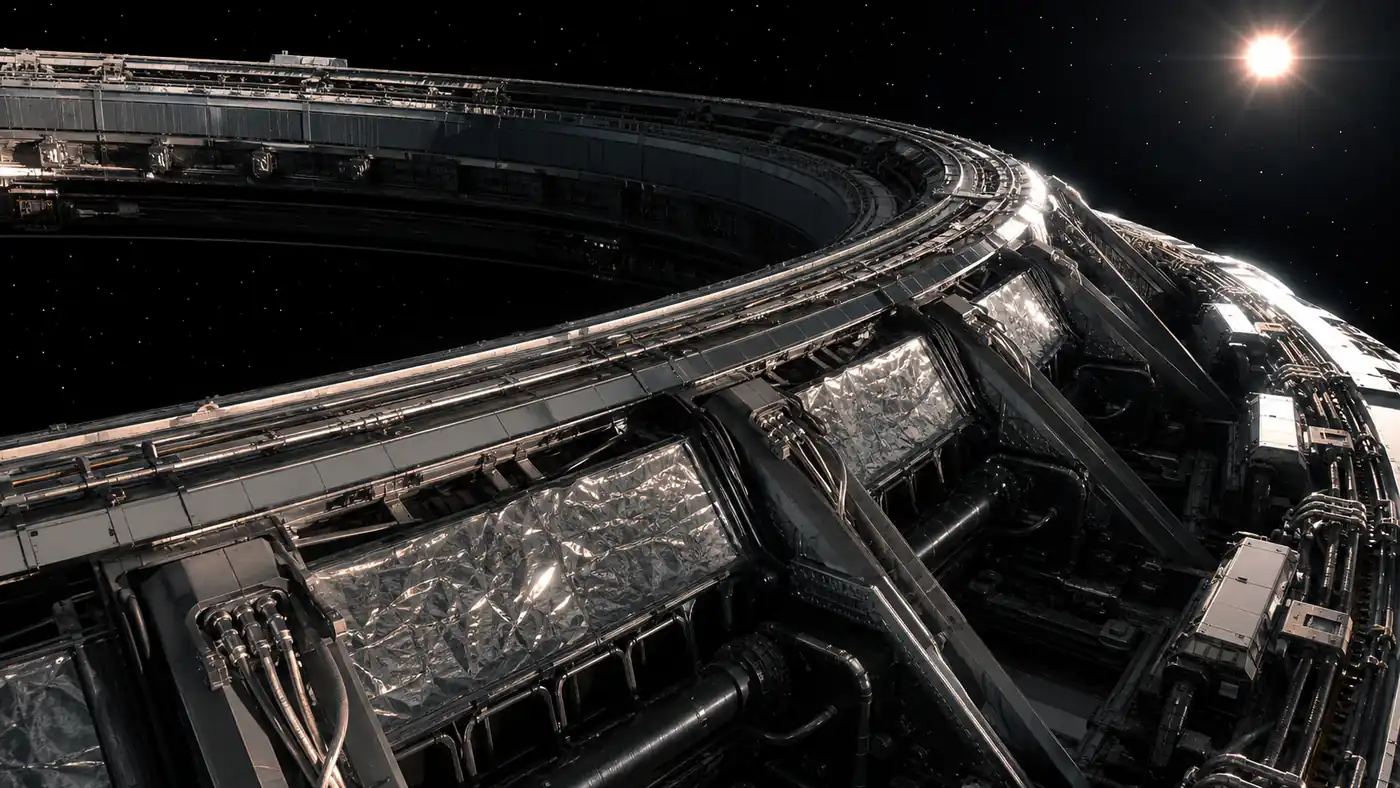
A superconducting loop carrying high current produces a dipole field extending tens to hundreds of kilometers beyond the physical coil. Incoming protons and electrons follow magnetic field lines rather than passing through them. The field acts as a wide funnel: particles approach from a large effective cross-section, interact with the field geometry, and surrender momentum in the process. The physical satellite might span tens of meters. The effective capture area of its magnetic field covers hundreds of square kilometers.
MHD Conversion: From Deflected Plasma to Direct Current
Magnetohydrodynamic generation skips the conductor. Solar wind plasma is an electrically conducting fluid, and when a conducting fluid moves through a magnetic field, charge carriers separate by polarity and a voltage develops across the flow. In the satellite’s conversion chamber, redirected plasma passes through a transverse magnetic field. Positive ions deflect toward one electrode wall, electrons toward the other. Current flows between them without any moving parts and without any physical surface contacting the plasma stream. Theoretical conversion efficiency for well-designed MHD channels reaches 50-60%, comparable to photovoltaic cells in space.
Getting the Power Back to Earth
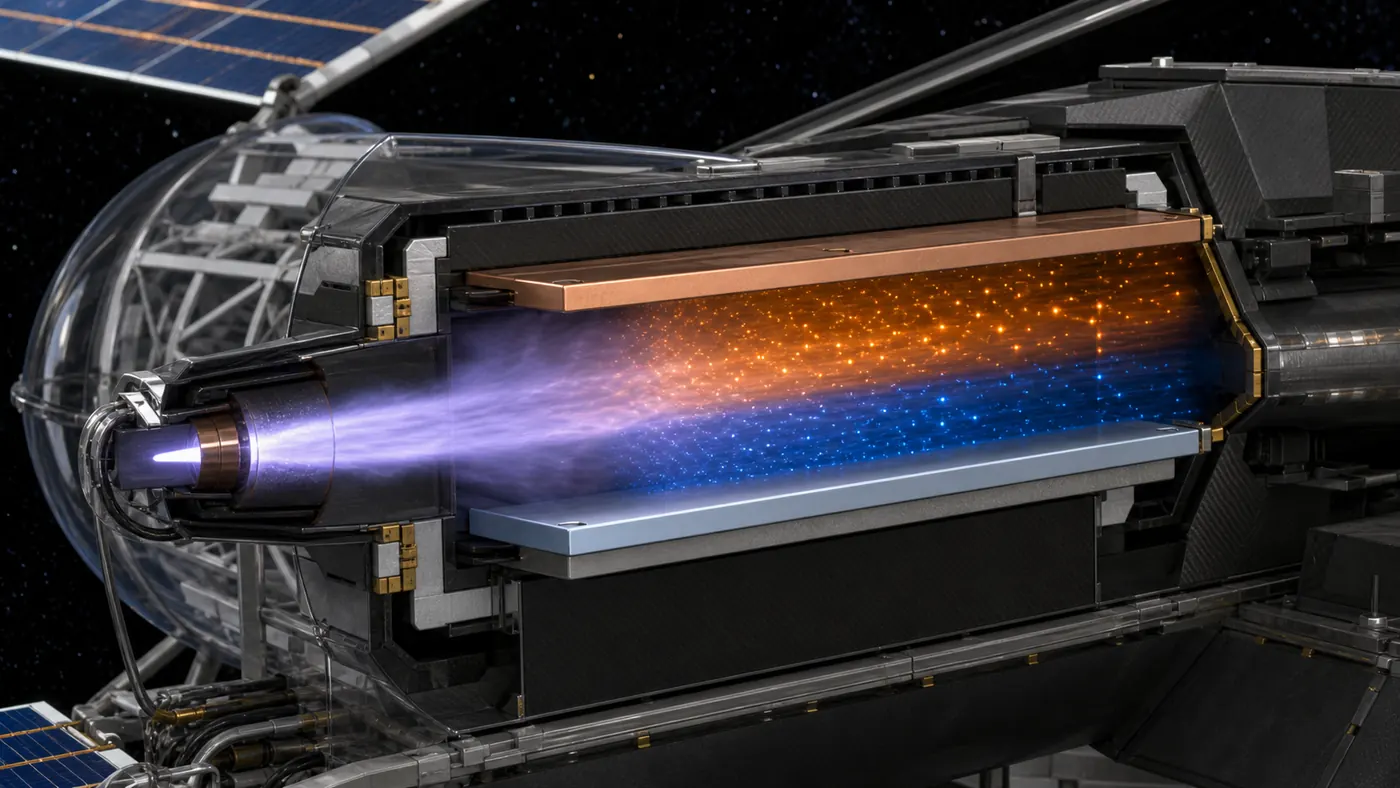
Generated direct current travels to a phased-array microwave transmitter. A tightly directional beam at 2.45 GHz covers a footprint of a few tens of kilometers at Earth’s surface after crossing 1.5 million kilometers. A rectenna array at the ground station converts the incoming signal to DC at 85-90% efficiency. The full chain – MHD output through microwave conversion, free-space propagation, rectenna reception, and grid inversion – delivers approximately 70-75% of generated power to the grid.
The Physics of Plasma Moving at 500 Kilometers Per Second
Density, Speed, and What the Numbers Actually Mean
Solar wind at 1 AU averages about eight protons per cubic centimeter – a near-perfect vacuum by laboratory standards. At 450 km/s, each proton carries roughly 1,000 electronvolts of kinetic energy, and the particle flux across each square meter per second amounts to about 300 million particles. The calculation of what that adds up to is direct:
P/A = ½ × n × m × v³
Where n is number density, m is proton mass (1.67 × 10⁻²⁷ kg), and v is wind speed.
At n = 8 × 10⁶ particles/m³ and v = 4.5 × 10⁵ m/s:
P/A = ½ × 8 × 10⁶ × 1.67 × 10⁻²⁷ × (4.5 × 10⁵)³ ≈ 6.1 × 10⁻⁴ W/m²
That is 0.6 milliwatts per square meter. Sunlight at the same distance delivers 1,361 watts per square meter. Solar wind kinetic energy is about 2.3 million times weaker per unit area than solar photon energy. That number deserves to land as what it is: an honest constraint that locates this device precisely on the energy architecture map.
The magnetic sail’s expanded effective cross-section improves the arithmetic. A superconducting loop with a 100 km effective capture radius harvests from roughly 31,000 km² of solar wind flow. At 0.6 mW/m², that yields about 18 megawatts continuous. During a coronal mass ejection, the same calculation looks different.
Why L1 Is the Only Sensible Address
The L1 point sits where gravitational forces from the Sun and Earth balance, allowing a satellite to hold position with minimal fuel expenditure. More important for this device: L1 lies well upstream of the bow shock, which begins roughly 60,000 km from Earth on the sunward side. Between L1 and that boundary, the plasma stream remains in free-streaming mode, carrying full kinetic energy. Any orbit significantly closer to Earth places the satellite inside the magnetosphere’s influence – where the resource this device is designed to harvest has already been redirected away.
What the Energy Arithmetic Reveals About Solar Wind Power
Placing solar wind alongside the resources it competes with at the same orbital distance makes the device’s honest position visible:
| Energy Source | Power Flux at 1 AU | Collector Type | Availability |
|---|---|---|---|
| Solar photons | 1,361 W/m² | Photovoltaic | Sunlit geometry only |
| Solar wind – typical | 0.0006 W/m² | Magnetic sail | Continuous, omnidirectional |
| Solar wind – strong CME | 0.06-0.5 W/m² | Magnetic sail | Hours to days, event-driven |
| Earth wind at 10 m/s | 600 W/m² | Turbine | Surface-limited, atmospheric |
| Solar wind at 0.1 AU | ~0.06 W/m² | Magnetic sail | Continuous, 100x denser |
The table makes something visible that the headline concept often obscures: steady-state solar wind loses to photovoltaics by a factor measured in millions per unit collecting area. This device is not interesting for the density of its energy source. It is interesting for the geometry of its collector and for what happens during peak events.
A strong coronal mass ejection drives solar wind to 1,500-3,000 km/s with density 20-100 times above baseline. Power flux scales with the cube of velocity. At 1,500 km/s and 50 times normal density: P/A = ½ × (50 × 8 × 10⁶) × 1.67 × 10⁻²⁷ × (1.5 × 10⁶)³ ≈ 141 mW/m². A satellite with a 100 km effective capture radius produces approximately 4.4 gigawatts at event peak. Whether harvesting that surge is worth the infrastructure depends on how future grids value intermittent gigawatt inputs and how cheaply energy storage can absorb them – a calculation that shifts considerably as storage economics improve.
Four gigawatts from a coronal mass ejection and a magnetic sail is the kind of number this archive exists to chase down.
I make all of it alone, with no ads. If it is worth a coffee a month to you, that keeps the next one coming.
Keep it alive →Engineering a Platform Nobody Has Built for a Particle Stream Nobody Has Tamed
The physical engineering of this satellite combines solved problems with genuinely open ones, and the line between them is worth locating precisely.
Station-Keeping Against a Persistent Headwind
A satellite at L1 faces continuous solar wind ram pressure on its magnetic structure. The momentum transferred from deflecting the plasma stream across a 100 km effective capture radius amounts to tens of newtons of anti-sunward force – manageable with ion thrusters consuming roughly 1-3% of the satellite’s own generated power. The station-keeping load shifts with the solar cycle: at solar maximum, higher density and speed increase both harvest output and the thrust the satellite must counteract.
Superconducting Coils and the Seed Technologies That Point Here
High-temperature superconductors already demonstrate persistent current under conditions achievable through passive radiative cooling at L1, where one side of the loop faces deep space and radiates heat freely. The superconducting state can be maintained without active refrigeration at that location. The magsail propulsion concept, developed in detail through proposals by researchers including Dana Andrews and Robert Zubrin, established the electromagnetic and force relationships that make the capture physics coherent. A Solar Wind Energy Satellite inherits all of that grounding and adds an MHD conversion layer on top. The physics is real. A flight-ready superconducting loop at the required scale has not been built – and that is the honest gap between this concept and deployment.
Sending Power Back Across 1.5 Million Kilometers
Transmission across 1.5 million kilometers is not primarily a distance problem. Electromagnetic waves travel at the speed of light; the propagation adds a five-second signal delay, not a power loss. The losses that matter accumulate at the transmitter and receiver interfaces.
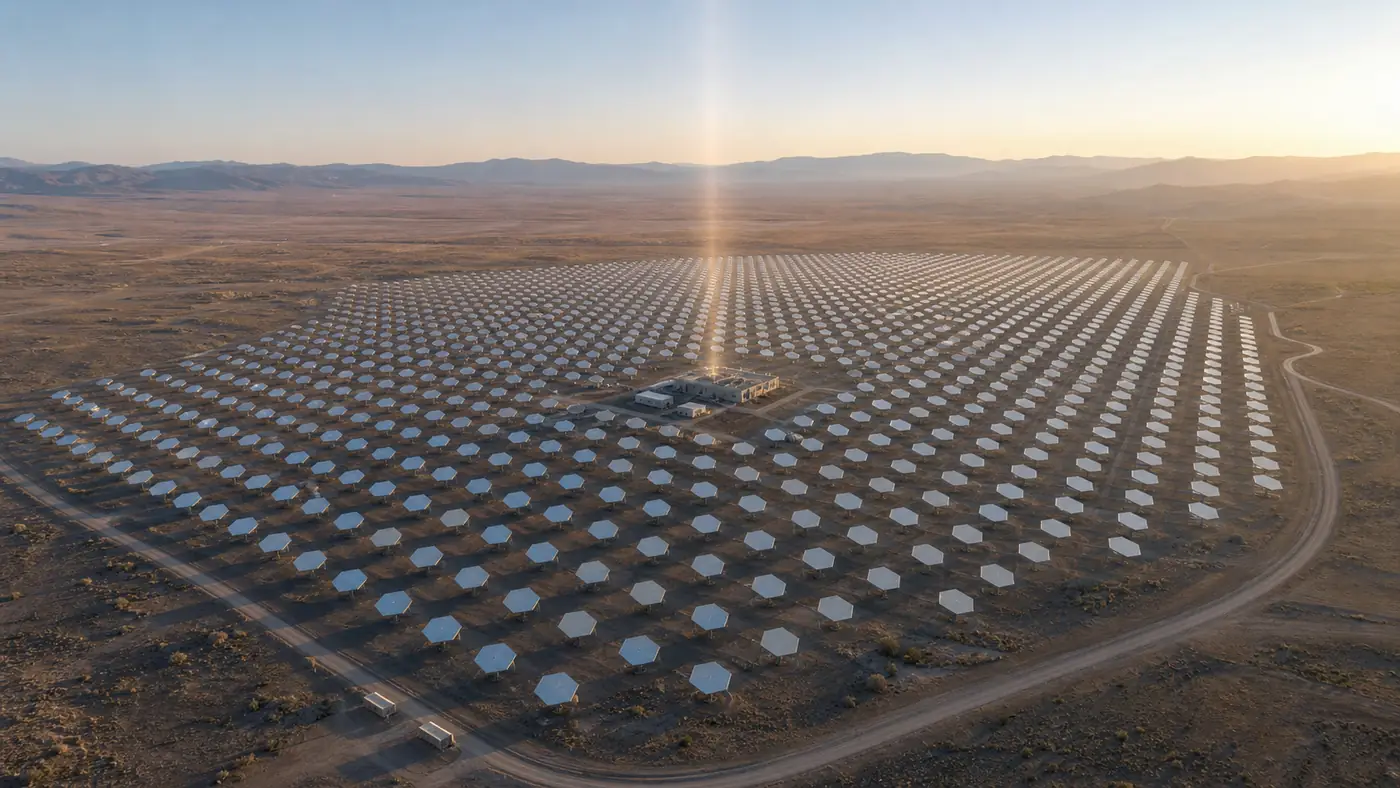
A phased-array microwave transmitter forms a highly directional beam with divergence well below one degree. Over 1.5 million kilometers, the beam spreads to a footprint of a few tens of kilometers at Earth’s surface – large enough to require a purpose-built receiving installation but not so large as to make ground siting impractical. A rectenna array converts the incoming microwave signal to DC at 85-90% efficiency. The array is a field of dipole antennas connected through rectifying circuits to a common DC bus, with no moving parts.
Laser transmission offers a tighter beam geometry on paper, but cloud cover that attenuates a near-infrared laser by 90% has negligible effect on a properly tuned microwave signal. For a device intended to deliver power independently of ground conditions, that difference settles the architecture question.
Where Solar Wind Power Makes Sense and Where It Does Not
Context determines almost everything about whether this device belongs in an energy architecture. For continuous baseline power delivered to Earth’s grid, a Solar Wind Energy Satellite is not competitive with a space-based solar power platform of comparable investment. The arithmetic examined above explains why: steady-state solar wind delivers 0.6 mW/m², while photovoltaics in space see 1,361 W/m².
Earth Grid Applications: CME Surge Harvesting
The honest Earth-facing use case is narrower and more specific: surge harvesting during CME events, fed into grid-scale storage. A satellite producing 4 gigawatts during a 24-72 hour event delivers energy at a volume meaningful at grid scale, independently of weather, cloud cover, or season. CME events are unpredictable but not rare – major events occur multiple times per year near solar maximum. Remote regions and island grids present a different calculation entirely: a microwave beam from L1 delivers continuously regardless of latitude or local weather, which changes the cost structure for locations where building conventional generation is extremely expensive.
Lunar and Martian Bases: No Magnetosphere in the Way
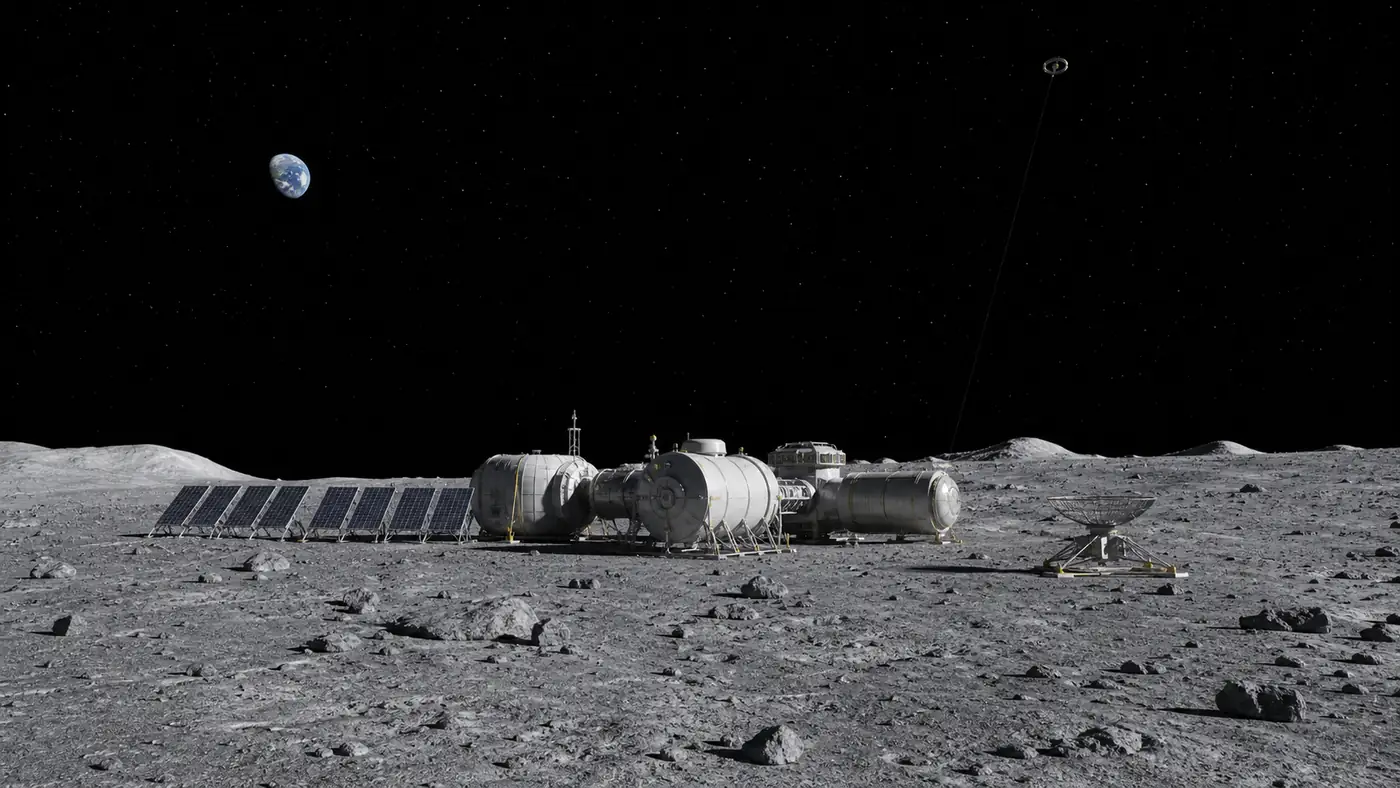
The strongest argument for solar wind energy harvesting has nothing to do with Earth. The Moon carries no global magnetosphere. Mars has only a fragmented remnant. Both surfaces receive the full solar wind at 1 AU flux – a particle environment the habitat must manage for radiation shielding purposes regardless of its power source choice. A Solar Wind Energy Satellite in the relevant Lagrange point near either body turns that unavoidable environment into an energy resource. A compact satellite generating 10-20 MW continuously covers the projected power needs of an early lunar base with operating margin. On Mars, where solar panel output already runs at roughly 43% of Earth equivalent due to distance, a solar wind satellite at the Sun-Mars L1 point supplements photovoltaics with a source that does not degrade with dust accumulation on panel surfaces.
From a First Platform to Harvesting the Heliosphere
An evolutionary arc for this device class moves through three phases. The gap between them is measured in superconductor engineering and deployment ambition, not in any unresolved question in fundamental physics.
A first-generation platform at L1 is a proof-of-concept at modest scale – a superconducting loop measured in hundreds of meters, a small MHD conversion chamber, and a low-power transmission link. Power output would be in the tens of kilowatts, not meaningful as grid supply. The value of this generation is measurement: real data on capture efficiency, conversion stability, and station-keeping performance in actual solar wind conditions. Nothing in the current scientific literature eliminates the case for building it; the absence of a flight demonstration is an economic and institutional gap.
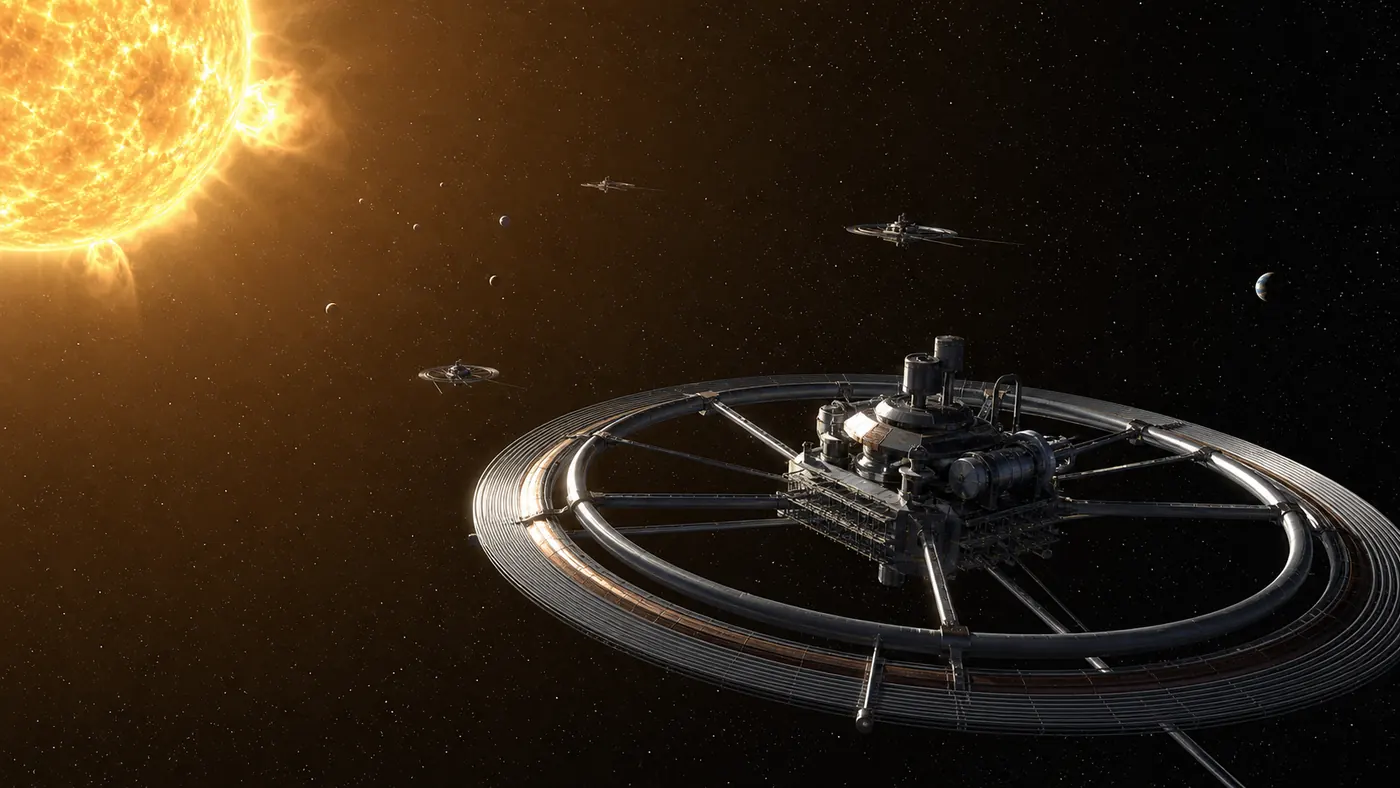
A mature second generation expands the superconducting loop to effective capture cross-sections spanning hundreds of square kilometers, with MHD output above 100 MW in steady-state conditions and gigawatt output during CME events. Multiple satellites sharing rectenna infrastructure and CME early-warning coordination represent the first system-level emergence: a distributed orbital network with surge-harvest capability that no individual platform provides alone.
The third form is heliospheric: platforms at 0.1 AU from the Sun, where solar wind density is roughly 100 times higher than at Earth’s orbit and steady-state power flux climbs to approximately 60 mW/m². Closer to the Sun, both photons and solar wind are denser; platforms there operate alongside photovoltaic arrays in a multi-source architecture. Solar cycle variations – the 11-year swing between minimum and maximum that shifts wind density by a factor of 2-3 and velocity by a comparable amount – affect all generations. A mature satellite manages this through storage reserves: CME surpluses and solar maximum excess charge storage that carries through lower-activity periods.
The View From NoSuchDevice
I find this device interesting for a reason the energy arithmetic does not obviously support: it is designed for the wrong place.
Almost every argument made for solar wind power positions it as a rival to space-based solar power – a way to draw electricity from a resource that flows continuously through the solar neighborhood. That framing makes the satellite look weak, because per square meter of collecting area it loses to photovoltaics by a factor that requires a calculator to appreciate. If you want to power Earth from space, photons are the straightforward choice.
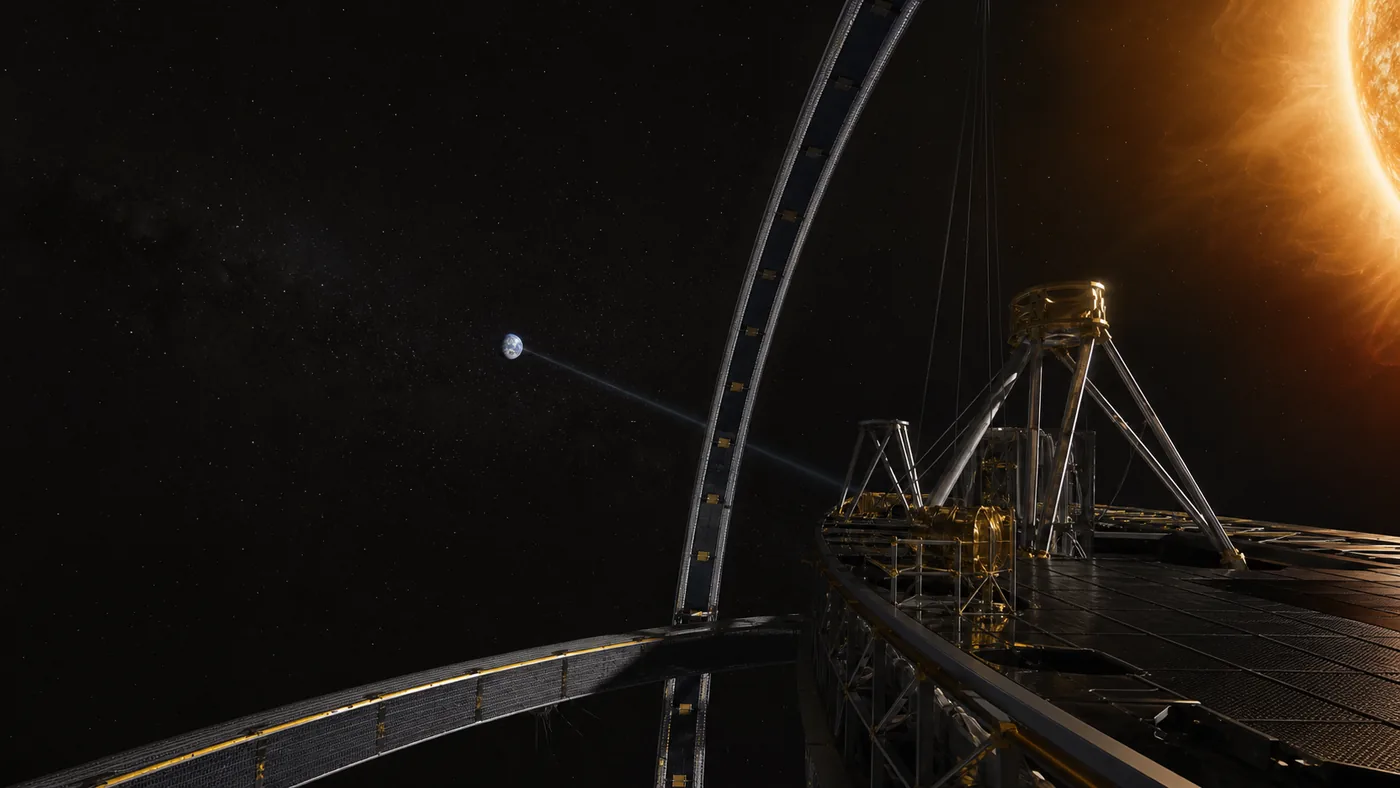
But a satellite designed to harvest plasma from an unshielded particle environment finds its honest domain everywhere Earth’s magnetosphere does not reach. The Moon, Mars, deep space transit routes, Lagrange point stations – none of these have a magnetic field deflecting the solar wind away from the habitat. The condition that makes solar wind power impractical for Earth is absent from every location where humans will eventually build outside this planet.
I think the device’s proper context becomes clear once you stop asking whether it makes sense for the power grid and start asking what energy infrastructure a civilization extending beyond Earth would actually need. A Solar Wind Energy Satellite at a lunar Lagrange point provides continuous power to a habitat that already has to manage radiation from the same source. That is not a marginal improvement to an existing architecture.
The CME harvesting angle is what I keep returning to for near-term value on Earth. A device that produces 4 gigawatts during a 24-to-72-hour event and feeds it into storage is a strange fit for a grid designed around steady supply – but an interesting fit for a grid that has learned to treat large intermittent inputs as a resource. Whether that grid exists in twenty years or fifty depends on storage economics more than satellite physics.
The heliospheric form is on the long horizon, and it is the right horizon: a concept that becomes more compelling as humanity moves further from Earth, not one that competes with easier options for staying put.
You read the whole thing.
That is rarer than it should be. A machine that harvests plasma where planetary protection has ended belongs in a category most energy roadmaps have not thought to include yet. I make every piece alone, with no ads and no investor deciding what gets written. If you want the next machine taken apart like this one, you can help me make it.
A coffee a month is enough to keep it free for everyone.
Prefer crypto or a one time gift? Other ways to give →