






What Is Cradle-to-Cradle design?
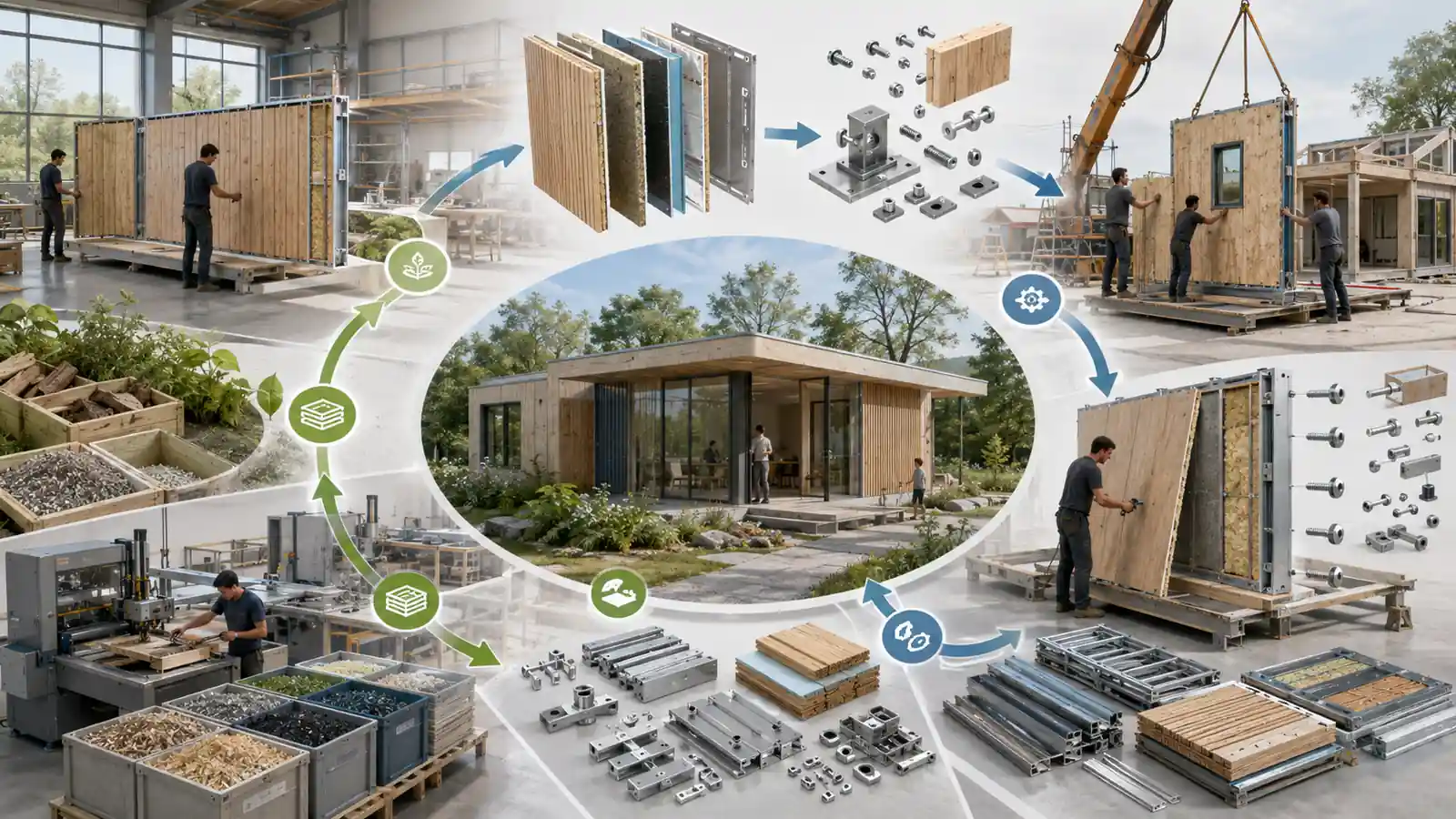
Cradle-to-Cradle design is a sustainable engineering approach that treats products and buildings as temporary assemblies of recoverable materials rather than future waste. Its principle is circular material flow: components should return safely to biological cycles or technical cycles after use. A simple recovery relation is Recovery Rate = M_reused / M_total, where reusable mass is compared with total material input.
In real systems, the approach changes material selection, fastening methods, chemistry, documentation, and ownership models. Adhesives, mixed composites, toxic additives, and hidden coatings can make recovery difficult even when a product looks recyclable. In circular material engineering, designers prefer separable joints, known material grades, traceable supply chains, and components that can be repaired, remanufactured, or recaptured at high purity.
The concept matters because disposal decisions are often locked in during early design. Used in devices include modular building panels, furniture systems, electronics housings, packaging, carpet tiles, facade assemblies, and reusable service equipment. Cradle-to-Cradle design reduces lifecycle impact by preserving material quality, lowering demand for virgin extraction, and making end-of-life handling part of the original engineering specification rather than an afterthought.
Example:
A facade panel designed with reversible mechanical fasteners can be removed, inspected, and reused instead of being demolished into mixed waste.
Related Terms:
- Embodied Carbon
- Lifecycle Assessment
- Design For Disassembly
NoSuchDevice is a free archive of machines that do not exist yet but already have a shadow in physics. I research and write every entry alone, with no ads. Take a look around the archive, or help keep it free.