





What Is Electromotive Force?
Electromotive force, usually shortened to EMF, is the energy supplied per unit charge by a source that drives electric current around a circuit. Despite the name, it is not a mechanical force; it is a voltage-like quantity that represents how strongly a battery, generator, or changing magnetic field can push charges through a conducting path.
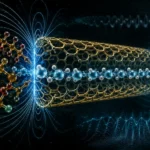
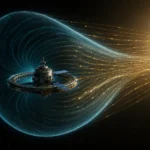
In electromagnetic induction systems, EMF appears when magnetic flux through a circuit changes with time. The source of that change may be rotation, translation, or a varying field strength, but the result is the same: charges experience a drive that produces current if the circuit is closed.
A standard relation is EMF = -N x (dPhi/dt), linking induced electromotive force to the rate of flux change through a coil with N turns. Why it matters is that EMF connects physical motion and field variation to real electrical output, giving engineers a direct way to estimate generator performance and transformer behavior.
Used in devices include generators, transformers, and induction coils. Engineers compare EMF with resistance, load, frequency, and winding count because the voltage a machine can induce determines how much current it can ultimately deliver under practical operating conditions.
Example:
A rotating generator coil develops EMF as its orientation changes and the magnetic flux through each turn rises and falls.
Related Terms:
- Magnetic Flux
- Faraday’s Law
- Potential Difference
NoSuchDevice is a free archive of machines that do not exist yet but already have a shadow in physics. I research and write every entry alone, with no ads. Take a look around the archive, or help keep it free.