






What Is Flash evaporation?
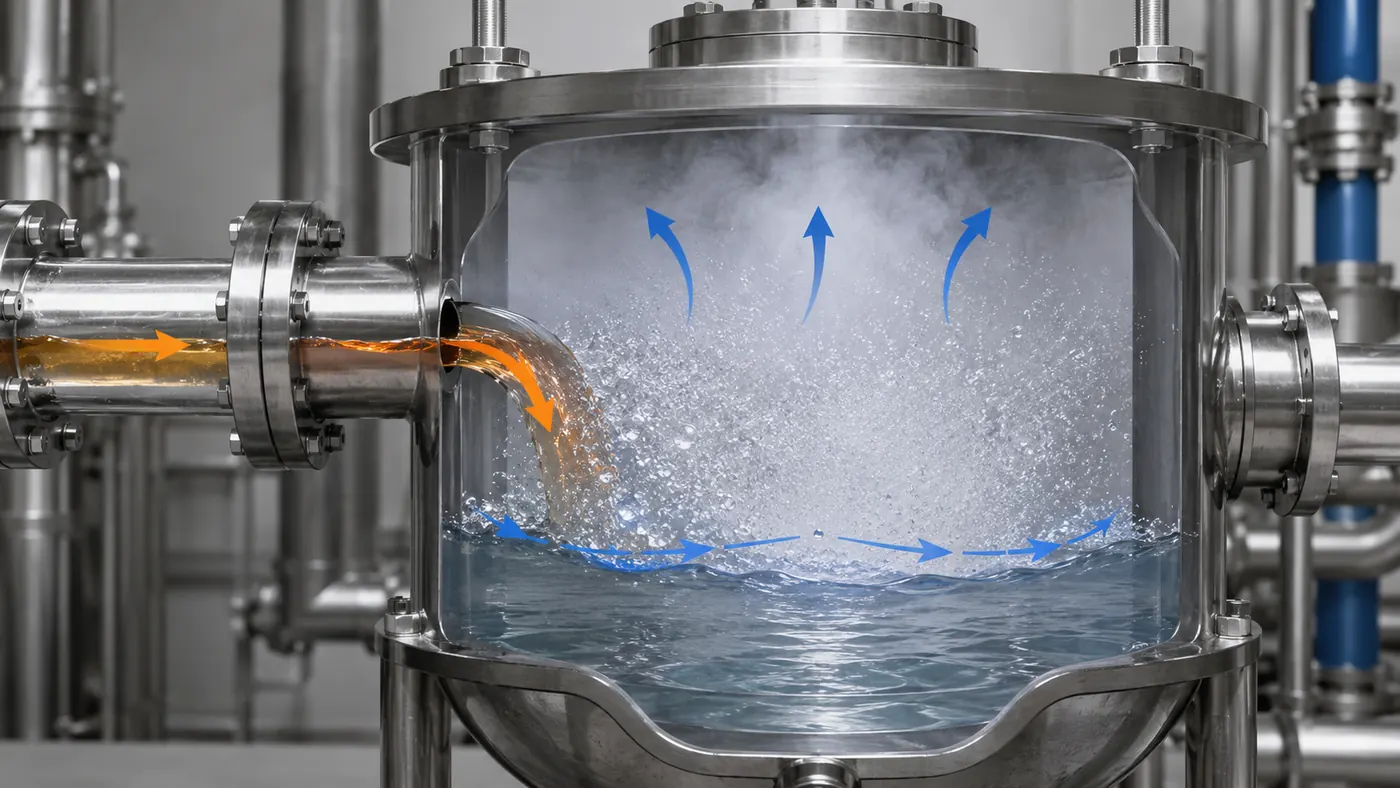
Flash evaporation is rapid boiling that occurs when a liquid suddenly enters a region where pressure is below the liquid’s saturation pressure at its current temperature. Part of the liquid changes to vapor without added heat, using energy taken from the remaining liquid. A useful relation is P < P_sat(T).
In real equipment, the pressure drop can happen through a valve, nozzle, vacuum chamber, or low-pressure separator. The vapor fraction depends on temperature, pressure, latent heat, and fluid composition. Used in devices include vacuum flash tanks, desalination units, refrigeration systems, and open-cycle ocean thermal generators.
The concept matters because it converts stored thermal energy into vapor flow that can drive separation, cooling, or mechanical work. In low-temperature thermal power systems, flash evaporation can produce low-pressure steam from warm water. Engineers must size chambers and turbines for large vapor volumes while controlling scaling, droplets, and noncondensable gases.
Designers estimate flashing with pressure-temperature charts, enthalpy balances, and measured vapor quality. The operating window must prevent damaging two-phase surges while allowing enough vapor generation for the separator, condenser, or turbine stage to function efficiently.
Example:
Warm seawater entering a vacuum chamber can partly flash into vapor that later condenses as distilled fresh water.
Related Terms:
NoSuchDevice is a free archive of machines that do not exist yet but already have a shadow in physics. I research and write every entry alone, with no ads. Take a look around the archive, or help keep it free.