




What Is Hydrometallurgy?
Hydrometallurgy is the extraction, separation, and recovery of metals using aqueous chemical solutions rather than high-temperature smelting alone. The approach typically combines leaching, purification, and metal recovery steps so valuable elements move through controlled liquid-phase reactions. Process yield is often summarized as eta = m_rec / m_feed, relating recovered metal mass to the amount originally present in the feed material.
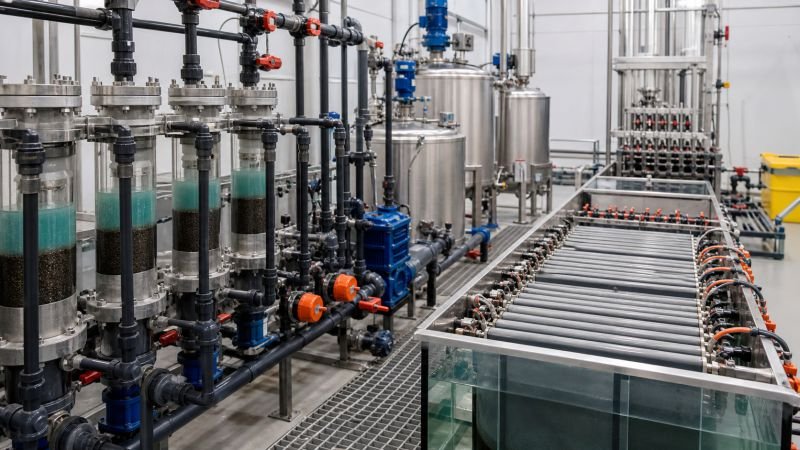
In working plants, acids, bases, oxidants, and complexing agents are chosen to dissolve one metal more readily than another, after which solvent extraction, ion exchange, precipitation, or electrowinning refine the solution. Selectivity depends on pH, redox potential, temperature, and impurity chemistry as much as on the ore or scrap itself. In aqueous metals recovery, hydrometallurgy remains a major route for extracting copper, gold, nickel, lithium, and cobalt from difficult mixed materials.
The field matters because it can recover metals from low-grade ores, complex wastes, and battery streams with lower furnace demand than purely pyrometallurgical routes. Used in devices include heap-leach circuits, solvent extraction trains, electrowinning cells, and battery recycling lines. Engineers value hydrometallurgy for tunable chemistry and high selectivity, while managing reagent cost, corrosion, water treatment, and the handling of residual solution wastes.
Example:
A battery recycler can leach dissolved nickel and cobalt from shredded cathode material before separating them into different product streams.
Related Terms:
- Leaching
- Solvent Extraction
- Electrowinning
NoSuchDevice is a free archive of machines that do not exist yet but already have a shadow in physics. I research and write every entry alone, with no ads. Take a look around the archive, or help keep it free.