



What Is Joule heating?
Joule heating is the conversion of electrical energy into heat when current passes through a material with resistance. Moving charge carriers scatter from atoms, defects, and lattice vibrations, transferring ordered electrical energy into random thermal motion. The basic relation is P = I^2 R, where power loss rises with the square of current.
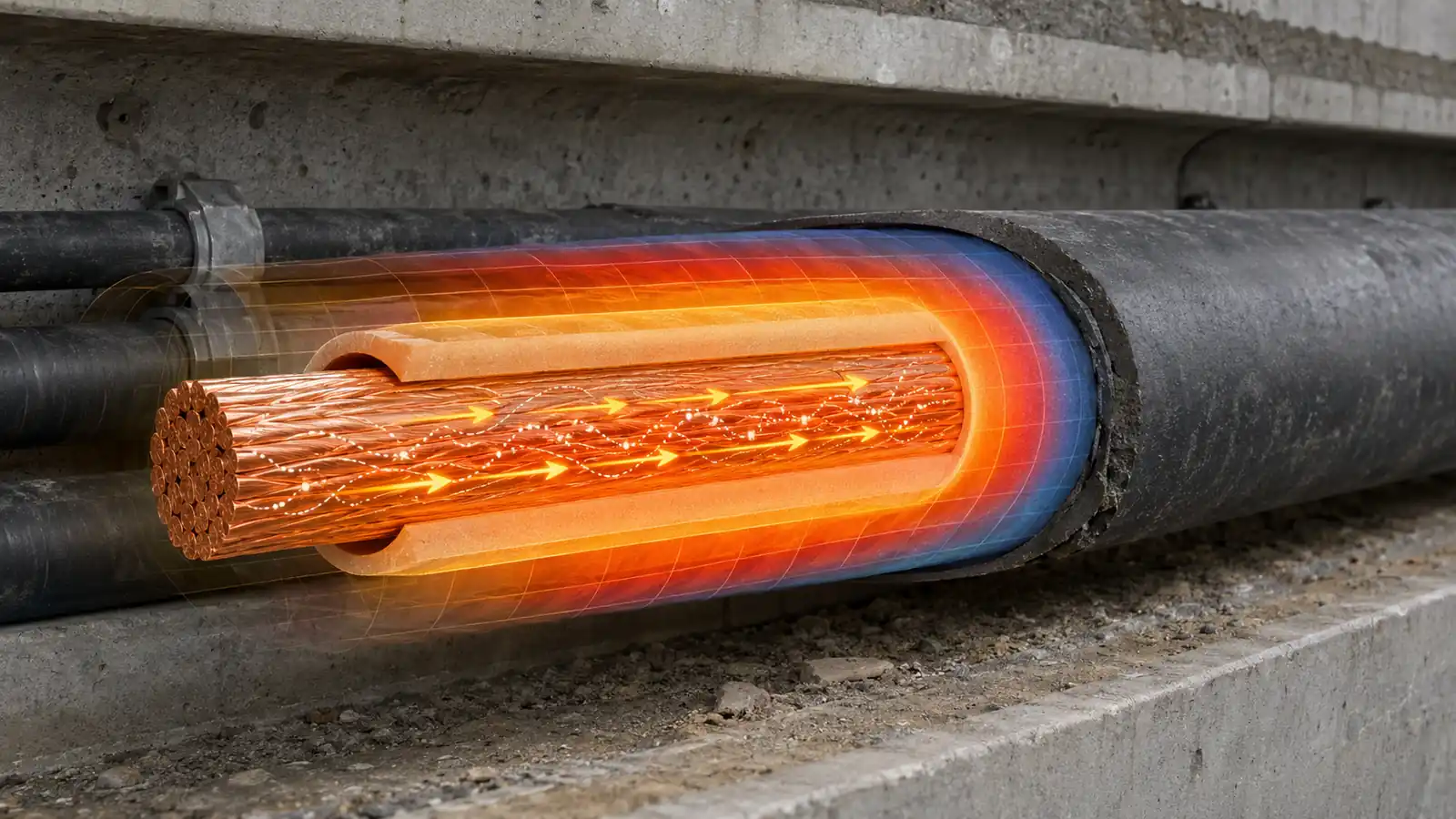
In real systems, Joule heating appears in wires, resistors, motors, transformers, semiconductor traces, battery tabs, and contacts. It can be useful when heat is the goal, but it is waste in most power delivery equipment. In urban power distribution, long cable runs and high currents turn resistance into measurable thermal loss.
The concept matters because it sets efficiency limits, cooling requirements, fire margins, and material choices across electrical engineering. Used in devices include electric heaters, fuses, incandescent lamps, printed circuit boards, power converters, and transmission cables. Engineers reduce unwanted Joule heating by lowering resistance, raising voltage to reduce current, widening conductors, improving contacts, or adding thermal paths that keep components within their rated temperature range. These losses also scale through connectors, splices, and enclosure airflow during long service life.
Example:
A distribution cable carrying high current warms because carrier scattering inside the metal converts part of the electrical power into heat.
Related Terms:
- Electrical Resistance
- Power Dissipation
- Thermal Management
NoSuchDevice is a free archive of machines that do not exist yet but already have a shadow in physics. I research and write every entry alone, with no ads. Take a look around the archive, or help keep it free.