






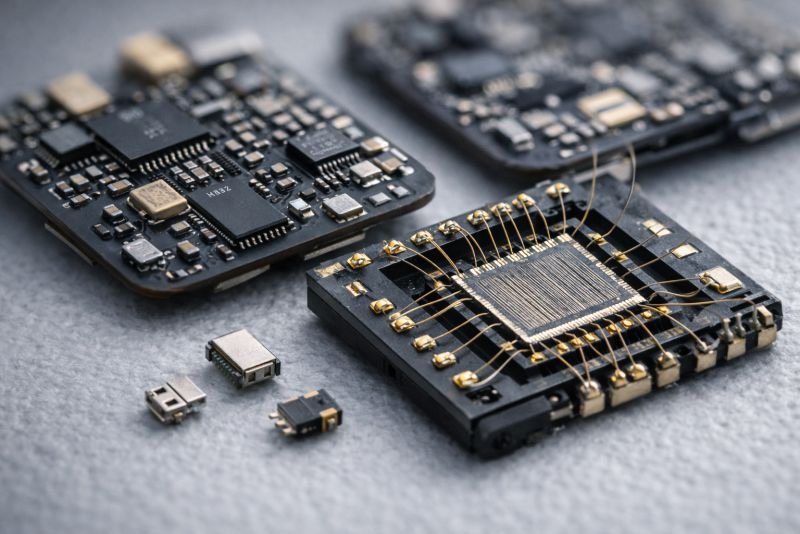
What Is Neuromorphic Computing?
Neuromorphic computing is a computing approach that models parts of information processing on the way biological neurons and synapses exchange short electrical spikes. Instead of moving all data through a clocked pipeline at fixed intervals, it reacts to events only when signals change, which reduces switching activity, memory traffic, and wasted power.
In wearable audio processing, this allows a chip to classify sound, detect speech features, or manage sensor fusion without keeping every circuit active continuously. Event-driven operation is especially useful when the device must share a tiny energy budget with harvesters and a Solid-State Battery inside a highly constrained enclosure.
A compact way to express its power model is P_avg = E_spike x r, where average power depends on the energy used per spike event and the spike rate. Why it matters is straightforward: if useful computation happens with fewer switching events, wearable systems can process sound locally while producing less heat and demanding far less stored energy.
Used in devices include hearing aids, edge vision sensors, and autonomous robots. Engineers choose neuromorphic hardware when sparse real-world signals, low latency, and long operating life matter more than peak throughput on large batches of data.
Example:
A future earbud could wake a spiking audio processor only when incoming sound crosses a learned threshold for speech or a warning tone.
Related Concepts:
- Spiking Neural Network
- Event-Driven Processing
- Synaptic Plasticity
NoSuchDevice is a free archive of machines that do not exist yet but already have a shadow in physics. I research and write every entry alone, with no ads. Take a look around the archive, or help keep it free.