





What Is Photosynthetically active radiation?
Photosynthetically active radiation is the portion of light, roughly 400 to 700 nanometers, that photosynthetic organisms use most effectively to drive photochemistry. Within this band, pigment molecules absorb photons and convert their energy into charge separation and biochemical work. A common lighting metric is PPFD = photons / m^2 s across the PAR range.
In natural and engineered environments, both amount and spectral balance matter because blue and red photons affect leaf development, canopy penetration, and photosynthetic rate differently. This is why spectral management for agrivoltaics, greenhouse glazing, and grow-light design often treat usable plant light separately from total solar or electrical power.
The concept matters because measuring only watts or lux can miss how efficiently light supports plant growth. Used in devices include quantum sensors, horticultural LEDs, climate-control systems, imaging instruments, and crop-monitoring platforms that optimize illumination for yield, morphology, and energy use.
PAR is usually measured as photon flux rather than radiant heat because photosynthesis depends on photon count in the usable band. Engineers therefore compare PPFD, daily light integral, and spectral distribution when sizing lamps, evaluating shading materials, or balancing crop growth against thermal loading.
Example:
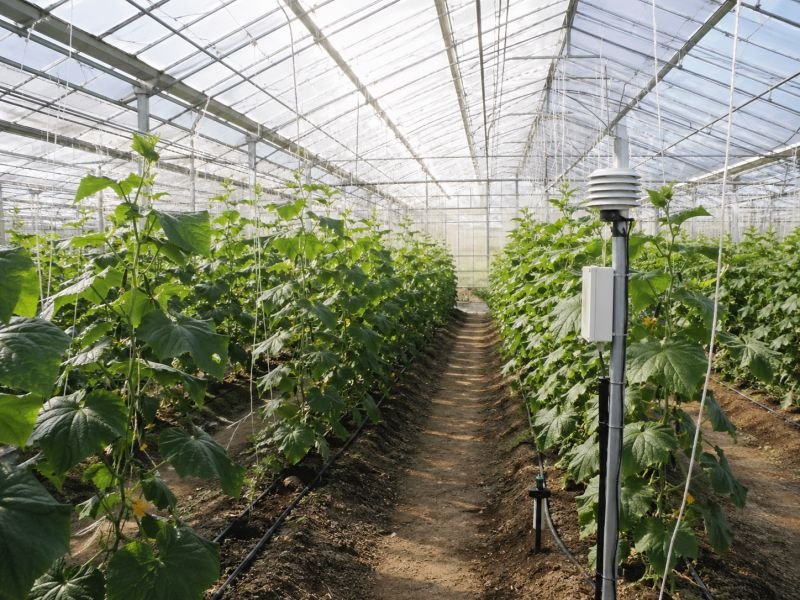
In a greenhouse, a roof material may transmit most photosynthetically active radiation to lettuce while diverting warmer wavelengths to reduce interior heat gain.
Related Terms:
- Near-Infrared
- Chlorophyll
- Photon Flux Density
NoSuchDevice is a free archive of machines that do not exist yet but already have a shadow in physics. I research and write every entry alone, with no ads. Take a look around the archive, or help keep it free.