






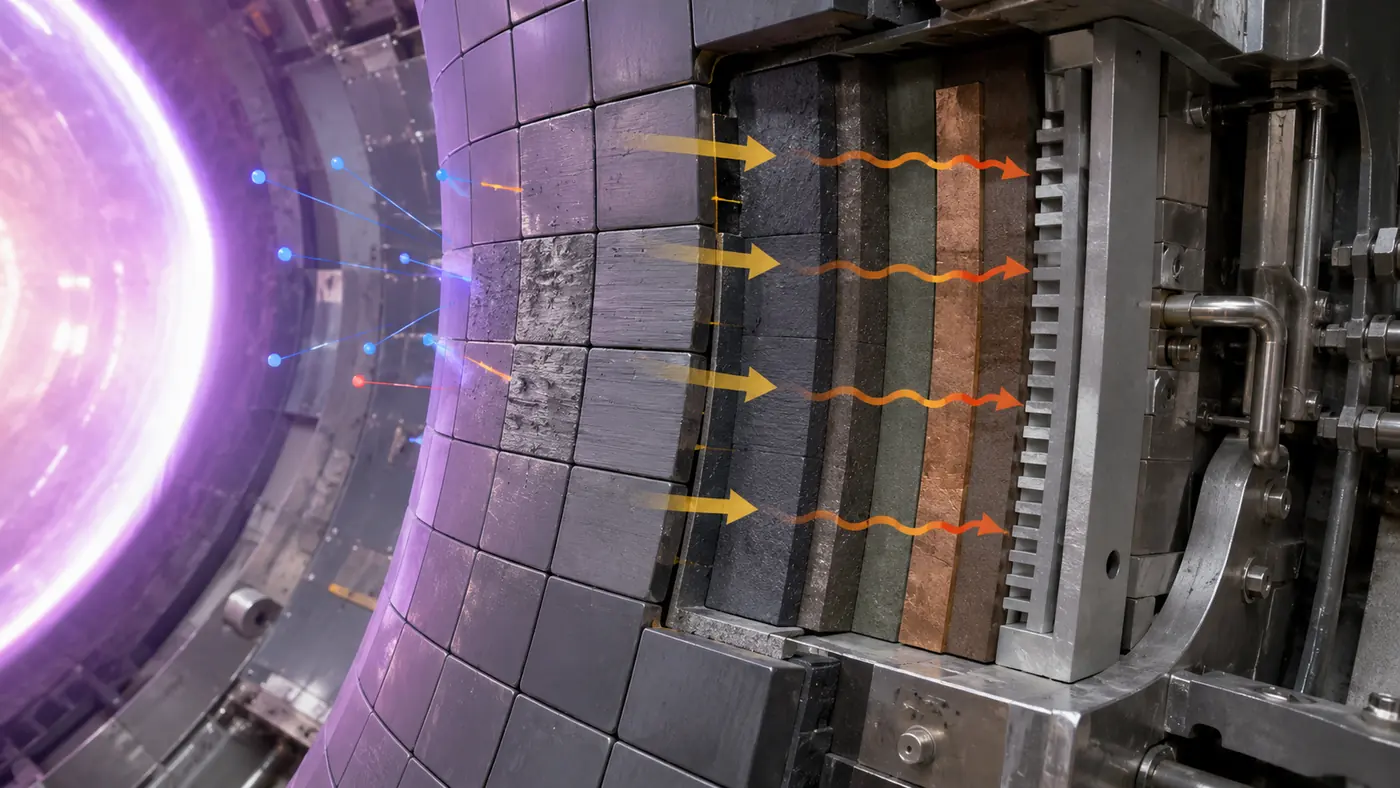
What Is plasma-facing materials?
Plasma-facing materials are the solids placed closest to a hot plasma in a fusion device, electric thruster, plasma cutter, or industrial plasma reactor. Their job is to survive heat flux, particle bombardment, erosion, and radiation while adding as little contamination as possible. A simple thermal relation is q = P/A, where heat flux rises as deposited power is concentrated onto a smaller surface area. The material must tolerate that load without melting, cracking, or sputtering excessively.
In real systems, performance depends on melting point, thermal conductivity, activation behavior, surface roughness, and how the material changes after repeated plasma exposure. Tungsten, carbon composites, beryllium, and liquid-metal surfaces have all been studied for different plasma environments. In fusion reactor materials science, plasma-facing surfaces shape both device lifetime and plasma cleanliness.
The concept matters because even a well-confined plasma sends particles and radiation toward nearby walls. If those walls erode or release impurities, they can cool the plasma and shorten component life.
Used in devices include tokamak divertors, stellarator first walls, Hall-effect thrusters, plasma etchers, and compact fusion cells exposed to intense boundary-layer particles.
Example:
A tungsten divertor tile can absorb intense edge-plasma heat while limiting impurity release into a fusion chamber.
Related Terms:
NoSuchDevice is a free archive of machines that do not exist yet but already have a shadow in physics. I research and write every entry alone, with no ads. Take a look around the archive, or help keep it free.