





What Is Plasma Confinement?
Plasma confinement is the control of an ionized gas so its charged particles remain hot, dense, and ordered long enough for useful physical processes to occur. In fusion science, the principle is to reduce particle and energy losses faster than collisions, radiation, and turbulence remove heat. A common relation is n T tau_E > C, where density, temperature, and energy confinement time must jointly exceed a reaction-dependent threshold.
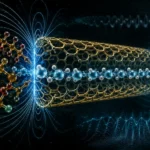
Real confinement systems use magnetic fields, rapid compression, or geometric boundaries to slow plasma expansion. Magnetic devices guide charged particles along field lines, while inertial schemes compress a fuel pellet so quickly that fusion begins before the material flies apart. In compact fusion energy systems, confinement quality determines whether a smaller machine can keep enough heat in the plasma volume.
The concept matters because confinement sets the scale, power balance, and achievable duty cycle of plasma devices. Used in devices include tokamaks, stellarators, mirror machines, plasma thrusters, and laser-driven pellet chambers. Better confinement reduces heating power, protects surrounding structures from excessive particle flux, and allows engineers to compare very different plasma architectures using the same physical yardstick.
Example:
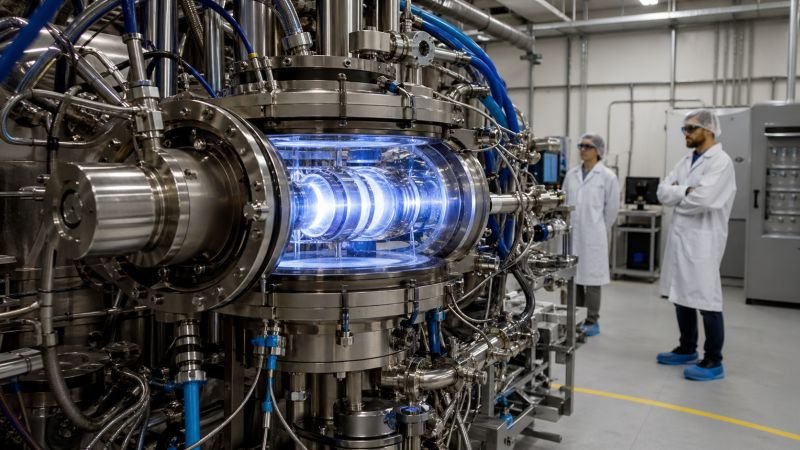
A stellarator uses shaped external magnets to hold hot plasma away from the vessel wall while fusion reactions release energy.
Related Terms:
NoSuchDevice is a free archive of machines that do not exist yet but already have a shadow in physics. I research and write every entry alone, with no ads. Take a look around the archive, or help keep it free.