





What Is Power Conversion Efficiency?
Power conversion efficiency is the fraction of incoming light power that a solar cell turns into electrical output at its maximum power point. It condenses the combined effects of absorption, charge separation, transport, and resistive losses into one number, making it the standard headline metric for photovoltaic performance.
In organic solar-cell performance analysis, the value depends on how much current the device generates, how much voltage it holds, and how square its current-voltage curve remains under load. A well-matched Non-Fullerene Acceptor can improve more than one of these terms at the same time.
The standard formula is PCE = (Jsc x Voc x FF) / Pin, where current density, open-circuit voltage, fill factor, and incident light power determine the final percentage. Why it matters is that the metric reveals whether material and device changes produce real electrical gains rather than isolated improvements in a single parameter.
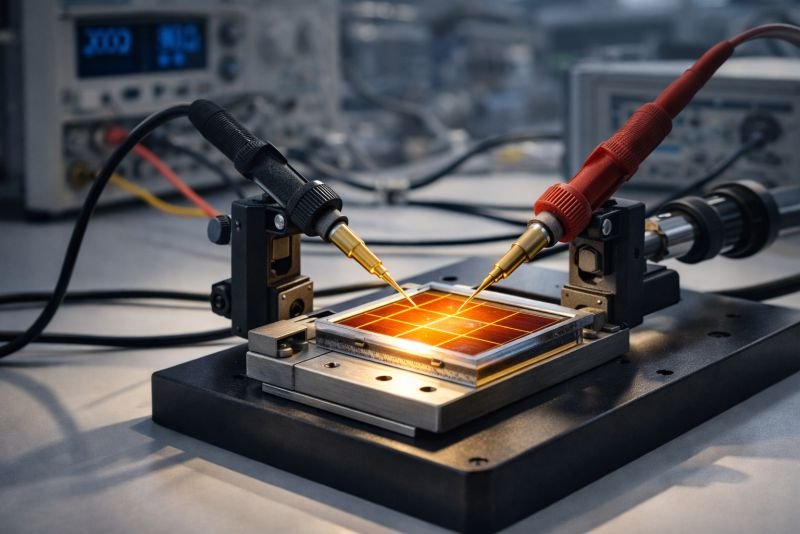
Used in devices include solar modules, solar windows, and portable charging films. Engineers measure it under controlled AM1.5 illumination because temperature, spectral mismatch, and cell area definitions can otherwise make two reported efficiencies look comparable when they are not.
Example:
An organic cell with higher current but a lower fill factor can still end up with poorer power conversion efficiency than a better-balanced design.
Related Concepts:
- Fill Factor
- Open-Circuit Voltage
- Short-Circuit Current Density
NoSuchDevice is a free archive of machines that do not exist yet but already have a shadow in physics. I research and write every entry alone, with no ads. Take a look around the archive, or help keep it free.