






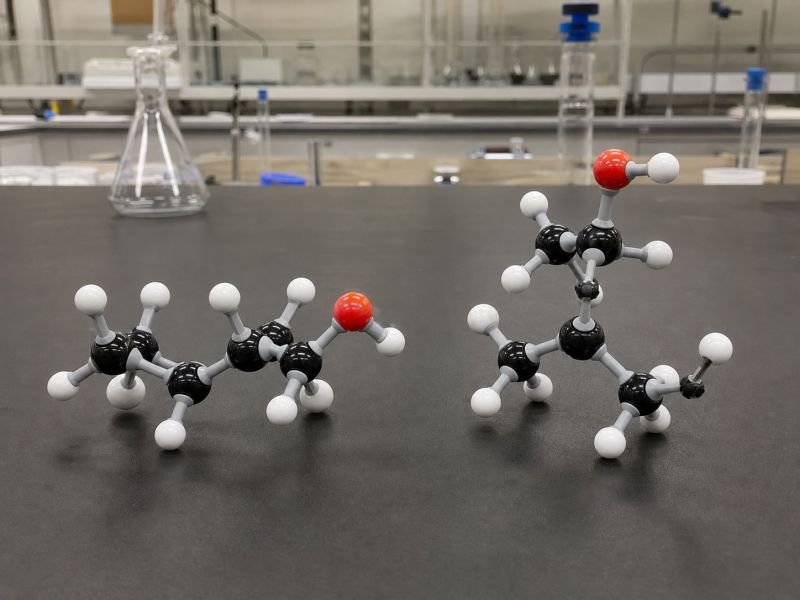
What Is Structural isomer?
A structural isomer is one of two or more compounds that share the same molecular formula but differ in how their atoms are connected. The change is not in composition but in bonding pattern, which alters the local chemical environment and often the bulk properties of the substance. For example, C4H10 can describe both n-butane and isobutane, showing that identical atom counts do not guarantee identical structures.
In real systems, structural isomers can have different boiling points, reaction pathways, densities, and biological behavior because branching, ring formation, or functional group placement changes how the molecule interacts with its surroundings. Analytical methods such as spectroscopy and chromatography are often needed to tell them apart reliably. In atomically specified materials synthesis, the distinction matters because one misplaced connection can produce a valid compound with the wrong function.
The concept matters across pharmaceuticals, petrochemicals, polymer precursors, and materials design, where connectivity can change performance without changing formula. Used in devices include gas chromatographs, reaction design software, pharmaceutical synthesis platforms, and molecular databases. Chemists track structural isomers to control selectivity, verify product identity, and avoid assuming that composition alone predicts the behavior of a finished material or active ingredient.
Example:
A refinery stream may contain hydrocarbon isomers with the same formula but different boiling behavior, requiring separate process control.
Related Terms:
- Bond Energy
- Functional Group
- Stereoisomer
NoSuchDevice is a free archive of machines that do not exist yet but already have a shadow in physics. I research and write every entry alone, with no ads. Take a look around the archive, or help keep it free.