





What Is Thermotropic liquid crystals?
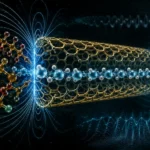
Thermotropic liquid crystals are materials whose molecular ordering and optical behavior change mainly with temperature. As they cross a phase-transition range, alignment, birefringence, color, or transparency can shift sharply without mechanical actuation. A practical threshold is T_c, the characteristic temperature around which the phase response changes most strongly.
In real coatings and films, heating can move a material between ordered and less ordered states, altering reflection, transmission, or scattering. That behavior makes thermotropic materials useful in passive thermal control surfaces, smart glazing, temperature indicators, and optical filters that respond directly to operating conditions rather than a powered controller.
The concept matters because temperature-responsive optics can regulate light or provide sensing with very low system complexity. Used in devices include fever strips, battery indicators, solar-control windows, adaptive packaging, and passive infrared-management layers that reduce overheating in enclosed or sunlit systems.
Engineers select thermotropic mixtures by transition temperature, hysteresis width, switching contrast, and durability over repeated heating cycles. Practical design also accounts for ultraviolet exposure, sealing, and substrate compatibility, since unwanted drift in T_c or loss of alignment can change performance long before the material visibly fails.
Example:
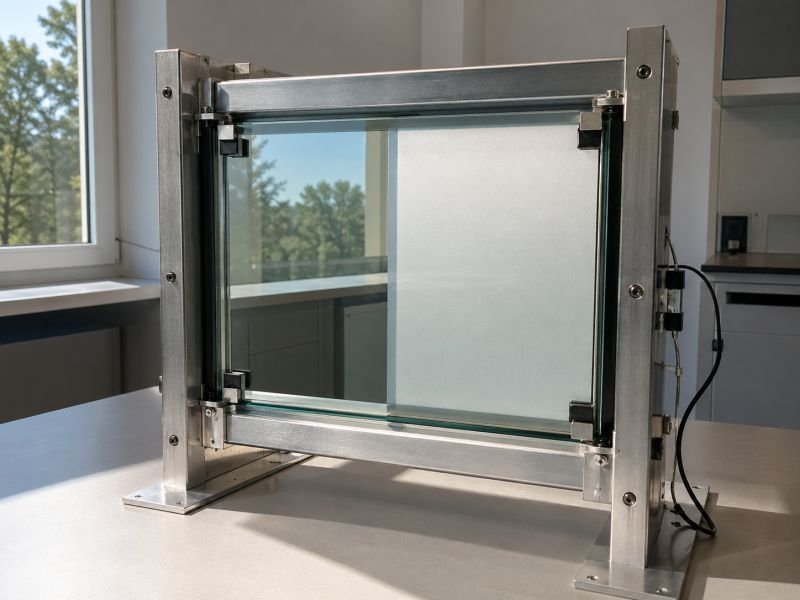
A glazing panel can use a thermotropic liquid crystal layer to become more scattering at higher temperature, limiting solar gain without motors or blinds.
Related Terms:
- Cholesteric Liquid Crystal
- Near-Infrared
- Phase Transition
NoSuchDevice is a free archive of machines that do not exist yet but already have a shadow in physics. I research and write every entry alone, with no ads. Take a look around the archive, or help keep it free.