




What Is Type-II superconductor?
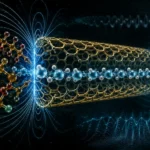
Type-II superconductor is a superconducting material that allows magnetic flux to penetrate in quantized vortices over an intermediate field range instead of expelling it completely. Its defining regime is Hc1 < H < Hc2, where superconductivity and magnetic flux coexist. This behavior arises because the material can lower its free energy by forming many tiny flux lines rather than maintaining a perfectly field-free interior.
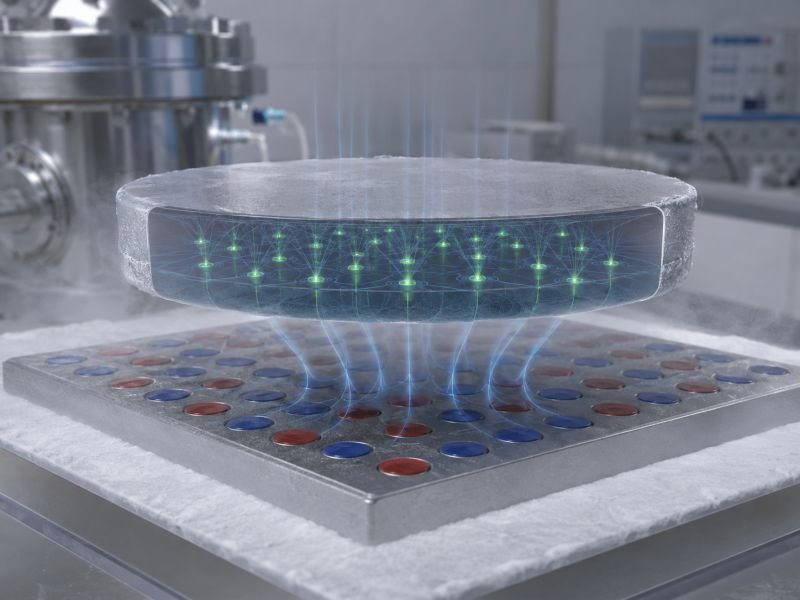
In real materials, defects and grain boundaries can pin those vortices in place, helping the superconductor carry large currents without dissipative vortex motion. That makes the class useful in superconducting transport systems and other high-field applications. Used in devices include MRI magnets, fusion coils, high-field laboratory magnets, and levitation assemblies that rely on strong flux pinning against patterned magnetic surfaces.
The concept matters because most practical superconductors used outside low-field laboratory demonstrations belong to this category. Understanding the mixed state, vortex pinning, and critical-field limits determines whether a material can operate under strong magnetic loading, mechanical vibration, and large transport current reliably. Those constraints shape the design of power equipment, research magnets, and cryogenic electromechanical systems.
Example:
A cooled superconducting puck can remain locked above a magnet array because pinned vortices resist displacement in several directions at once.
Related Terms:
- REBCO
- High-Temperature Superconductor
- Flux Pinning
NoSuchDevice is a free archive of machines that do not exist yet but already have a shadow in physics. I research and write every entry alone, with no ads. Take a look around the archive, or help keep it free.