



What Is wave dispersion?
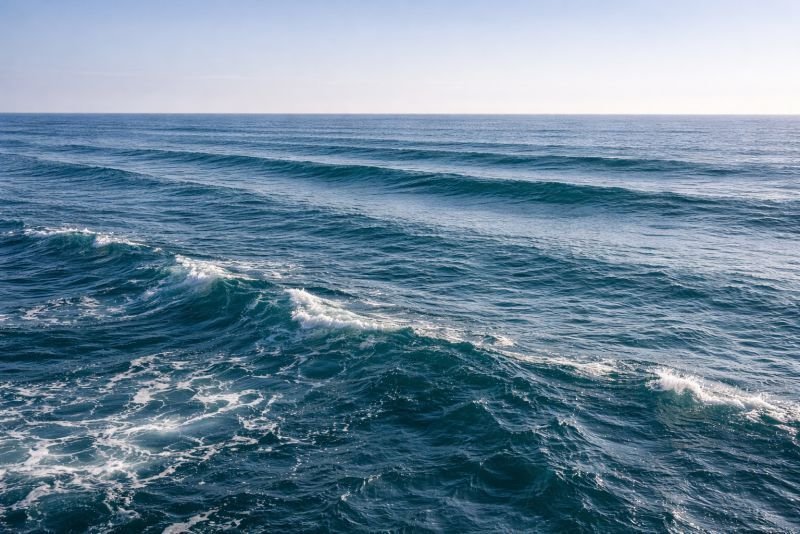
Wave dispersion is the tendency of ocean waves with different periods to travel at different speeds. For deep-water gravity waves, the phase speed is c = gT / 2 pi, so longer-period waves move faster than shorter-period waves. A storm therefore generates a mixed wave field that gradually sorts itself during propagation, with long swell arriving first and shorter components following later.
In practice, dispersion reshapes the spectrum between an offshore storm and a coastal site. A distant sea can look orderly because fast long-period components have separated from the original chaos. It also changes how wave groups bunch together and how coastal observers interpret approaching sea states. Because those components often carry larger Energy Flux, a converter may receive useful power before the surface appears especially rough.
The concept matters because forecast timing, resonant tuning, and grid planning all depend on when each wave band reaches a device. In ocean swell forecasting, dispersion lets operators estimate arrival windows and judge whether a converter’s preferred period will line up with the incoming resource at a given site. That makes it central to control strategy as well as resource assessment.
Example:
After a distant storm, long smooth swell can reach a shoreline hours before shorter, choppier waves from the same event.
Related Concepts:
- Group Velocity
- Wavelength
- Spectral Period
NoSuchDevice is a free archive of machines that do not exist yet but already have a shadow in physics. I research and write every entry alone, with no ads. Take a look around the archive, or help keep it free.