



What Is Backscatter Coefficient?
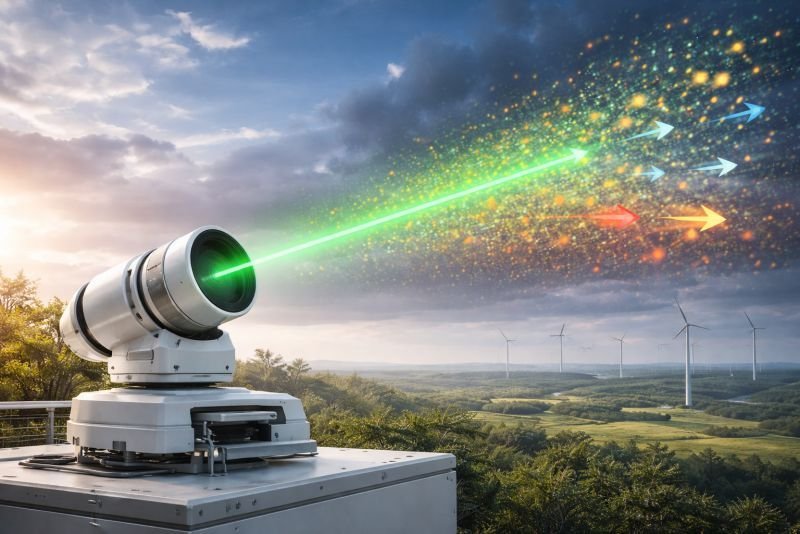
Backscatter coefficient is a physical quantity that describes how strongly a medium scatters incoming electromagnetic radiation back toward the source. In atmospheric sensing, it represents the fraction of transmitted light or radio waves that is reflected backward by particles such as dust, aerosols, water droplets, or ice crystals suspended in the air.
The value of the backscatter coefficient depends on particle size, concentration, and wavelength of the transmitted signal. Remote sensing instruments such as lidar and radar use this property to estimate the density and distribution of atmospheric particles in Doppler lidar wind measurement systems, where the strength of the returning signal determines whether wind velocity can be measured reliably.
Because the coefficient links particle scattering with measurable signal intensity, it serves as a key parameter in atmospheric physics, environmental monitoring, and many forms of optical and radar-based remote sensing.
Example:
A lidar instrument detects higher backscatter coefficient values when a dense aerosol layer passes through the measurement beam.
Related Concepts:
- Nyquist Velocity Limit
- Lidar Remote Sensing
- Aerosol Scattering
NoSuchDevice is a free archive of machines that do not exist yet but already have a shadow in physics. I research and write every entry alone, with no ads. Take a look around the archive, or help keep it free.