






What Is Band Gap?
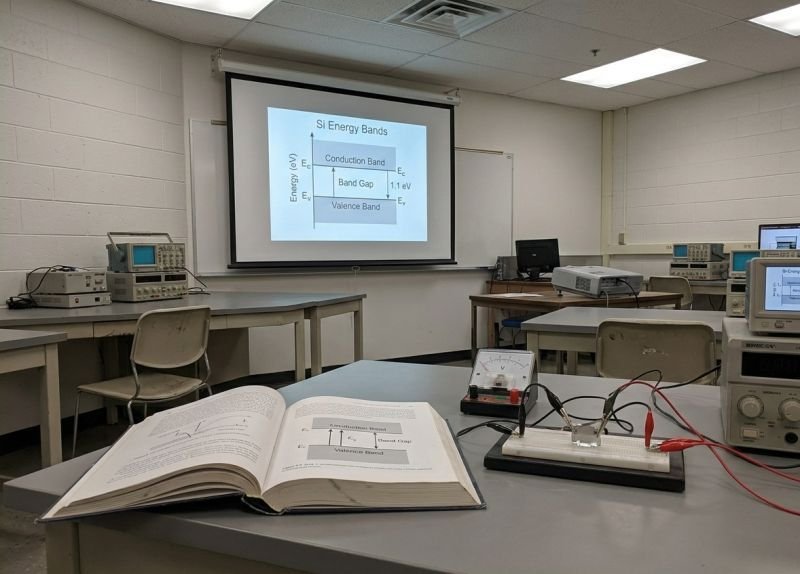
A band gap is the energy difference between two electron energy regions in a solid material: the valence band, where electrons normally reside, and the conduction band, where electrons can move freely and carry electrical current. Electrons must gain at least this amount of energy to move from the valence band into the conduction band. Materials with a very large band gap behave as insulators, while materials with no gap allow electrons to flow easily as conductors. Semiconductors occupy the middle ground, where the band gap is small enough that external energy can excite electrons across it.
In semiconductor physics, the band gap determines how a material responds to light, heat, or electrical fields. Photons whose energy matches or exceeds the band gap can excite electrons into the conduction band, creating mobile charge carriers that participate in electrical processes. In many semiconductor devices such as those used in photovoltaic semiconductor energy conversion systems, the band gap controls which wavelengths of light can generate electron movement and therefore electrical power.
The concept arises from quantum mechanics and the collective behavior of electrons inside crystalline solids. According to the semiconductor explanation shown in the photovoltaic effect discussion on page 2 of the referenced material, silicon has a band gap of about 1.1 electron volts, meaning photons with at least that energy can lift electrons across the gap and produce electron-hole pairs that enable electrical current. The Photovoltaic Effect Explain…
Example:
Engineers select semiconductor materials with a specific band gap so that their electronic devices respond to particular wavelengths of light or electrical conditions.
Related Concepts:
- Valence Band
- Conduction Band
- Electron-Hole Pair
NoSuchDevice is a free archive of machines that do not exist yet but already have a shadow in physics. I research and write every entry alone, with no ads. Take a look around the archive, or help keep it free.