





What Is Dielectric Constant?
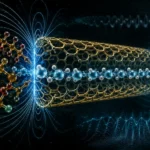
Dielectric constant is a measure of how strongly a material polarizes in response to an electric field compared with vacuum. In semiconductors, a higher dielectric constant screens electrostatic attraction more effectively, reducing the force between opposite charges and changing how easily electrons and holes can separate.
In organic semiconductor electrostatics, the dielectric constant is typically much lower than in silicon, so Coulomb attraction remains strong after light absorption. That is why an Exciton in an organic solar cell stays bound unless it reaches a donor-acceptor interface with enough energy offset to split it.
A familiar capacitance relation is C = epsilon_r x epsilon_0 x A / d, showing how relative permittivity epsilon_r enters electric-field response. Why it matters is that modest changes in dielectric constant can alter exciton binding energy, charge separation efficiency, and the voltage losses designers must accept in organic photovoltaics.
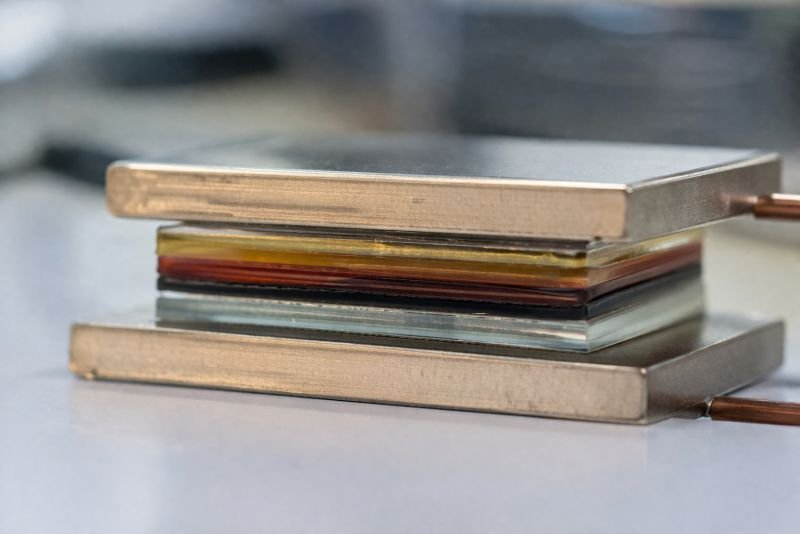
Used in devices include organic solar cells, capacitors, and thin-film transistors. Engineers tailor it through molecular design, polar side groups, and blend composition because electrostatic screening influences both optical excitation behavior and charge transport across the active layer.
Example:
An organic absorber with a slightly higher dielectric constant can reduce exciton binding enough to improve charge separation at the donor-acceptor junction.
Related Concepts:
- Exciton
- Coulomb Attraction
- Permittivity
NoSuchDevice is a free archive of machines that do not exist yet but already have a shadow in physics. I research and write every entry alone, with no ads. Take a look around the archive, or help keep it free.