

What Is Electrochemical Gradient?
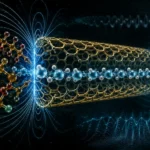
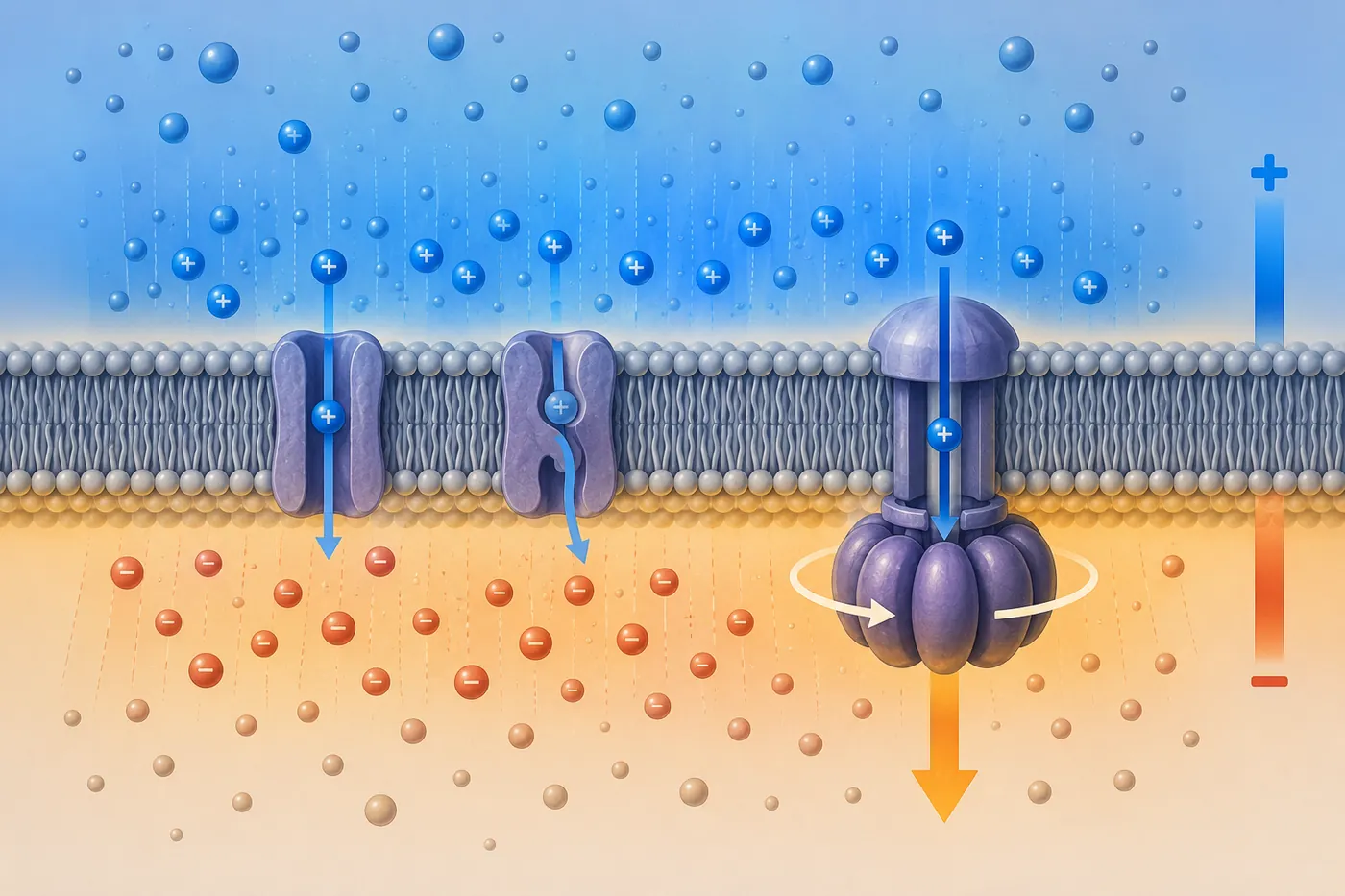
Electrochemical gradient is stored energy created when ions differ in both concentration and electric potential across a membrane. It combines chemical diffusion pressure with voltage, so charged particles move according to both forces. A common expression is Delta mu = RT ln(c_out/c_in) + zF Delta psi, where z is ion charge and Delta psi is membrane potential.
In real systems, membranes maintain these gradients by selective channels, pumps, and electron-transfer chains. Protons, sodium ions, potassium ions, and calcium ions can each form gradients that drive transport, signaling, or chemical synthesis. The same principle supports bioelectrochemical soil systems where microbial metabolism, nutrient movement, and redox chemistry interact. Used in devices include ion-selective electrodes, microbial fuel cells, bioelectrochemical reactors, membrane transport assays, and ATP synthase test platforms.
The concept matters because cells and engineered membranes convert electrochemical stored energy into work. Gradients power ATP production, nerve impulses, solute uptake, pH control, and many forms of microbial respiration. In engineering, they help explain batteries, desalination membranes, sensors, and bioreactors that depend on controlled ion movement.
Measurement usually combines voltage readings with concentration data, because either part alone misses the full driving force on the ion.
Example:
Mitochondria use a proton electrochemical gradient across the inner membrane to drive ATP synthase.
Related Terms:
NoSuchDevice is a free archive of machines that do not exist yet but already have a shadow in physics. I research and write every entry alone, with no ads. Take a look around the archive, or help keep it free.