





What Is Nitrogenase?
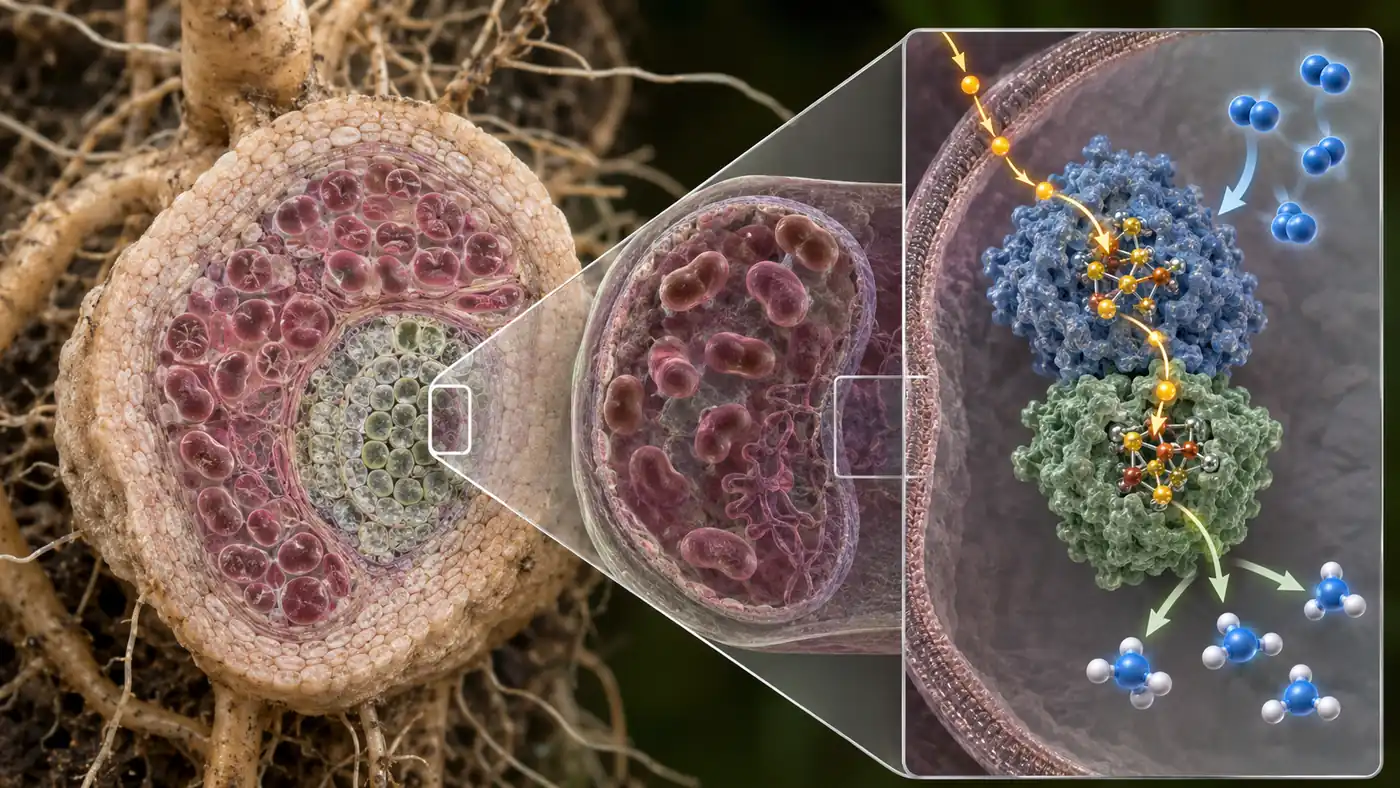
Nitrogenase is an enzyme complex that converts atmospheric nitrogen gas into ammonia during biological nitrogen fixation. The reaction is difficult because N2 has a strong triple bond, so the enzyme uses metal-sulfur clusters, electron transfer, and ATP hydrolysis to reduce it. A simplified overall reaction is N2 + 8H+ + 8e- + 16 ATP -> 2NH3 + H2 + 16 ADP + 16 Pi.
In real organisms, nitrogenase operates inside specialized microbial systems that protect it from oxygen while supplying reducing power. Its activity depends on molybdenum, iron, or vanadium cofactors, protein conformational changes, and the flow of electrons from donor proteins. It is central to biological nitrogen fixation because it links microbial metabolism to plant-available nitrogen. Used in devices include bioreactors, microbial biosensors, root-zone monitoring platforms, isotopic assay systems, and engineered symbiosis research tools.
The concept matters because nitrogenase performs at mild temperature and pressure what industrial chemistry achieves with far harsher conditions. Understanding its mechanism helps biochemists improve crop nitrogen use, study microbial ecology, and design catalysts inspired by enzymes. It also defines a major natural pathway in the global nitrogen cycle.
Example:
Rhizobium bacteria in legume root nodules use nitrogenase to produce ammonia that supports plant growth.
Related Terms:
- Electrochemical Gradient
- Haber-Bosch Process
- Nitrogen Fixation
NoSuchDevice is a free archive of machines that do not exist yet but already have a shadow in physics. I research and write every entry alone, with no ads. Take a look around the archive, or help keep it free.