



What Is Electrowinning?
Electrowinning is an electrochemical process that recovers dissolved metal ions from solution by reducing them onto an electrode surface using direct current. It converts ionic species in an aqueous electrolyte into solid metal with controlled purity and morphology. A core relation is Faraday’s law, m = ItM / nF, linking deposited mass to current, time, molar mass, and charge number.
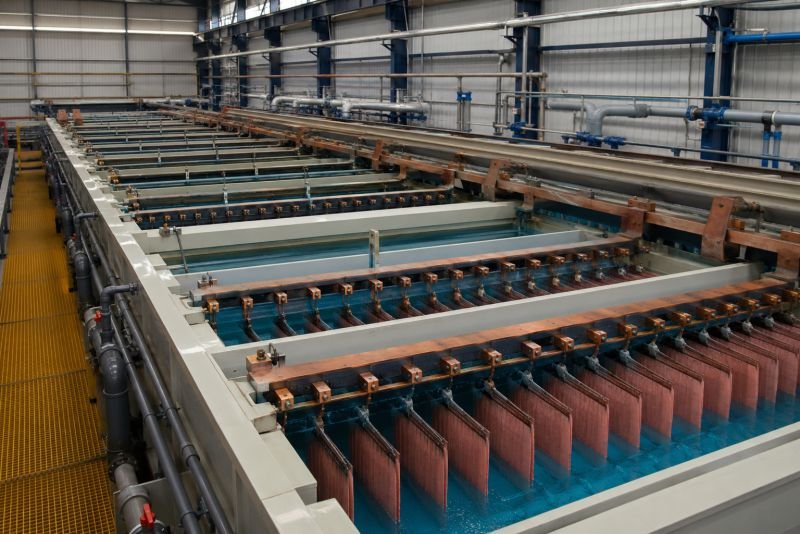
In real plants, performance depends on electrolyte composition, temperature, current density, electrode spacing, and mass transport near the cathode. Operators balance voltage, circulation, and impurity control to favor dense deposits instead of powdery or dendritic growth. Used in devices include copper recovery cells, battery metal refineries, plating test rigs, and process monitoring systems built around rectifiers and electrode arrays.
The method matters because it provides a selective route from dissolved species back to usable metal in hydrometallurgical metal recovery. That selectivity supports purification after leaching, reduces handling of mixed solids, and allows valuable metals to be separated from complex waste streams or low-grade ores.
Current efficiency, energy consumption per kilogram, and cathode stripping behavior are practical indicators of whether an electrowinning circuit is operating economically and producing material suitable for downstream use.
Example:
Copper ions dissolved during leaching can be plated onto stainless cathodes as solid metal in an electrowinning tankhouse.
Related Terms:
- Hydrometallurgy
- Solvent Extraction
- Cathode
NoSuchDevice is a free archive of machines that do not exist yet but already have a shadow in physics. I research and write every entry alone, with no ads. Take a look around the archive, or help keep it free.