





What Is Encapsulation Barrier Film?
An encapsulation barrier film is a protective coating or multilayer sheet designed to block oxygen, water vapor, and chemical contaminants from reaching a sensitive electronic or photovoltaic layer. It works by combining materials with very low permeability so the active device remains chemically stable while still receiving light, electrical contact, or mechanical support.
In electronic textile packaging, the barrier has to do more than seal a flat surface. It must survive bending, abrasion, sweat exposure, and repeated strain without developing cracks or pinholes, because one failure path can let moisture spread degradation far beyond the original defect.
A common performance relation is WVTR = Delta m / (A x t), where transmitted water mass is normalized by area and time. Why it matters is that flexible energy devices often fail not from poor electrical design but from slow environmental ingress that corrodes contacts, disrupts interfaces, and destroys photoactive chemistry.
Used in devices include OLED displays, flexible solar cells, and skin-mounted medical patches. Engineers balance optical transparency, adhesion, low-permeation performance, mechanical compliance, and process temperature because the best moisture barrier on paper is useless if it cracks during real operation.
Example:
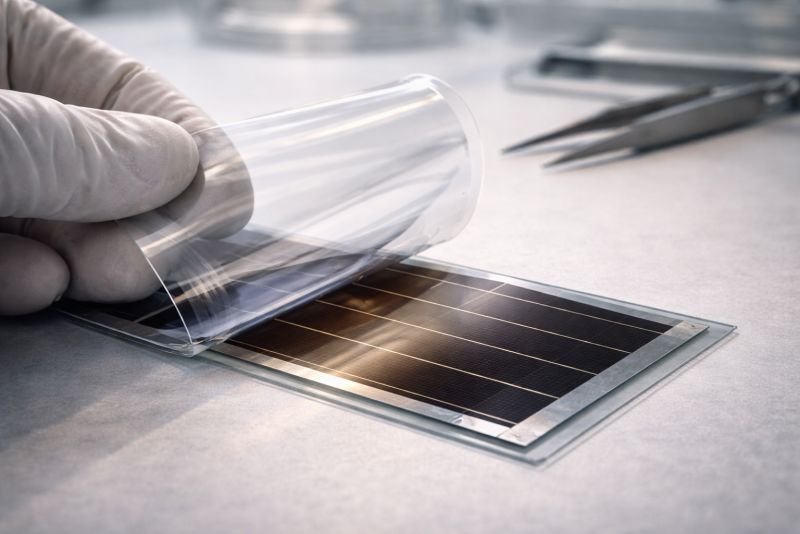
A flexible solar laminate can lose output rapidly if its barrier film develops microscopic cracks that admit water during outdoor use.
Related Terms:
- Water Vapor Transmission Rate (WVTR)
- Atomic Layer Deposition (ALD)
- CIGS (Copper Indium Gallium Selenide)
NoSuchDevice is a free archive of machines that do not exist yet but already have a shadow in physics. I research and write every entry alone, with no ads. Take a look around the archive, or help keep it free.