



What Is Gravitational field vector?
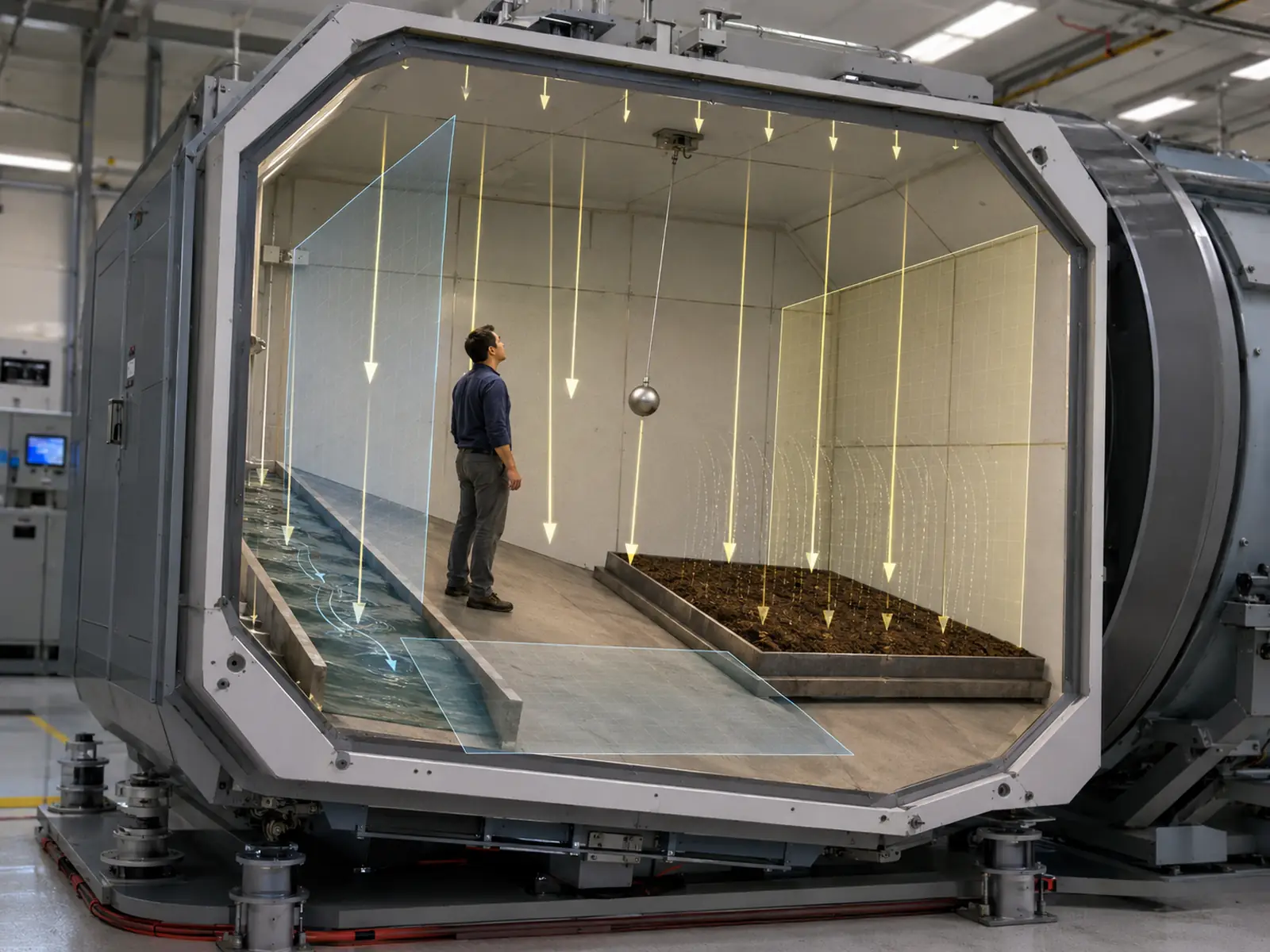
A gravitational field vector is the vector quantity that describes the direction and strength of gravity at a point in space. It tells how a small test mass would accelerate if placed there. The basic relation is g = F/m, where g is gravitational field strength, F is gravitational force, and m is test mass; near Earth’s surface, |g| is about 9.81 m s^-2.
In real systems, the vector can change with height, latitude, nearby mass, rotation, or artificial acceleration. Engineers often work with an effective gravity vector, which combines gravitational pull with inertial effects inside moving or rotating frames. In gravitational urban infrastructure, changing the effective vector determines which surface behaves as the floor.
The concept matters because it sets load direction, drainage behavior, plant orientation, human balance, projectile motion, and sensor response. Used in devices include accelerometers, gravimeters, inertial navigation units, satellite geodesy instruments, and proposed artificial-gravity habitats. A vector description is needed whenever magnitude alone is not enough, because changing direction can alter a system as strongly as changing field strength in structures, fluids, and organisms.
Example:
Inside a centrifuge, the effective gravitational field vector points outward from the rotation axis, so samples settle against the outer wall.
Related Terms:
NoSuchDevice is a free archive of machines that do not exist yet but already have a shadow in physics. I research and write every entry alone, with no ads. Take a look around the archive, or help keep it free.