


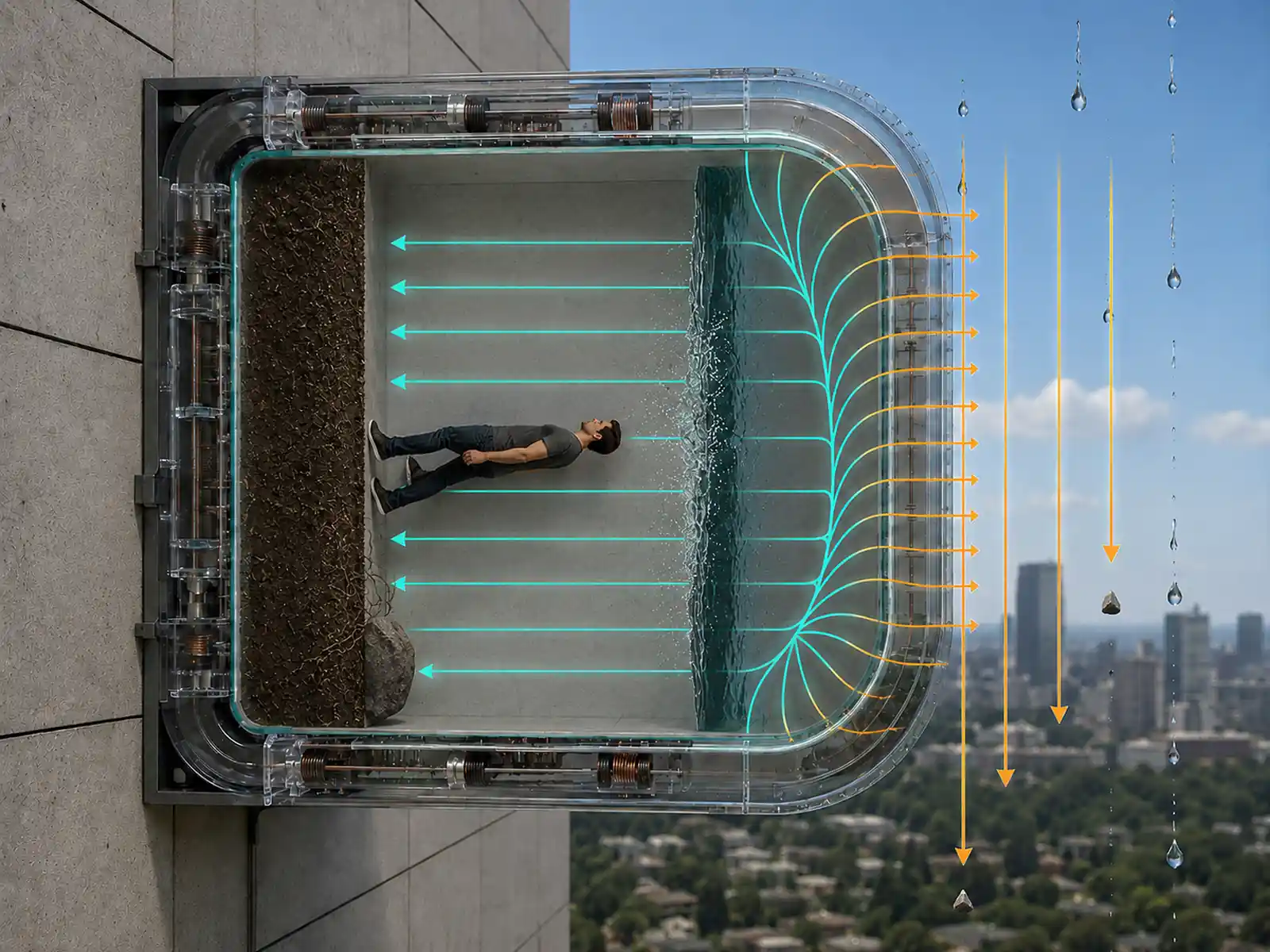
What Is Localized gravitational field modification?
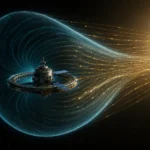
Localized gravitational field modification is the controlled alteration of effective gravity within a bounded region, while surrounding space remains under its normal field. In practical terms, it means changing the local direction, magnitude, or geometry of gravitational acceleration. A useful relation is g_eff = g + a_synthetic, where the experienced field combines natural gravity with an imposed acceleration or field effect.
In real physics, ordinary mass curves spacetime and inertial systems can mimic gravity through acceleration. A future engineered version would require a sharply bounded field, stable energy input, and protection against unwanted gradients at the edge. In localized gravity control systems, the boundary determines where material behavior switches from one effective gravity direction to another.
The concept matters because a local field change would alter loads, fluid flow, sedimentation, biological growth direction, and human motion without changing the whole environment. Used in devices include centrifuges, artificial-gravity habitat concepts, precision gravimeters, inertial simulation rigs, and proposed field-controlled architectural volumes. Any usable design must conserve energy, maintain causality, and avoid harmful tidal forces across the modified region during continuous operation.
Example:
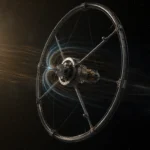
A rotating space habitat produces a local artificial-gravity effect by making objects accelerate toward the outer hull through centripetal motion.
Related Terms:
- Gravitational Field Vector
- Spacetime Curvature
- Artificial Gravity
NoSuchDevice is a free archive of machines that do not exist yet but already have a shadow in physics. I research and write every entry alone, with no ads. Take a look around the archive, or help keep it free.