




What Is Haber-Bosch Process?
Haber-Bosch process is the industrial method for synthesizing ammonia from nitrogen and hydrogen gases. It overcomes the strong N2 triple bond by using high pressure, elevated temperature, and an iron-based catalyst. The core reversible reaction is N2 + 3H2 <-> 2NH3, with heat release favoring ammonia at lower temperature but faster kinetics at higher temperature.
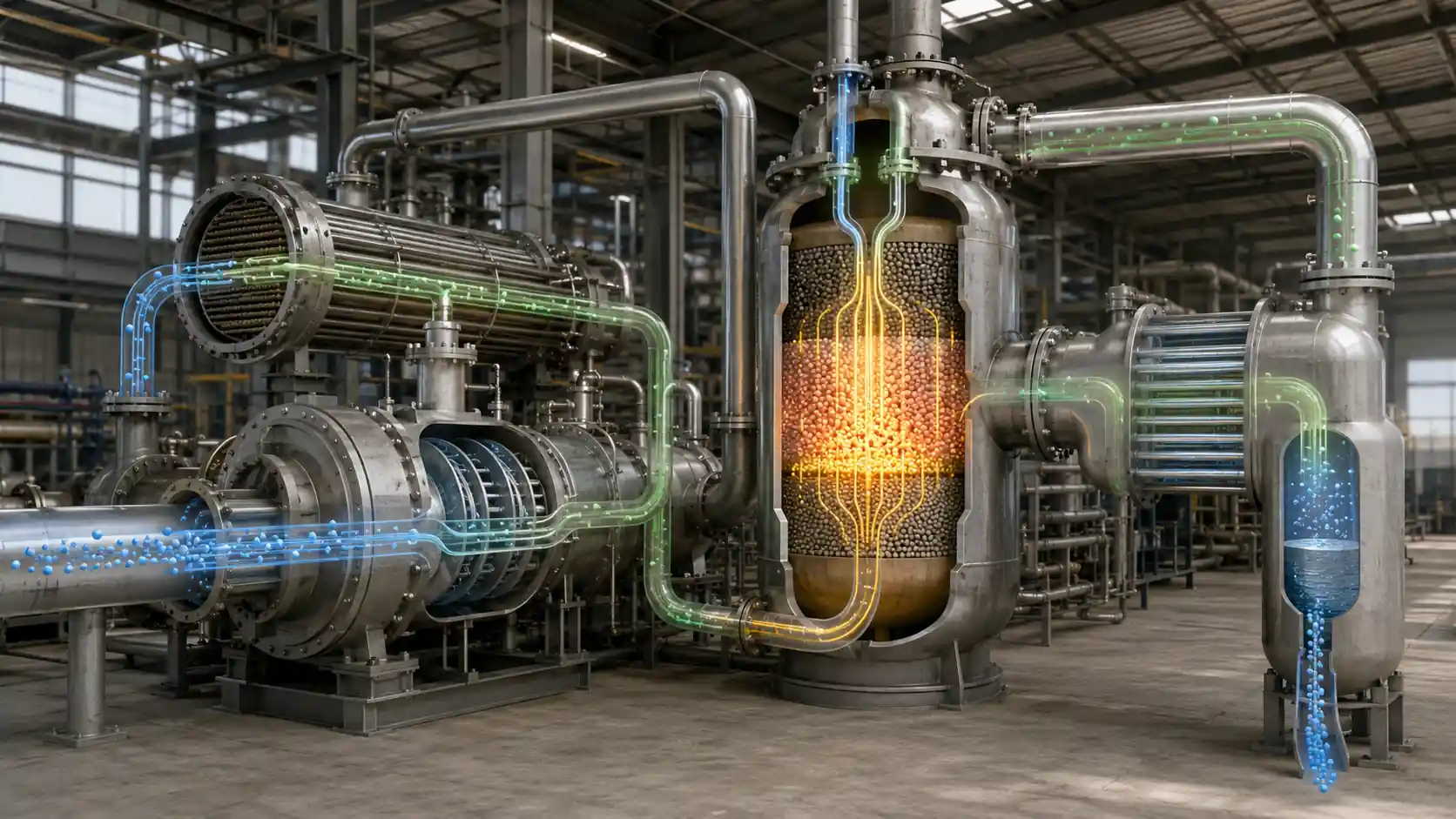
In real plants, hydrogen is usually generated from natural gas or other feedstocks, purified, compressed, and reacted with nitrogen from air separation. Unreacted gases are recycled because each pass reaches only partial conversion. The process is a benchmark for sustainable nitrogen management because ammonia production links fertilizer supply, energy use, and carbon emissions. Used in devices include ammonia synthesis reactors, hydrogen reformers, heat exchangers, pressure compressors, and process gas analyzers.
The concept matters because synthetic ammonia supports much of global fertilizer production and many chemical supply chains. Its energy demand also makes it a major target for cleaner hydrogen, improved catalysts, electrified heat, and better process integration. Engineers evaluate the reaction through equilibrium, kinetics, catalyst lifetime, separation efficiency, and heat recovery under changing feed conditions.
Example:
An ammonia plant raises pressure and temperature over an iron catalyst bed to convert purified nitrogen and hydrogen into fertilizer feedstock.
Related Terms:
- Nitrogenase
- Catalysis
- Ammonia Synthesis
NoSuchDevice is a free archive of machines that do not exist yet but already have a shadow in physics. I research and write every entry alone, with no ads. Take a look around the archive, or help keep it free.