






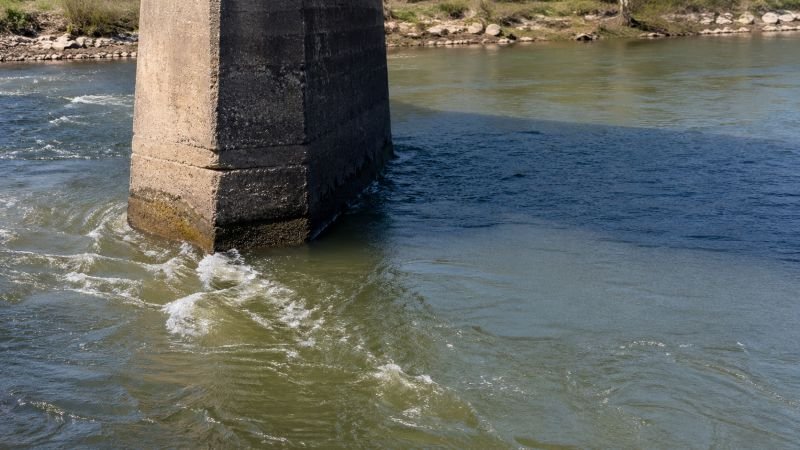
What Is Hydraulic shadow?
Hydraulic shadow is the region of reduced velocity and altered turbulence created beside or downstream of an immersed structure as the body diverts momentum and forms a wake. A simple way to describe the effect is Delta u = U_inf – U_local, the difference between incoming flow speed and local speed inside the shadowed zone.
In rivers, channels, and coastal structures, the shadow varies with body shape, blockage ratio, roughness, and incoming turbulence. In bridge-pier flow analysis, the term helps describe where supports shelter navigation space, where wakes mix sediment, and where a nearby device may encounter lower speed or more chaotic inflow.
The concept matters because local wake structure influences drag, scour, debris transport, habitat conditions, and equipment placement around hydraulic works. Used in devices include hydrokinetic turbines, acoustic flow meters, sediment monitors, pier protection systems, and autonomous underwater vehicles operating close to submerged infrastructure.
Engineers characterize a hydraulic shadow with velocity maps, turbulence intensity, and wake recovery distance rather than with one universal number. Measurements often come from current profilers, dye studies, pressure sensors, or numerical models that track how the sheltered region expands, contracts, and reconnects with the main flow.
Example:
A maintenance sensor mounted behind a pier may see calmer local flow because it sits inside the hydraulic shadow instead of the faster main current.
Related Terms:
- Power Coefficient
- Velocity Deficit
- Flow Separation
NoSuchDevice is a free archive of machines that do not exist yet but already have a shadow in physics. I research and write every entry alone, with no ads. Take a look around the archive, or help keep it free.