






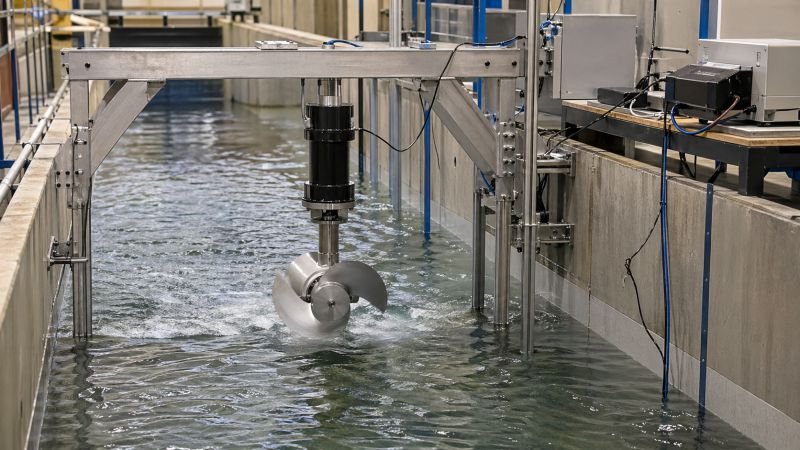
What Is Power coefficient?
Power coefficient is a dimensionless measure of how much of the kinetic power available in a moving fluid is converted into useful output by a rotor. It is commonly written Cp = P_out / (0.5 rho A v^3). The quantity compares actual extraction with the total flow energy crossing the swept area.
In real turbines, power coefficient changes with blade geometry, tip-speed ratio, loading, and turbulence, so it reaches a peak only over part of the operating range. In hydrokinetic turbine design, it helps compare whether a rotor gains more from cleaner inflow, better pitch control, or improved placement near a structure.
The term matters because fluid power rises strongly with velocity, making capture efficiency a major driver of yield, thermal loading, and system economics. Used in devices include wind turbines, water turbines, tidal generators, laboratory test rigs, and control systems that estimate output from flow measurements.
Engineers usually plot Cp against tip-speed ratio to show where a machine performs best and where losses from stall, drag, or generator mismatch appear. Because Cp is dimensionless, it also supports comparison across prototypes and full-scale machines operating in air or water.
Example:
A test rotor may produce more electrical output at the same river speed after a blade redesign raises its power coefficient closer to the machine’s optimum operating point.
Related Terms:
NoSuchDevice is a free archive of machines that do not exist yet but already have a shadow in physics. I research and write every entry alone, with no ads. Take a look around the archive, or help keep it free.