






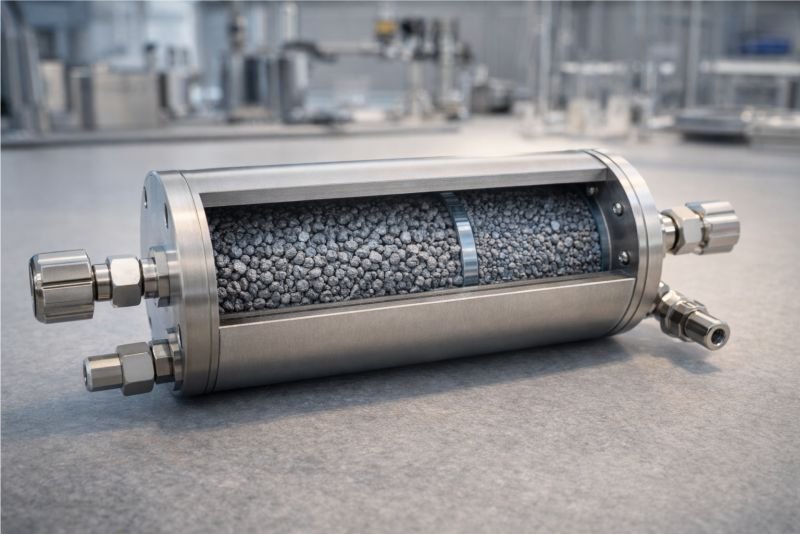
What Is Hydride alloy?
A hydride alloy is a metal or multi-metal material that reversibly absorbs hydrogen into its lattice, forming a metal hydride without requiring high-pressure gas storage. A common loading measure is x = H/M, the atomic ratio of hydrogen to metal sites. This reversible sorption lets the material store hydrogen compactly and release it when temperature or pressure conditions shift.
In engineered systems, the alloy takes up hydrogen during charging or fueling and releases it during discharge, heating, or pressure reduction. Composition controls plateau pressure, kinetics, cycle durability, and operating temperature, so different alloys serve different design targets. In portable hydrogen energy systems, hydride alloys allow fuel storage modules to stay compact while feeding gas to downstream devices at controlled rates.
Used in devices include metal-hydride cartridges, nickel-metal hydride batteries, and laboratory storage canisters for low-pressure hydrogen handling. The term matters in materials science and electrochemistry because alloy choice sets safety, gravimetric capacity, response time, and longevity, which determines whether hydrogen storage can be practical at small scale rather than only in industrial tanks.
Performance also depends on heat transfer, since absorption and desorption are coupled to enthalpy changes that can slow refueling or fuel delivery.
Example:
A metal hydride cartridge can release hydrogen into a compact fuel-cell system as waste heat warms the storage alloy during operation.
Related Terms:
- Hydrogen Storage
- Desorption
- Ultracapacitor
NoSuchDevice is a free archive of machines that do not exist yet but already have a shadow in physics. I research and write every entry alone, with no ads. Take a look around the archive, or help keep it free.