




A phone dies and the reflex is immediate – find a cable, find a socket, find forty minutes. Nobody questions the logic of it. Nobody points out that the device in their hand runs on roughly 15 watt-hours of stored energy, which is about what it takes to keep a bedside lamp on for two hours. Nobody asks why that particular ceiling exists, or whether it has to.
Hydrogen carries 33,600 watt-hours per kilogram. Lithium-ion batteries, at their best, carry around 250. That is not a small gap in the roadmap of incremental improvement. That is a different class of problem, with a different class of answer.
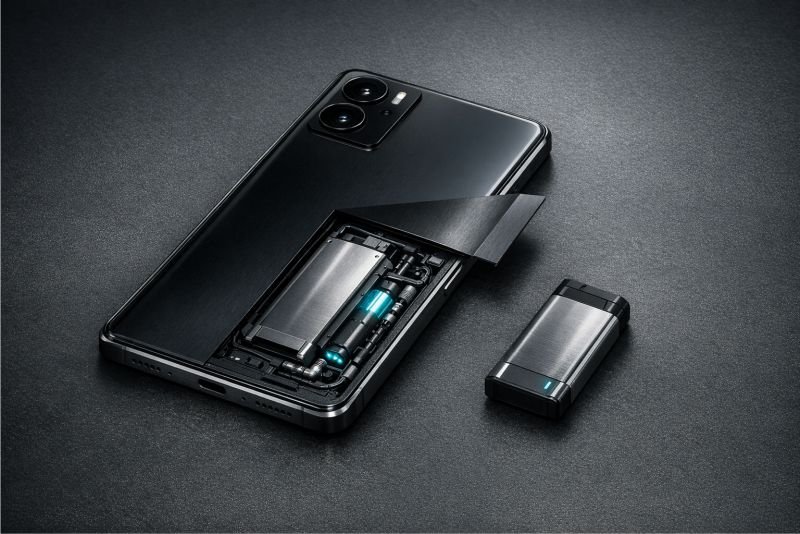
The short version: A hydrogen fuel cell smartphone replaces the lithium-ion pack with a proton exchange membrane fuel cell and a refillable metal hydride cartridge. Hydrogen reacts with oxygen from surrounding air to generate electricity continuously, with water vapor as the only output. A 30-gram cartridge running through a 50%-efficient cell delivers roughly 30 usable watt-hours – two to three days of power for a modern phone. The engineering obstacles are specific and real. The physics has no objection.
Key Takeaways
- Hydrogen carries 33,600 Wh per kilogram. A lithium battery carries about 250 Wh/kg. That gap does not close by iterating on lithium chemistry.
- The phone does not charge. It refills. A cartridge swaps in under ten seconds – the same hand motion as ejecting a SIM tray.
- The water vapor output is real and quantifiable: roughly 3.6 grams per day. Managing it in a sealed chassis is a specific engineering problem, not a theoretical one.
- Flying with this phone is currently prohibited under aviation rules. That is a categorization problem, not a physics problem – and categorization problems have changed before.
- The first people who need this device are not early adopters at a product launch. They are people for whom a dead phone is an operational emergency.
Table of Contents
The Charging Problem Is Older Than It Looks
Everyone charges their phone every night. The habit has become so complete that the underlying cost barely registers as a cost. A lithium-ion battery degrades with every charge cycle – after roughly 500 cycles, around 18 months of daily charging, most phone batteries retain about 80% of their original capacity. After 1,000 cycles, either the device slows or the user replaces it.
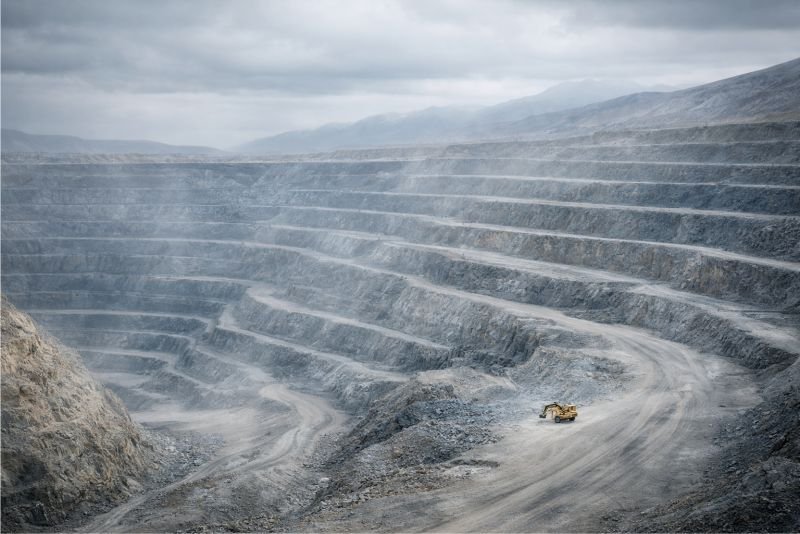
What disappears from view is what happened upstream. Mining lithium, cobalt, and nickel for a single smartphone battery requires processing several tons of ore. The carbon footprint of manufacturing that battery sits between 50 and 100 kilograms of CO2 equivalent. Across the 1.5 billion smartphones shipped annually, that arithmetic accumulates into something large and largely invisible to the person holding the charger.
The hydrogen fuel cell phone does not solve any of that on its own. But it replaces the degrading lithium pack with a cell whose membrane can sustain tens of thousands of operating hours, and it replaces the battery replacement cycle with a cartridge replacement cycle. The device lasts longer. The environmental cost shifts from mining to logistics. Whether that shift is genuinely better depends on where the hydrogen comes from – and that question has an honest answer that the device description alone cannot provide.
What This Device Actually Is
A hydrogen fuel cell smartphone is not a battery with different chemistry. The architecture is different in kind. A battery stores energy chemically and releases it as ions migrate between electrodes – a fixed reservoir that depletes. A fuel cell generates electricity continuously as long as fuel flows in. Stop the flow, stop the current. Resume the flow, resume the current. Nothing charges. Nothing depletes. The device runs as long as it is fed.
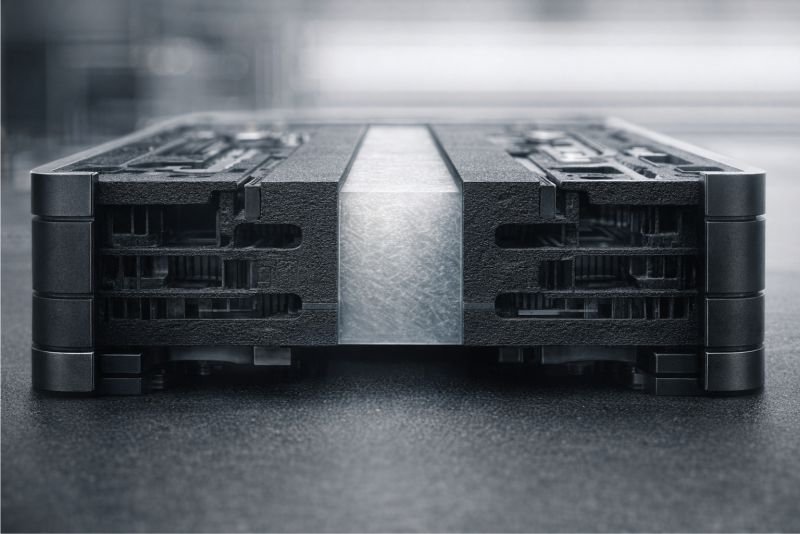
The cell type suited to phone-scale operation is the proton exchange membrane fuel cell. Hydrogen enters one side of the membrane, oxygen from surrounding air enters the other. The membrane allows protons to pass through while blocking electrons, which are forced around an external circuit – creating usable current. Water forms where the proton and electron paths reconnect on the oxygen side. The full electrochemistry behind that reaction is described in the Science Principles article on hydrogen fuel cell chemistry.
The relevant constraint for a phone is geometric. The membrane, electrodes, gas diffusion layers, and air-intake channels must fit inside a body that is roughly 8 millimeters thick and weighs under 200 grams. That packaging problem separates this concept from a fuel cell powering a bus or a data center. The physics is identical in both cases. The form factor is not even close.
How the Device Could Operate
The Metal Hydride Cartridge
Storing hydrogen as compressed gas at the volumes a phone requires would demand a tank rated for 350 to 700 bar of pressure – heavier than the phone itself and unsuitable for a pocket. The device described here uses metal hydride storage: a compact module where hydrogen is absorbed into a solid metal alloy, held stably at low pressure and room temperature. When the alloy is warmed slightly – by heat generated as a natural byproduct of the running fuel cell – hydrogen releases on demand at exactly the rate the cell needs it.

The cartridge occupies the same volume as the current battery pack, flush with the rear chassis. The external surface shows only a small port, similar in profile to a SIM card tray, that allows the spent cartridge to eject and a fresh one to seat in under ten seconds. The phone body remains unchanged in width, thickness, and external appearance. The only visible difference from a conventional device is that the rear port accepts fuel, not a cable.
The Autonomy Numbers
Metal hydride storage systems, at projected engineering maturity, deliver approximately 1,500 to 2,500 watt-hours of usable energy per kilogram of total system weight – cartridge housing, alloy, and regulation components included. A 30-gram cartridge at a system energy density of 2,000 Wh/kg carries 60 watt-hours of stored chemical energy before the fuel cell processes it.
The formula for what actually reaches the device:
Usable energy (Wh) = Cartridge mass (kg) x System energy density (Wh/kg) x Cell efficiency
0.030 kg x 2,000 Wh/kg x 0.50 = 30 Wh
A modern smartphone under typical mixed usage – screen on, connectivity running, background processes – consumes roughly 10 to 15 watt-hours per day. At 12 Wh/day, 30 usable watt-hours yields 2.5 days per cartridge. Not a week. Not a month. Two and a half days, then a ten-second swap.
Peak Load and the Buffer Problem
A fuel cell generates current at a rate set by how fast hydrogen flows through the membrane. A smartphone does not consume power at a constant rate. Running navigation with the screen at full brightness while a background sync completes can spike demand to 5 or 6 watts for sustained minutes. A phone-scale PEM cell running within the cartridge’s hydrogen flow budget might deliver a steady 2 to 3 watts continuous.
The device handles that mismatch with an ultracapacitor buffer – a component that stores enough energy to smooth demand spikes lasting seconds to minutes, without pretending to serve as a backup battery. During low-demand periods, the fuel cell output is slightly higher than the device needs, and the surplus charges the capacitor. During spikes, the capacitor discharges to cover the gap. This is load management, not redundancy – the same role a power conditioner plays in a data center, scaled down to the space behind a circuit board.
Everything here is free. Readers are the reason it stays that way.
I make all of it alone, with no ads. If it is worth a coffee a month to you, that keeps the next one coming.
Keep it alive →Water Vapor and the Zero-Byproduct Claim
The marketing version of hydrogen fuel cells leads with the output: pure water, nothing else. The longer version is more specific. A PEM cell produces approximately 9 grams of water for every gram of hydrogen consumed. At the consumption rate this device requires – roughly 0.4 grams of hydrogen per day to deliver 12 usable watt-hours – the water output is about 3.6 grams per day. At operating temperature inside the chassis, that exits as vapor.
In a car, that vapor leaves through an exhaust port. In a phone, it needs to pass through the device body. The architecture handles this with a micro-porous membrane panel integrated into the rear surface – approximately 4 square centimeters of hydrophobic breathable material that allows water vapor to diffuse outward while blocking liquid ingress. Gore-Tex membrane technology already solves that material problem. Integrating it into a rigid chassis while maintaining the IP ratings users expect from a phone is a specific engineering problem, and a solvable one.
What the zero-byproduct claim misses is lifecycle honesty. The hydrogen inside the cartridge had to come from somewhere. Green hydrogen – produced by electrolysis using renewable electricity – carries near-zero carbon through its lifecycle. Grey hydrogen, produced from natural gas, carries the full carbon burden of gas processing all the way to the cartridge. The phone’s chemistry is clean. The fuel supply chain may not be, and that distinction matters whenever the device is presented as an environmental argument.
Strengths, Limitations, and the Honest Numbers
| Parameter | Lithium-Ion Phone Battery | Hydrogen Fuel Cell Phone |
|---|---|---|
| System energy density | ~250 Wh/kg | ~1,500-2,500 Wh/kg (projected) |
| Refuel method | Cable, 30-90 minutes | Cartridge swap, under 10 seconds |
| Degradation over time | Significant (80% capacity by cycle 500) | Membrane life 10,000+ hours (speculative) |
| Output byproduct | Heat | Water vapor + heat |
| Aviation compliance | Permitted | Not currently permitted |
| Peak demand handling | Battery absorbs spikes directly | Requires ultracapacitor buffer |
| User infrastructure needed | Wall socket and cable | Cartridge supply chain |
The energy density advantage is not close. Hydrogen wins by a factor that makes the comparison look like a rounding error. The refueling advantage is real in any context where a power outlet is unavailable. The disadvantages are equally real: no existing cartridge supply network, a regulatory barrier for air travel, and a manufacturing chain that does not yet exist at consumer scale.
What the table does not capture is the asymmetry of the problem. Most of the advantages are physics. Most of the disadvantages are logistics and regulation – categories that have changed before and will change again when the pressure is sufficient.
Why a Phone Is Harder Than a Car
Hydrogen fuel cells already operate in commercial vehicles. The Toyota Mirai has logged millions of kilometers on PEM cells. A phone might seem like a simpler challenge – smaller system, lower power demands, no electric motor to drive. The opposite is true.
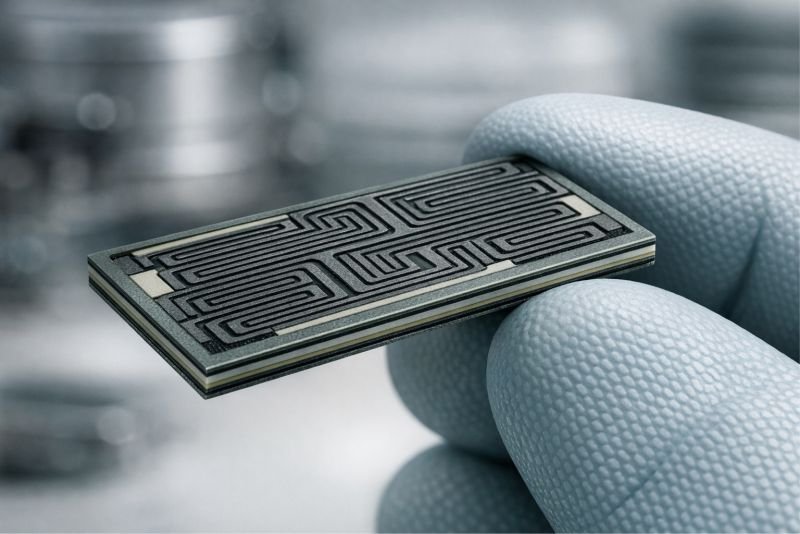
A fuel cell car operates at kilowatt scale, where the stack has room to breathe, thermal management has physical space to work with, and the hydrogen tank can be cylindrical and purpose-engineered. A phone operates at watt scale inside a volume smaller than a paperback book. The membrane must be thin enough to be flexible, the gas channels narrow enough to be etched, and the air intake sufficient without a dedicated fan. Every engineering parameter that is routine at car scale becomes a precision problem at phone scale.
The car also has decades of regulatory clearance behind it. The hydrogen phone asks regulators to evaluate a new category of personal consumer device containing a flammable gas in quantities for which no framework currently exists. That bureaucratic friction has delayed safer technologies before and will delay this one too – probably by years that have nothing to do with the engineering and everything to do with the calendar of committee reviews.
The Airplane Question
IATA’s current dangerous goods regulations classify hydrogen as prohibited for passenger carry-on and checked baggage. Taking a hydrogen fuel cell phone aboard a commercial aircraft is not permitted under existing rules. This will be described as a safety problem. It is actually a categorization problem.
The hydrogen in a mature metal hydride cartridge – bound in solid alloy form at low pressure, requiring heat input to release – is not energetically comparable to compressed hydrogen at 700 bar. The comparison that matters is with lithium-ion batteries, which are permitted on aircraft despite documented thermal runaway incidents. A lithium battery failure releases energy rapidly and generates toxic smoke. A compromised metal hydride cartridge at phone volumes releases a small amount of hydrogen gas slowly into open air.
Regulators have updated dangerous goods categories before. Lithium batteries faced similar initial scrutiny and were eventually classified under specific watt-hour limits that allowed them on board. The hydrogen phone will follow a similar path – first a technical safety case, then a testing standard, then a watt-hour or gram-equivalent threshold that distinguishes small hydride cartridges from industrial hydrogen cylinders. The first generation of this device exists primarily outside the aviation context anyway, with users for whom airport lounges are not the relevant environment.
Who Reaches for This Device First
Consumer product launches target the maximum addressable market. This device does not launch there. The city apartment with three power outlets does not need this phone. The arctic research station with zero does.
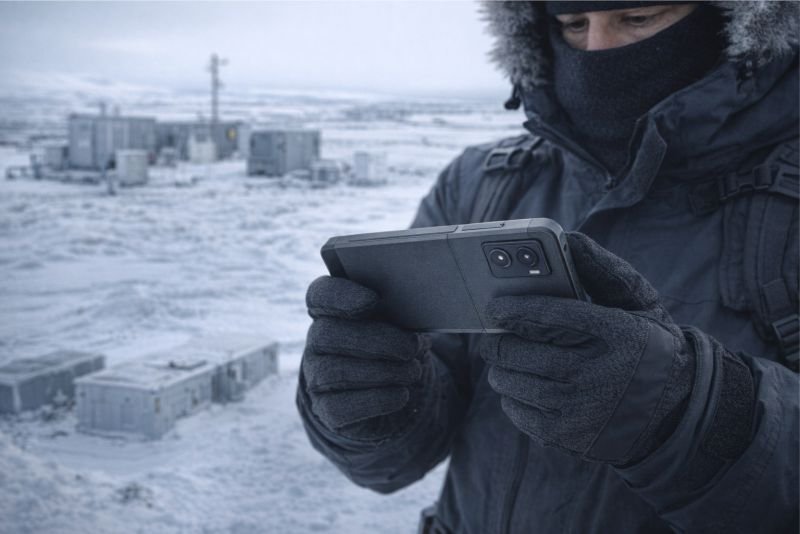
Field researchers on multi-month deployments without power infrastructure. Military personnel in environments where a charging cable is a tactical liability and a power bank adds weight that has to be carried. Emergency responders who cannot afford a device failure during a 72-hour crisis. Sailors on extended ocean passages. Scientists at polar stations where lithium batteries and -30 degree air reach an unhappy equilibrium.
A cache of five cartridges weighs 150 grams and provides roughly 12 days of power. A conventional power bank delivering 12 days of full smartphone use weighs over a kilogram and still needs to be recharged from somewhere. The hydrogen phone was not designed to replace the charger in an apartment. It was designed for places where the charger was never going to follow.
For these users, the aviation restriction is already irrelevant. The regulatory gap matters at an airport. It does not matter at an Antarctic research station or a forward operating base, and those are precisely the environments that generate the operational data that eventually builds the safety case for everywhere else.
What the Builders Would Have to Change
A lithium-ion phone is designed outward from its battery. The battery shape, charge management IC, and thermal dissipation paths determine much of the board layout and chassis geometry. A hydrogen fuel cell phone is designed outward from its fuel cell stack and cartridge interface – different components, different geometries, different engineering partnerships from day one.
The upstream supply chain shifts. Lithium from South American salt flats and cobalt from central Africa give way to hydride alloys, fluoropolymer membranes, and platinum group catalysts for the electrode layers. That substitution does not simplify the supply chain. It replaces one complex chain with a different one. The different chain does not require draining aquifers in protected ecosystems or operating under the labor conditions that follow cobalt mining in certain regions – and that is worth naming honestly, without overstating it as a solved problem.
For device manufacturers, a proprietary cartridge format carries a strategic implication that no lithium phone has ever offered. The hardware sells once. The fuel sells continuously. The company that sets the cartridge standard for hydrogen phones gains a recurring revenue position unlike anything in the current smartphone model – closer to the razor-and-blade structure than to any existing consumer electronics business. That commercial logic will accelerate adoption faster than the physics ever could.
From a Single Device to a Different Kind of Grid
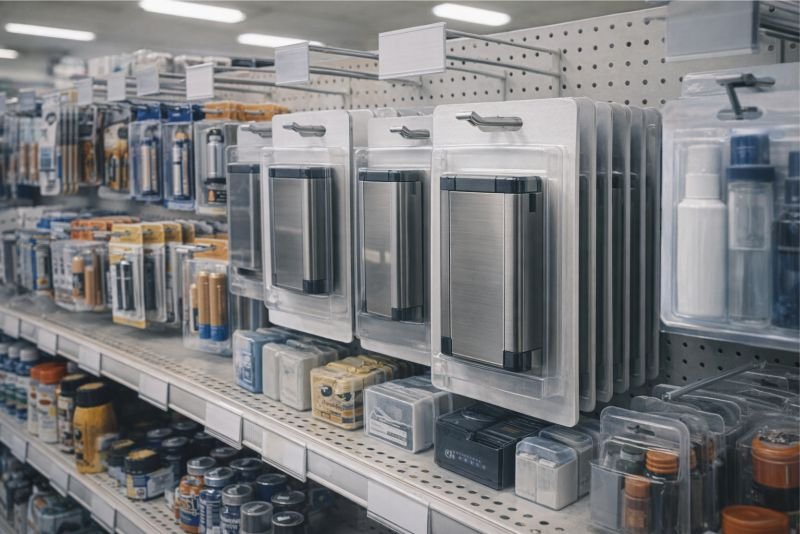
A hydrogen phone used by one person is a tool. Ten million of them in circulation create an infrastructure question that the market will answer. Convenience stores near remote worker hubs begin stocking cartridges. Outdoor equipment retailers add them to the shelf next to fuel canisters. The same hydrogen distribution networks being built for automotive use – with dispensing stations already appearing alongside conventional fuel pumps in parts of Europe and Japan – accommodate phone cartridge refill points as a negligible additional service.
At that scale, the device stops being a phone with an unusual power source and starts being one node in a larger argument: that personal electronics do not need to be tethered to electrical infrastructure at all. The phone changed the definition of what a computer could be. A mature hydrogen device ecosystem changes the definition of what a power grid needs to be.
The trajectory from field tool to mass-market device follows the same path that every technology of this kind has followed. Satellite phones were military tools before they were consumer devices. Lithium batteries were aerospace components before they were in pockets. The pattern is not a guarantee. But the physics is not the obstacle in that path, and the physics is usually the hard part.
The View From NoSuchDevice
I find myself more convinced by this device than I expected to be when I started examining it. The energy density numbers are not close. Hydrogen’s advantage over lithium by weight is so large that it shifts the question from “is this better?” to “why hasn’t this happened yet?” The answer to that question is boring: regulatory frameworks, supply chains, manufacturing inertia, and the fact that daily charging has become so normalized that most people do not experience it as a problem worth solving. Those are not physics problems. Physics problems are harder.
What I keep returning to is the refill model and what it does to the mental relationship between a person and their device. A phone that charges feels like something running down that needs to be rescued before it dies. A phone that refuels feels like something that simply continues as long as it is fed. That difference sounds like rebranding. It is not. It changes what applications make sense, what environments the device enters, and what expectations a user brings to it.
I do not think the consumer version of this phone is close. The regulatory path is long, the cartridge supply chain does not exist at scale, and the manufacturing shift for device makers is not trivial. But I think the early deployment version – the one that goes to field researchers, emergency responders, and people working where power outlets are simply not available – is less far than the absence of coverage suggests. Those users do not need the device to be perfect. They need it to be better than a power bank in a backpack. That bar, the hydrogen phone can already clear, given the right cartridge chemistry and a fuel cell stack that someone has decided to miniaturize properly. Someone will decide that.
You read the whole thing.
That is rarer than it should be, and it is the exact kind of attention I built this archive for. I make every piece alone, with no ads and no investor deciding what gets written. If you want the next machine taken apart like this one, you can help me make it.
A coffee a month is enough to keep it free for everyone.
Prefer crypto or a one time gift? Other ways to give →