





What Is Lawson criterion?
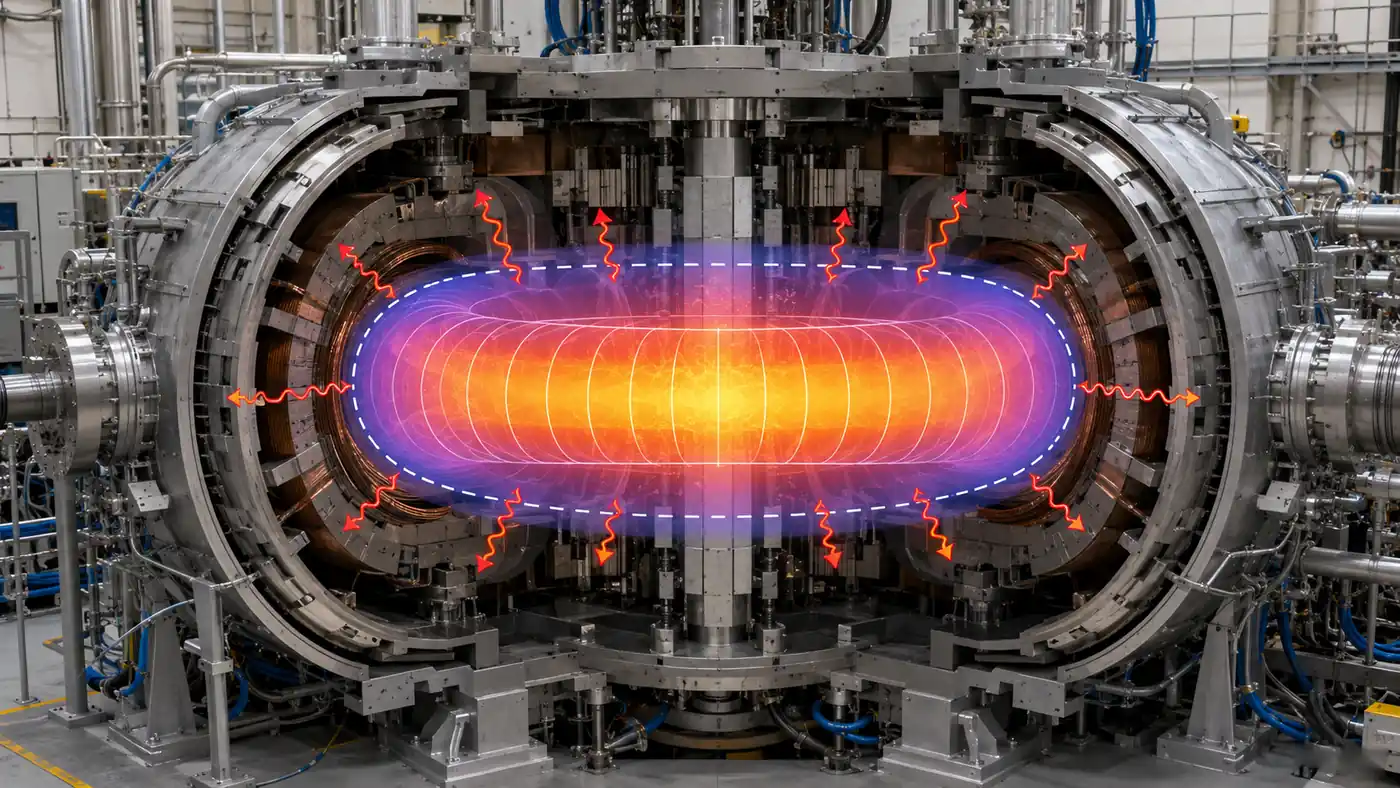
The Lawson criterion is the minimum combination of plasma density, temperature, and confinement time needed for fusion reactions to release useful net energy. For deuterium-tritium fuel near its optimal temperature, the common density-confinement threshold is n tau_E >= 1.5 x 10^20 m^-3 s. The principle states that fusion is not controlled by temperature alone; enough reacting particles must stay hot and confined long enough for reaction power to exceed losses.
In real plasma systems, the criterion behaves like a design target rather than a single switch. Higher density can compensate partly for shorter confinement, while better confinement can reduce the density required. Magnetic fields, plasma shape, fuel purity, heating power, and instability control all affect whether the product is reached. In compact fusion power engineering, the threshold sets the boundary between a plasma experiment and a power-producing reactor.
The concept matters because it gives fusion engineers a measurable condition for net energy gain. It allows different reactor designs to be compared across size, field strength, and fuel choice.
Used in devices include tokamaks, stellarators, inertial fusion chambers, and compact fusion cells where plasma performance must be judged against energy output.
Example:
A tokamak can raise heating power and magnetic confinement quality to move its plasma closer to the Lawson criterion during a pulse.
Related Terms:
NoSuchDevice is a free archive of machines that do not exist yet but already have a shadow in physics. I research and write every entry alone, with no ads. Take a look around the archive, or help keep it free.