






What Is Machine Learning?
Machine learning is a branch of artificial intelligence in which algorithms improve their performance by finding statistical patterns in data rather than following only fixed hand-written rules. A compact training objective is theta* = arg min_theta (1/n) sum L(f_theta(x_i), y_i), where the model parameters are adjusted to reduce prediction error across examples.
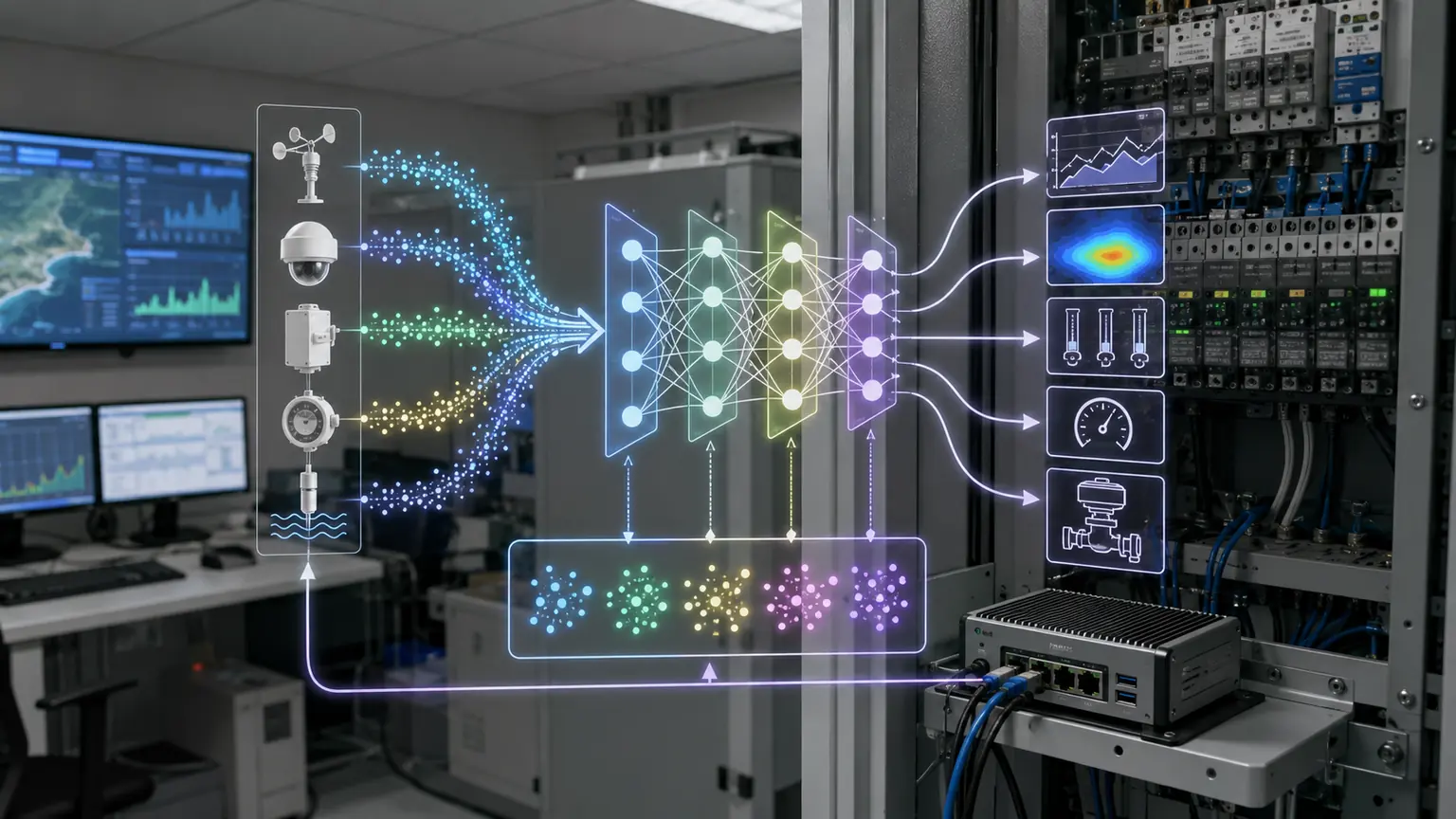
In real systems, behavior depends on data quality, model class, training procedure, and how well new inputs resemble the examples used during learning. It appears in environmental AI systems when sensor records, satellite imagery, or energy-use histories are converted into forecasts, classifications, or control signals. Used in devices include smart meters, imaging sensors, predictive maintenance controllers, energy-management systems, and embedded monitoring units.
The concept matters because it gives engineers a practical way to model relationships too complex to describe with simple equations. Machine learning can detect anomalies, estimate unknown variables, rank alternatives, or guide decisions under uncertainty, but its output still depends on measurement design and validation. Good applications pair learned models with domain knowledge so predictions remain testable and useful outside the training data.
Common evaluation methods compare predicted and observed values on held-out data, using error, accuracy, or calibration checks to reveal overfitting and drift.
Example:
A weather-aware building controller can use machine learning to predict hourly cooling demand from occupancy, solar gain, and previous energy use.
Related Terms:
- Reinforcement Learning
- Neural Network
- Training Data
NoSuchDevice is a free archive of machines that do not exist yet but already have a shadow in physics. I research and write every entry alone, with no ads. Take a look around the archive, or help keep it free.