





What Is magnetic confinement?
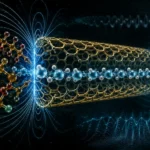
Magnetic confinement is the use of magnetic fields to hold charged particles away from material walls. In a hot plasma, ions and electrons spiral around magnetic field lines instead of moving freely in straight paths. A useful scale is the Larmor radius, r_L = mv_perp / qB, which shrinks as magnetic field strength rises. Smaller gyro-motion helps keep particles inside the intended plasma volume.
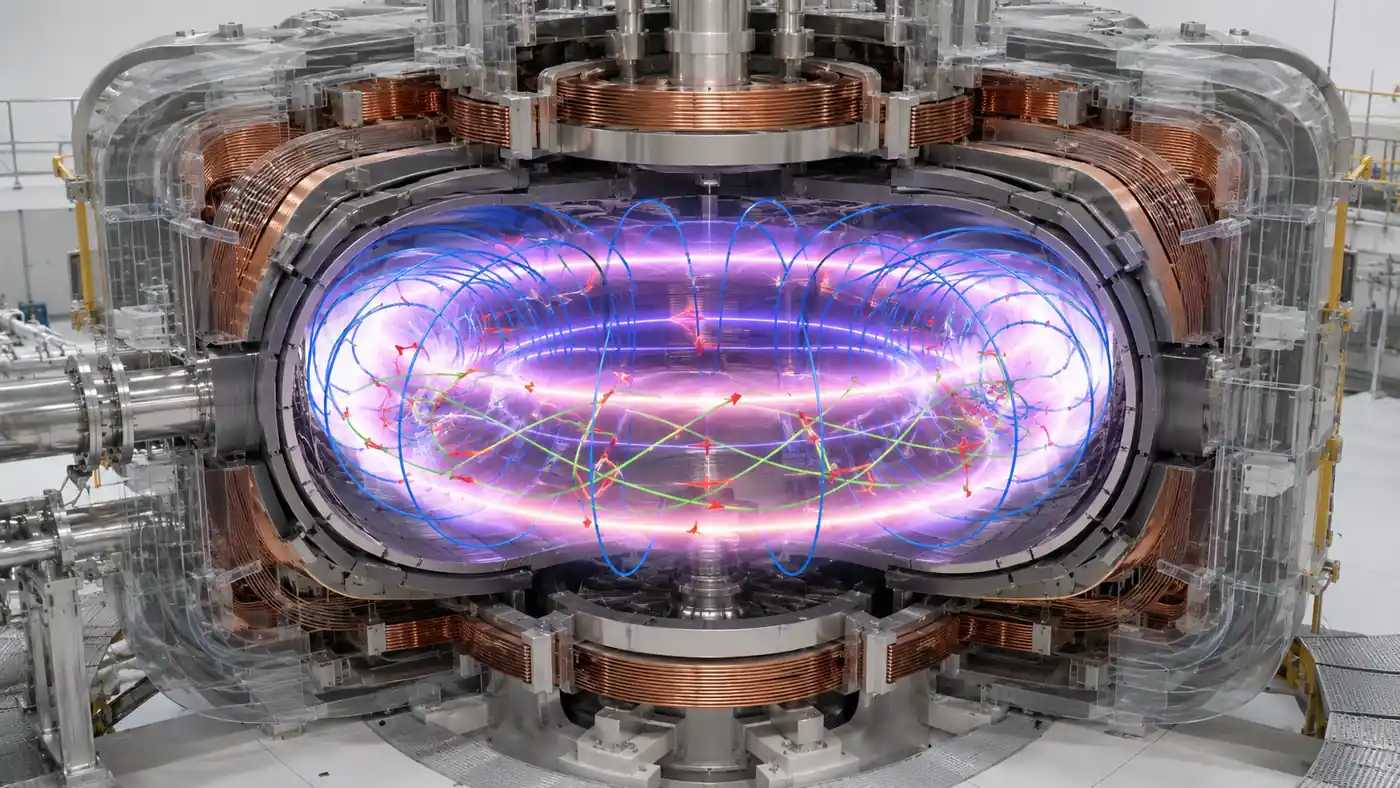
In real fusion systems, confinement requires more than a strong magnet. Field geometry must close on itself or guide particles in controlled paths, while pressure gradients and instabilities must be managed. Tokamaks, stellarators, mirrors, and compact toroidal devices all use different field arrangements. In magnetically confined fusion systems, confinement quality determines how long the fuel stays hot enough to react.
The concept matters because no solid container can touch fusion-temperature plasma. Magnetic confinement provides a non-contact boundary, enabling high temperature while protecting the machine and reducing heat loss during operation reliably.
Used in devices include tokamaks, stellarators, magnetic mirrors, plasma thrusters, and fusion cells that rely on superconducting magnets to maintain a plasma core precisely over operating time.
Example:
In a tokamak, toroidal and poloidal magnetic fields combine to keep charged plasma particles circulating inside a ring-shaped chamber.
Related Terms:
NoSuchDevice is a free archive of machines that do not exist yet but already have a shadow in physics. I research and write every entry alone, with no ads. Take a look around the archive, or help keep it free.