






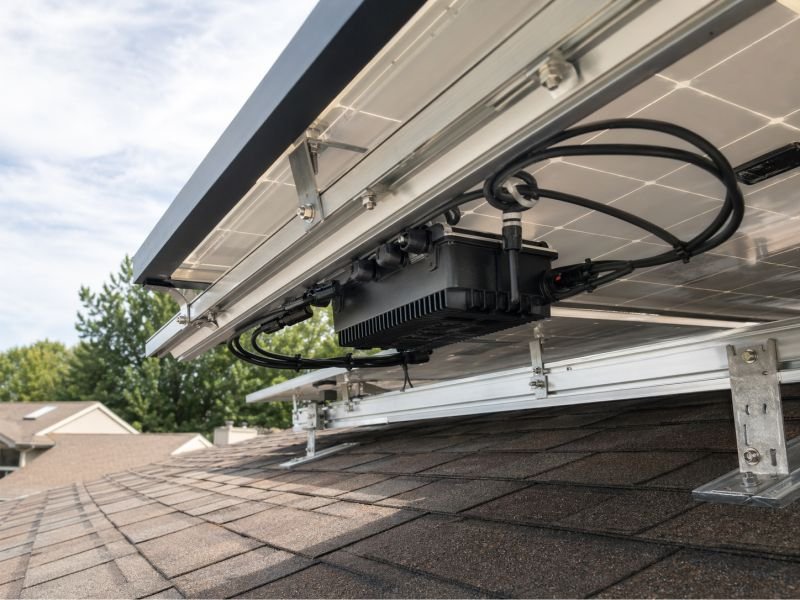
What Is Microinverter?
A microinverter is a compact inverter assigned to a single solar module or a small module pair, converting direct current at the panel into grid-compatible alternating current nearby. Its core function is electronic power conversion and maximum power point tracking at the module level rather than at a centralized string inverter. A common efficiency relation is eta = P_AC/P_DC, comparing usable AC output to the DC power entering the unit.
In operation, a microinverter isolates each module electrically, so shading, dirt, aging, or mismatch on one panel has less effect on neighboring panels. It also performs voltage conversion, switching control, and synchronization with the grid waveform. In modular solar power systems, module-level conversion is valuable where exposure conditions vary across the array or where flexible expansion is preferred.
This architecture matters because it can improve energy harvest, monitoring resolution, and design resilience in distributed photovoltaic installations. It also changes installation tradeoffs by moving conversion electronics closer to the module and reducing high-voltage DC runs across the system. Used in devices include residential solar arrays, building-integrated photovoltaic systems, and modular solar canopies. Engineers choose microinverters when per-module optimization and fault isolation outweigh the added hardware count.
Example:
A partially shaded roof with chimneys and vent stacks can produce more consistent energy when each panel uses its own microinverter.
Related Terms:
- DC Optimizer
- Maximum Power Point Tracking
- Monocrystalline Silicon
NoSuchDevice is a free archive of machines that do not exist yet but already have a shadow in physics. I research and write every entry alone, with no ads. Take a look around the archive, or help keep it free.