





What Is Monocrystalline Silicon?
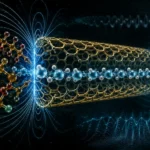
Monocrystalline silicon is silicon solidified as a continuous crystal with a highly ordered atomic lattice. Because the crystal structure is uniform, charge carriers move through it with fewer grain-boundary losses than in polycrystalline material. In electronics and photovoltaics, that makes its electrical behavior predictable and efficient. A useful relation is E = hc/lambda, which links incoming photon energy to the absorption threshold of a semiconductor.
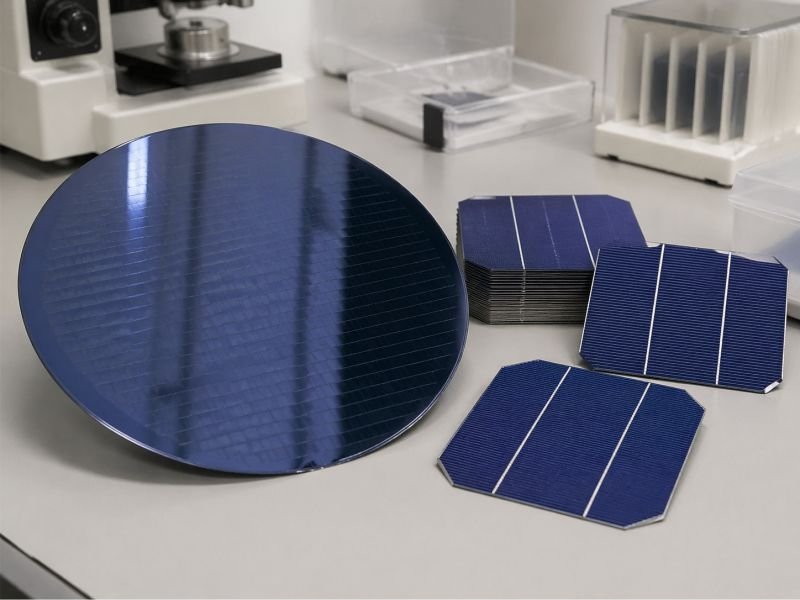
In real devices, wafers are sliced from a grown ingot, doped to form junctions, and processed into cells or circuits. Material purity, defect density, and wafer thickness all influence carrier lifetime, resistive loss, and final conversion efficiency. In distributed photovoltaic systems, monocrystalline silicon is often chosen where surface area is limited and higher output per square meter justifies tighter manufacturing control.
This material matters because it underpins a large share of modern solar modules and microelectronic components. Higher crystal quality supports stronger electronic performance, better consistency between units, and lower long-term variability under controlled operating conditions. Used in devices include solar cells, integrated circuits, photodiodes, and power transistors. Engineers select it when efficiency, uniformity, and mature fabrication methods are more important than the lowest possible material cost.
Example:
A compact rooftop module can use monocrystalline silicon cells to raise energy yield when the available panel area is limited.
Related Terms:
- Photovoltaic Cell
- Semiconductor
- P-N Junction
NoSuchDevice is a free archive of machines that do not exist yet but already have a shadow in physics. I research and write every entry alone, with no ads. Take a look around the archive, or help keep it free.