






What Is Parasitic Load?
Parasitic load is the portion of generated or stored power consumed by the supporting functions of a system rather than its intended external output. It is a systems term, not a single component. A simple balance is P_net = P_gross – P_parasitic. The larger the internal load, the less useful power remains for propulsion, heating, pumping, computation, or another end task.
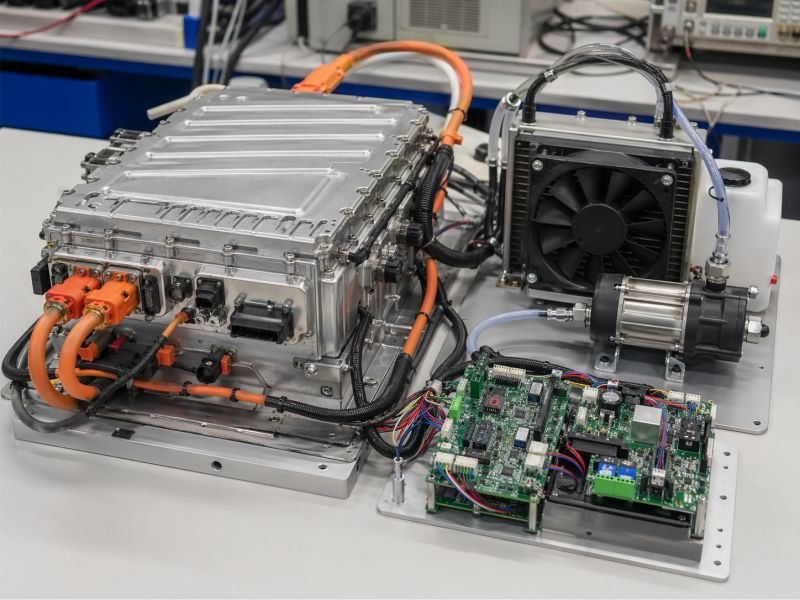
In real machines, parasitic load comes from compressors, coolant pumps, fans, sensors, converters, and control electronics that must operate for the main process to run. The penalty changes with operating point, temperature, and control strategy. In fuel cell power systems, air supply hardware and thermal management can consume enough power to change endurance calculations and optimal stack sizing.
This concept matters because efficiency claims can look strong at the component level while the full device performs worse once balance-of-plant power is included. High parasitic load also raises waste heat and can force larger energy storage or more aggressive cooling. Used in devices include fuel cell systems, heat pumps, refrigeration units, and large power electronics cabinets. Engineers track it to compare architectures on a true net-output basis.
Example:
A compact drone powertrain may lose several percent of available energy to cooling fans and control electronics before any power reaches the propellers.
Related Terms:
- Balance Of Plant
- Electrolyzer
- Efficiency
NoSuchDevice is a free archive of machines that do not exist yet but already have a shadow in physics. I research and write every entry alone, with no ads. Take a look around the archive, or help keep it free.