





What Is Perovskite?
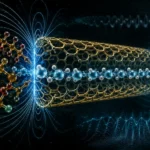
Perovskite refers to a family of materials defined by a crystal structure commonly written as ABX3, rather than by one single chemical composition. In solar-cell research, the term usually means metal-halide perovskites whose strong light absorption, long carrier diffusion lengths, and low-temperature processing make them attractive photovoltaic absorbers.
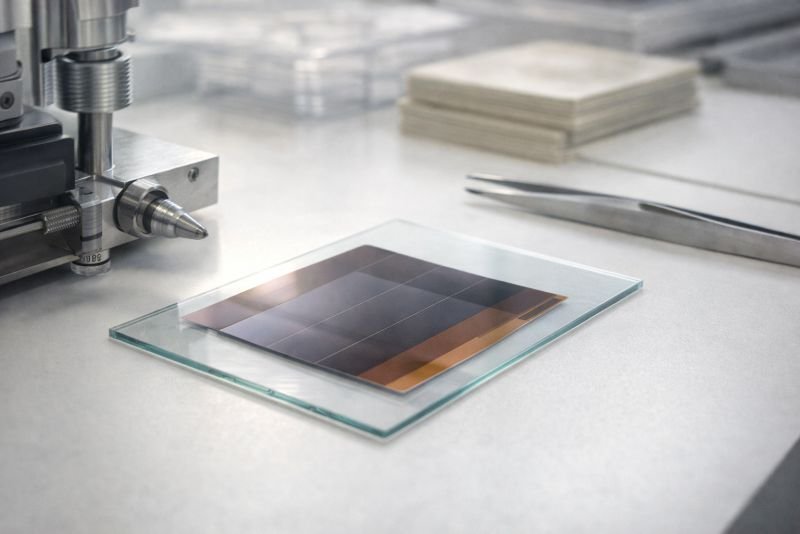
In tandem photovoltaic engineering, thin perovskite layers absorb high-energy sunlight efficiently and can be paired with silicon below. Their adjustable Bandgap and good charge transport allow designers to split the solar spectrum more effectively than a single semiconductor can on its own.
A common structural formula is ABX3, where A and B are cations and X is an anion. Why it matters is that perovskites combine strong absorption with simple film deposition, which can raise efficiency without the material thickness of crystalline wafers, though moisture sensitivity and long-term stability remain major engineering constraints.
Used in devices include solar cells, light-emitting diodes, and photodetectors. Researchers focus heavily on passivation layers, encapsulation methods, lead-free compositions, and interface quality because these details determine whether impressive lab performance can survive real outdoor operating conditions for years.
Example:
A perovskite-silicon tandem cell can assign blue-rich sunlight to the top layer while the silicon cell below handles lower-energy wavelengths.
Related Concepts:
- Band gap
- Passivation
- Tandem Cell
NoSuchDevice is a free archive of machines that do not exist yet but already have a shadow in physics. I research and write every entry alone, with no ads. Take a look around the archive, or help keep it free.