






What Is Piezoelectric Transduction?
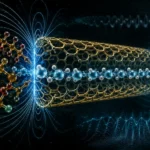
Piezoelectric transduction is the conversion of mechanical stress or strain into electrical charge by a piezoelectric material. When certain crystals or polymers are deformed, their internal charge distribution shifts and creates a measurable voltage or charge output, allowing motion, pressure, or vibration to be turned directly into an electrical signal.
In vibration energy harvesting, a piezoelectric element bonded to a flexing beam generates alternating charge every time the structure bends. That makes the method compact and mechanically simple, especially when the available motion is small, repetitive, and already concentrated near a high-strain section.
A simple relation is Q = d x F, where electric charge depends on the piezoelectric coefficient d and the applied force F. Why it matters is that piezoelectric transduction enables self-powered sensing and microgeneration without gears or rotating contacts, though output still depends heavily on impedance matching, fatigue life, and operating frequency.
Used in devices include ultrasound probes, ignition lighters, and structural vibration harvesters. Engineers compare coupling coefficient, stiffness, fatigue behavior, and voltage conditioning because the material’s electromechanical response determines whether small motion can be converted into practical electrical energy.
Example:
A piezoelectric strip bonded to a vibrating cantilever can charge a capacitor from repeated bending in airflow.
Related Terms:
- Vortex-Induced Vibration (VIV)
- Strouhal Number (St)
- Electromechanical Coupling
NoSuchDevice is a free archive of machines that do not exist yet but already have a shadow in physics. I research and write every entry alone, with no ads. Take a look around the archive, or help keep it free.