





What Is Plume Migration?
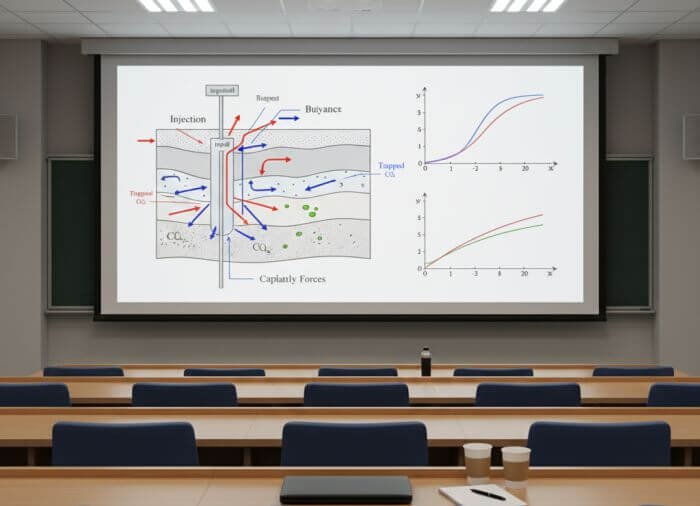
Plume migration describes the movement of injected CO2 through subsurface rock layers as buoyancy, permeability contrasts, and pressure gradients steer the fluid along preferential pathways. Its behavior depends on the balance between upward drive, lateral spreading, and the capacity of pore networks to transmit or restrict flow.
Within geologic carbon handling systems, plume migration determines how CO2 distributes over time, which zones experience pressure changes, and where secondary trapping mechanisms begin to dominate as the plume slows and disperses.
Because plume motion reshapes the pressure field and alters how trapping processes initiate, understanding its dynamics is central to predicting long-term containment performance.
Example:
Plume migration controls how far injected CO2 travels before slowing enough for capillary and residual trapping to immobilize it.
Related Concepts:
- Capillary Trapping
- Residual Trapping
- Reactive Transport
NoSuchDevice is a free archive of machines that do not exist yet but already have a shadow in physics. I research and write every entry alone, with no ads. Take a look around the archive, or help keep it free.