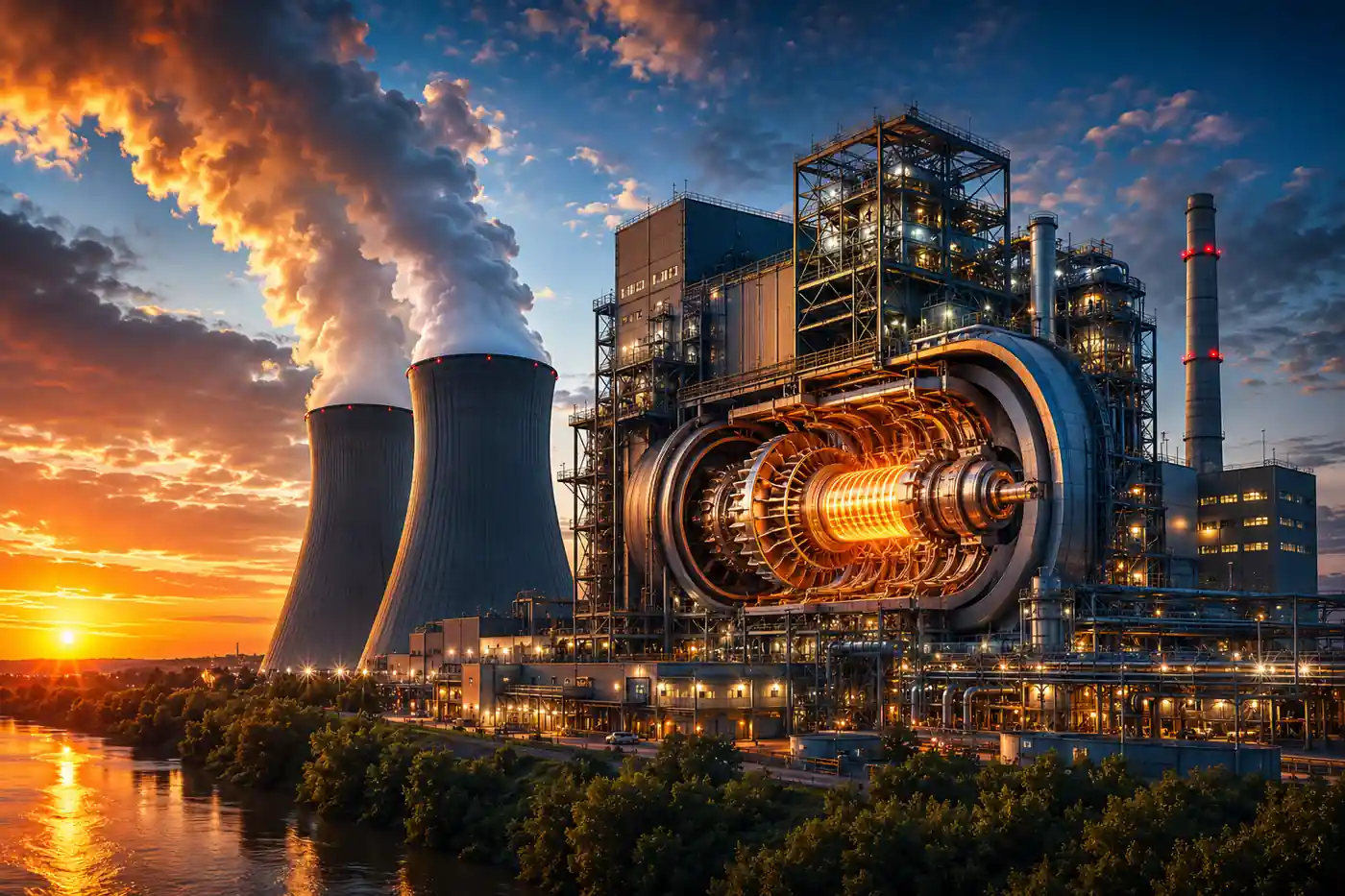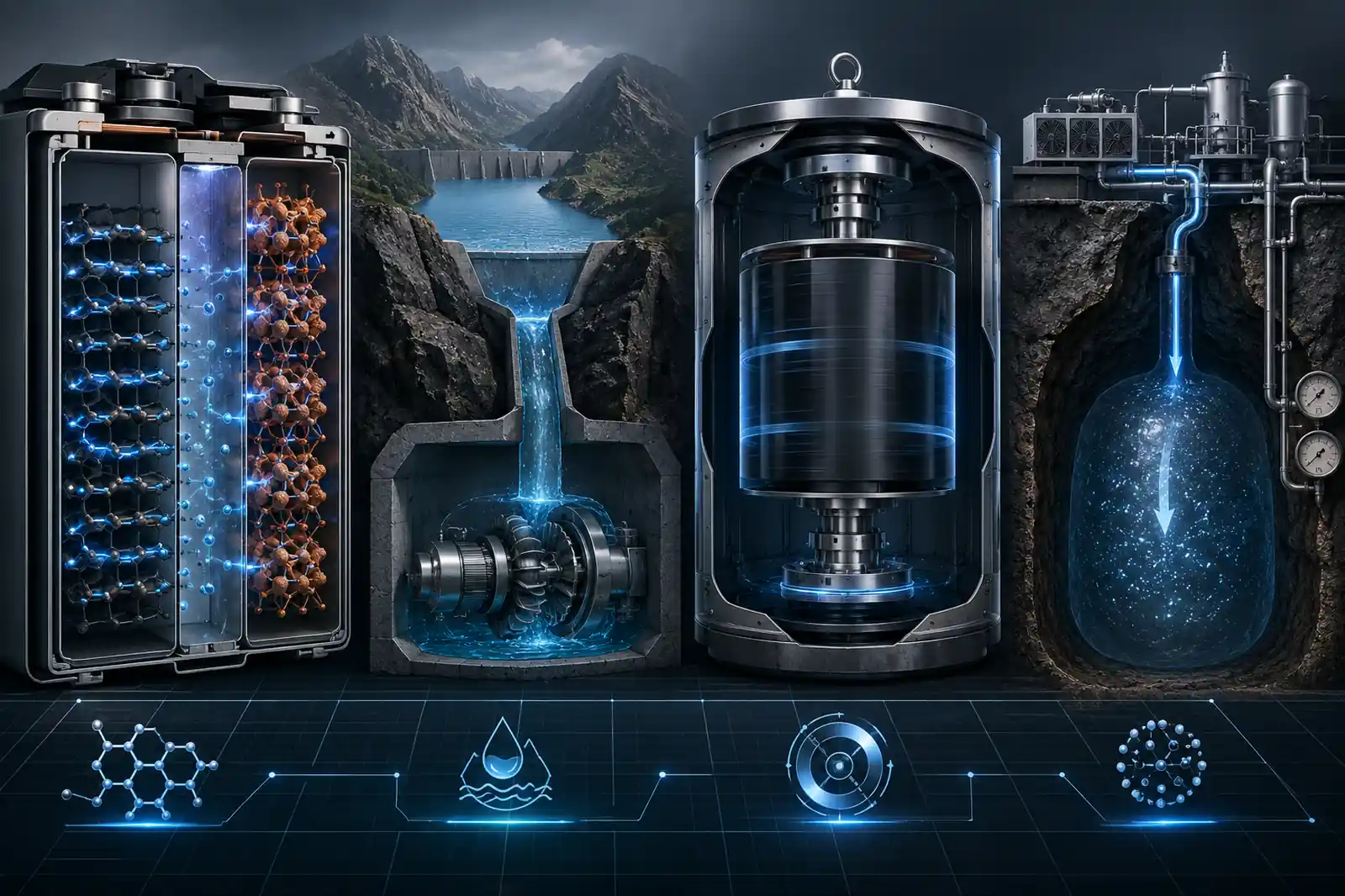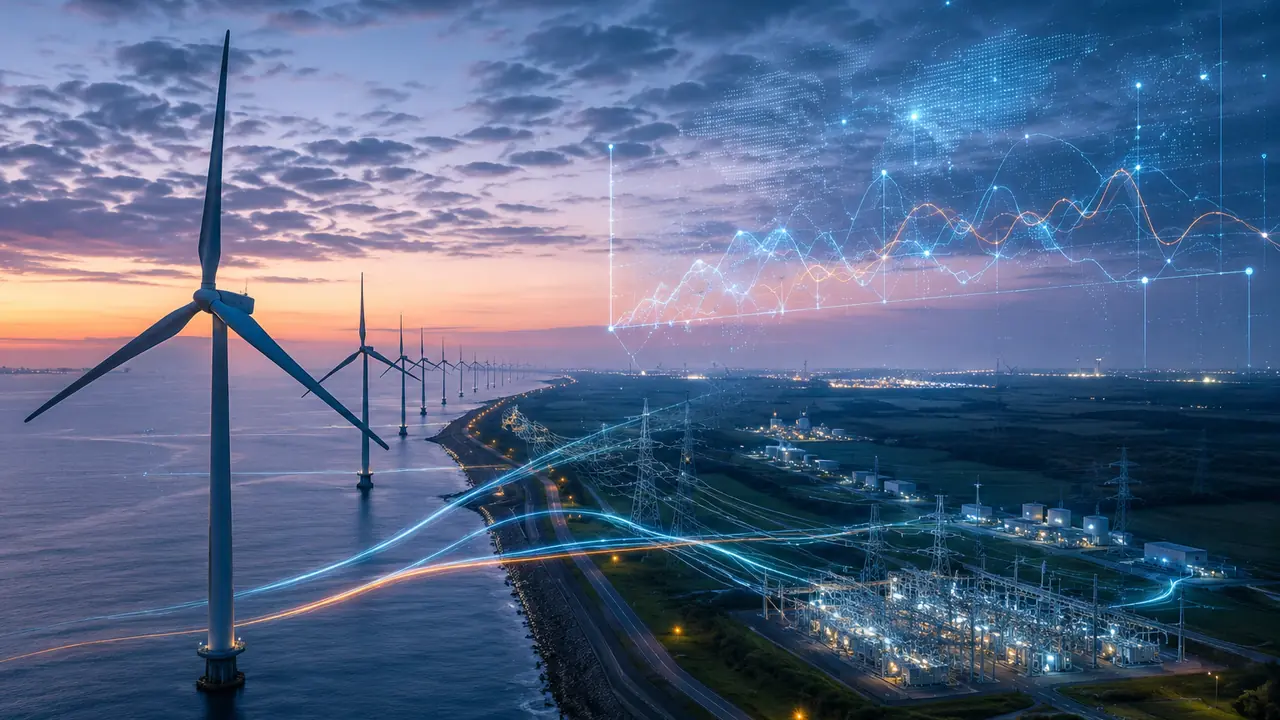





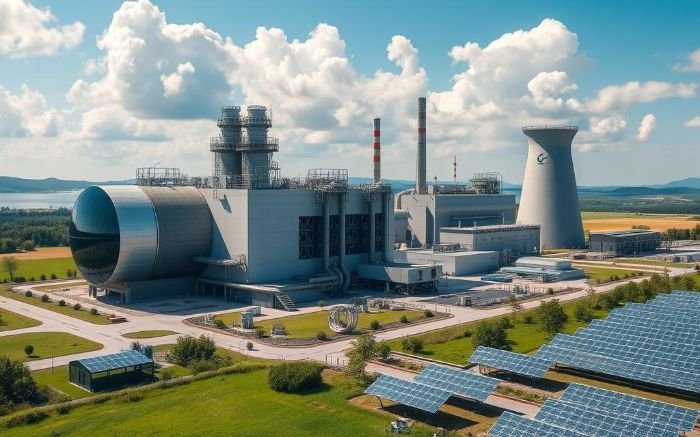
CO2 storage gets judged in seconds during a damp morning walk, when a white cloud pours upward and the gut reaction says pollution. Carbon capture and storage moves CO2 into long lived confinement, so visible steam rarely tracks climate impact. More cloud does not equal more carbon. Misreading cues risks wrong conclusions, while clear interpretation brings calmer, more reliable judgement.
In Eco Tech, climate value depends on where emissions end up over years, not daily optics. Readers weighing policies or industrial claims gain leverage by separating capture talk from storage credibility and energy penalties. Better framing reduces disappointment and improves decisions across refineries, cement plants, and transport corridors.
Key Takeaways
- Recognize hazy air near factories as weak evidence of carbon fate
- Avoid treating capture headlines as proof of long term climate benefit
- Understand carbon capture and storage as carbon routing over decades
- Compare claims using storage permanence rather than short term visuals
- Notice public debates follow what eyes see, while climate impact follows mass balance
Table of Contents
Carbon Capture as a Controllable Phase Change Problem
Carbon capture and storage treats CO2 as a separable component rather than an unavoidable exhaust outcome. Bench scale capture rigs often behave differently after a minor solvent tweak. The scientific frame centers on shifting carbon dioxide from a dilute, fast moving gas mixture into a controlled state that can be compressed, transported, and isolated under physical conditions that suppress re release. Boundaries remain limited to separation and containment physics rather than performance tuning, economic trade offs, or deployment pathways.
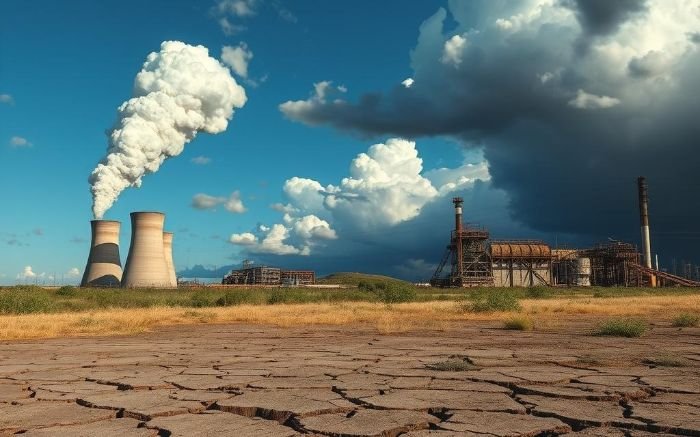
Where CO2 gets isolated in the real world
Carbon separation occurs at defined points where exhaust streams still retain predictable composition and temperature. Capture units operate before the exhaust stream mixes with ambient air, preserving strong mass-transfer gradients.
Isolation depends on contact time, surface area, and chemical selectivity interacting under flow conditions that rarely remain static for long. Small shifts in exhaust composition can change uptake rates and regeneration behavior in ways that remain invisible at the stack level.
Storage as a leakage rate question, not a volume question
Subsurface storage reframes containment away from capacity thinking and toward time dependent leakage probability. Long-term isolation depends on pressure control, pore-scale trapping, and rock-layer integrity, not on reservoir volume.
A sealed container analogy breaks down quickly.
Carbon remains immobilized through a combination of residual trapping, solubility in formation fluids, and structural barriers that limit upward migration, which means containment quality emerges from interactions across scales rather than a single physical boundary.
Variables That Decide Capture Yield And Storage Integrity
Field injection logs can show a clean start, then drift after minor pressure tuning. Outcomes depend on interacting limits. Performance emerges from thermodynamic gradients, transport resistance, and subsurface acceptance acting together across capture, compression, and injection, with sensitivities that couple gas composition to energy use and reservoir response. Coverage remains limited to variable dependencies and physical parameters rather than design metrics or monitoring strategies.
Model And Interpretation
Higher CO2 partial pressure raises the driving force for capture while higher compression targets raise energy demand, so gains at separation can translate into added downstream work.
Formal Expression
W_comp ≈ (k/(k-1)) · n · R · T · ln(P2/P1) / η
Symbol Legend
- k — heat capacity ratio for the gas mixture
- n — moles of CO2 compressed per unit time or batch
- R — universal gas constant
- T — gas temperature during compression
- P2 — discharge pressure after compression
- P1 — intake pressure before compression
- η — compressor efficiency factor
Interpretation
Compression work scales with temperature and the pressure ratio through the logarithmic term, so raising discharge pressure for transport or dense phase injection elevates energy demand even when capture chemistry performs well. Lower efficiency amplifies cost across the plant, tying solvent choice and heat removal to storage logistics.
Partial pressure sets the separation difficulty
Partial pressure defines the mass transfer gradient available to absorbers, adsorbents, or membranes. A higher gradient accelerates uptake.
Feed streams with dilute CO2 demand larger contact areas or longer residence time, while enriched streams shift limits toward regeneration heat and solvent loading, changing which loss terms dominate overall performance.
Energy penalty lives in regeneration, compression, and heat management
Energy demand concentrates where bound CO2 gets released and pressurized. Shortfalls appear early.
Regeneration heat, recompression stages, intercooling, and pressure losses interact, so incremental capture targets can trigger nonlinear increases in auxiliary power draw. The coupling tightens under higher temperatures, where solvent stability and compressor maps narrow operating margins.
Thermal management then shapes feasibility, since waste heat recovery alters effective temperature and shifts the logarithmic pressure term without changing capture chemistry.
Subsurface acceptance depends on permeability and capillary sealing
Injection viability depends on flow paths and sealing behavior under pressure. Acceptance varies by formation.
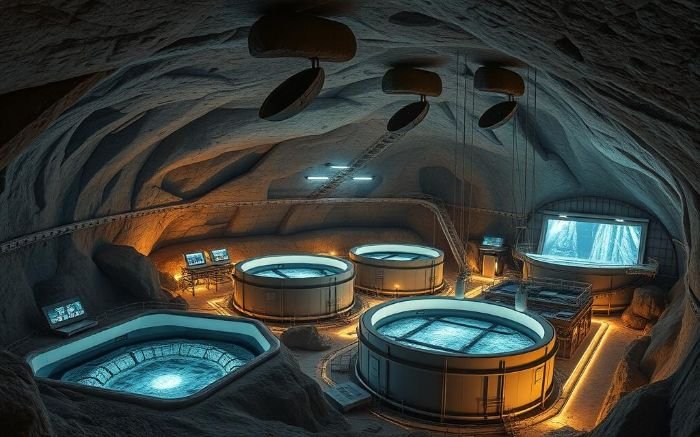
Permeability controls injectivity while capillary entry pressure and rock fabric govern upward migration resistance, so storage quality follows combined effects rather than a single threshold.
- Structural trapping limits buoyant rise through geometry and seals
- Residual trapping immobilizes CO2 at pore scale after migration
- Solubility trapping dissolves CO2 into formation fluids over time
CO2 handling regimes and storage behavior
| Handling regime | Typical pressure range | Storage implication |
|---|---|---|
| Gas phase | Low to moderate | Higher volume, limited injectivity |
| Dense phase | Elevated | Reduced volume, improved flow |
| Supercritical | High | High density, strong injectivity |
Each regime trades compression work against injectivity and containment behavior.
Turning Carbon Capture Into Design Targets And Control Loops
Two projects can claim identical capture rates while producing very different verification strength. Engineering interpretation translates separation physics into measurable quantities, control bounds, and inference rules that connect mass flow to confidence in long term isolation across capture and storage interfaces. Commissioning teams frequently discover sensor drift long before chemistry fails.
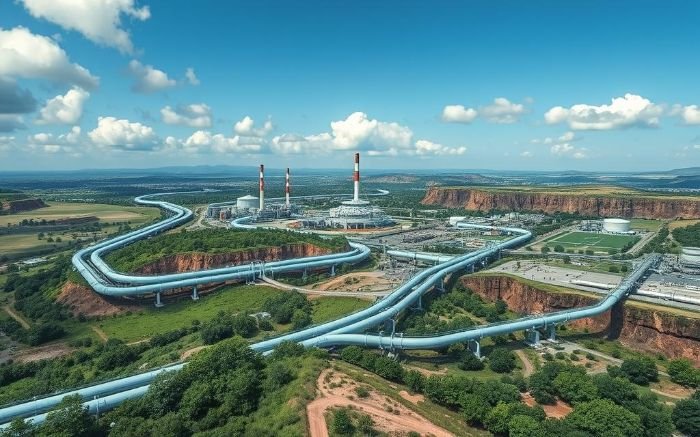
Capture performance becomes a mass balance ledger
Capture gets treated as a set of conserved flows rather than a chemical promise. Inputs, outputs, and losses get reconciled across time windows that expose slip, dilution, and parasitic demand.
A clean ledger slows interpretation. Shortfalls appear when flow meters, analyzers, and timing assumptions fall out of alignment, which forces reconciliation between nominal capture fractions and what leaves the system under real operating conditions.
MRV approaches and visibility trade offs
| Method | Detection focus | Temporal resolution |
|---|---|---|
| Mass flow accounting | Capture fraction and slip | Continuous |
| Tracer analysis | Leakage confirmation | Periodic |
| Seismic imaging | Plume migration patterns | Campaign based |
Each method resolves a different slice of uncertainty.
Monitoring, reporting, and verification as a signal problem
Monitoring turns physical behavior into signals under noise. Inference dominates.
Pressure traces, tracer dispersion, and imaging outputs form parallel evidence streams that vary in latency and spatial reach, so confidence grows through cross checking rather than single metrics.
- Pressure monitoring tracks deviation from expected injection response
- Tracer methods reveal unintended migration pathways
- Seismic imaging maps plume geometry at scale
Interpretation slows when signals diverge, because resolving them depends on model assumptions rather than direct measurement.
Everything here is free. Readers are the reason it stays that way.
I make all of it alone, with no ads. If it is worth a coffee a month to you, that keeps the next one coming.
Keep it alive →Unknowns Hiding Inside Long Term Storage Claims
Uncertainty concentrates in time. Long term isolation depends on coupled physical and chemical processes evolving under pressure, temperature, and fluid interaction across decades, where model confidence erodes faster than short term performance metrics suggest. Long duration tests often reveal surprises late in the run. Scope remains limited to unresolved scientific questions rather than operational choices or environmental impact framing.
Predicting leakage pathways across decades remains hard
Leakage risk resists clean forecasting. Single factors rarely dominate.
Fault activation, wellbore cement alteration, and reactive transport processes interact in ways that remain poorly constrained over long horizons, especially when pressure perturbations propagate through heterogeneous formations with incomplete historical data.
A slow interpretive pause appears here, since models rely on assumptions about rock continuity and reaction rates that cannot be fully validated before injection begins, leaving uncertainty distributed across space and time rather than localized at one boundary.
Where Carbon Storage Fits Inside Future Energy Systems
Public acceptance often tracks trust in monitoring more than trust in chemistry. Carbon capture and storage alters emissions trajectories for industrial processes that resist electrification, while adding energy demand, transport coordination, and long term accountability tied to containment credibility rather than capture chemistry alone. Relevance appears at system scale. Scope stays limited to environmental and energy system context rather than technical operation or unresolved scientific uncertainty.

Hard to abate sectors and system coupling
Steel, cement, refining, and chemical production generate concentrated carbon flows that align with point source capture. Integration links capture loads to power supply, heat recovery, and compression timing, which shifts grid interaction toward peak management and reliability planning. Shortfalls appear when auxiliary power draws collide with constrained local capacity.
Interpretation slows at sector boundaries. Decarbonization value depends on how capture energy demand aligns with low carbon supply over time, not on removal rate alone.
Permanence credibility and infrastructure burden
Climate value depends on confidence in long duration containment. Pipelines, hubs, and storage corridors add spatial coordination requirements that extend beyond plant boundaries and into regional planning for monitoring coverage and liability assignment.
System impact emerges from verification strength. Weak confidence erodes acceptance even when capture rates look high.
Word Wrap
Carbon capture and storage functions as a constraint shaped response rather than a universal remedy, operating inside narrow physical, energetic, and verification limits that resist simplification. Capture efficiency interacts with compression work, transport logistics, and subsurface behavior in ways that shift system balance rather than eliminate emissions outright. Long duration containment introduces a temporal dimension that energy planning rarely accommodates, where credibility depends on monitoring resolution, model confidence, and institutional continuity over decades. As power systems decarbonize unevenly across sectors, carbon storage occupies a transitional role that links industrial legacy processes with evolving low carbon supply, carrying added energy demand and coordination overhead. The value of such systems ultimately emerges from alignment between physical feasibility, energy availability, and societal tolerance for managed risk, not from capture percentages alone.
You read the whole thing.
That is rarer than it should be, and it is the exact kind of attention I built this archive for. I make every piece alone, with no ads and no investor deciding what gets written. If you want the next machine taken apart like this one, you can help me make it.
A coffee a month is enough to keep it free for everyone.
Prefer crypto or a one time gift? Other ways to give →
FAQ
How does long term carbon storage interact with geochemical equilibrium in deep formations?
Injected carbon dioxide perturbs existing fluid and mineral equilibria, driving slow reactions that can alter porosity and fluid composition. Such shifts may either enhance immobilization through mineral binding or modify flow pathways, depending on temperature, brine chemistry, and reaction kinetics over extended timescales.
Under what conditions does carbon storage transition from physical containment to chemical immobilization?
Chemical immobilization emerges when dissolved carbon dioxide reacts with formation minerals at rates comparable to advective transport. Elevated temperatures, reactive silicate content, and prolonged fluid residence time favor precipitation pathways, gradually shifting dominance away from buoyancy and capillary effects toward solid phase retention.
In what way does carbon storage differ thermodynamically from natural carbon sinks?
Engineered storage operates far from equilibrium, relying on imposed pressure and temperature states that accelerate phase transitions. Natural sinks evolve under ambient gradients, dispersing carbon slowly, whereas engineered systems compress temporal scales, trading higher energy input for faster isolation under controlled boundary conditions.