




What Is polysulfide shuttle?
Polysulfide shuttle is a parasitic process in lithium-sulfur batteries in which soluble lithium polysulfide intermediates dissolve into the electrolyte and migrate between electrodes. Instead of staying confined near the sulfur cathode, these species diffuse to the anode, react there, and then cycle back again. A common performance indicator is coulombic efficiency, CE = Q_discharge / Q_charge, which drops when shuttle reactions waste charge.
The problem is severe because it causes self-discharge, active-material loss, and uneven deposition on the lithium surface. Shuttle species move through the Electrolyte, interfere with the protective Solid Electrolyte Interphase (SEI), and make cell behavior harder to control over repeated cycles. Suppressing the shuttle often requires cathode confinement, separator design, or chemical trapping strategies.
The concept matters because lithium-sulfur chemistry has very high theoretical energy density, yet the shuttle effect blocks that promise from becoming durable commercial performance. In advanced battery chemistry, polysulfide shuttle is treated as a central failure mode that links capacity fade, low efficiency, and poor cycle life to the underlying reaction pathway. Without control of the shuttle, high theoretical capacity does not become stable delivered energy.
Example:
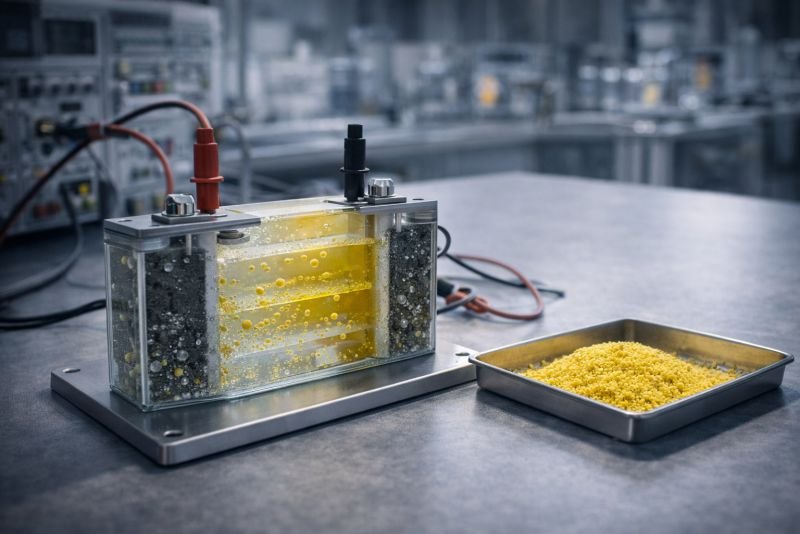
A lithium-sulfur test cell can lose charge overnight when dissolved sulfur intermediates keep reacting at the lithium anode.
Related Concepts:
- Coulombic Efficiency
- Lithium-Sulfur Cathode
- Self-Discharge
NoSuchDevice is a free archive of machines that do not exist yet but already have a shadow in physics. I research and write every entry alone, with no ads. Take a look around the archive, or help keep it free.