




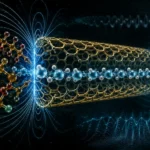


What Is PZT?
PZT is a synthetic ceramic material made from lead zirconate titanate, a compound whose crystal structure allows mechanical stress to generate an electric charge. The material belongs to a class of ferroelectric ceramics in which tiny electric dipoles inside the crystal lattice can align in a preferred direction. When the material is compressed, bent, or vibrated, these dipoles shift slightly and create an electrical voltage across the material.
Because of its strong electromechanical coupling, PZT produces significantly more electrical charge under stress than many natural piezoelectric crystals. This high efficiency makes it one of the most widely used materials in sensors, actuators, ultrasonic transducers, and vibration energy harvesters used in modern engineering.
In systems such as vibration-driven piezoelectric energy harvesting architectures, PZT converts tiny mechanical deformations into measurable electrical output, enabling devices to generate power directly from ambient motion.
Example:
A thin PZT strip mounted on a vibrating machine can generate small electrical pulses each time the structure bends under mechanical oscillation.
Related Concepts:
- Ferroelectric Materials
- Barium Titanate
- PVDF
NoSuchDevice is a free archive of machines that do not exist yet but already have a shadow in physics. I research and write every entry alone, with no ads. Take a look around the archive, or help keep it free.