





What Is Residual Trapping?
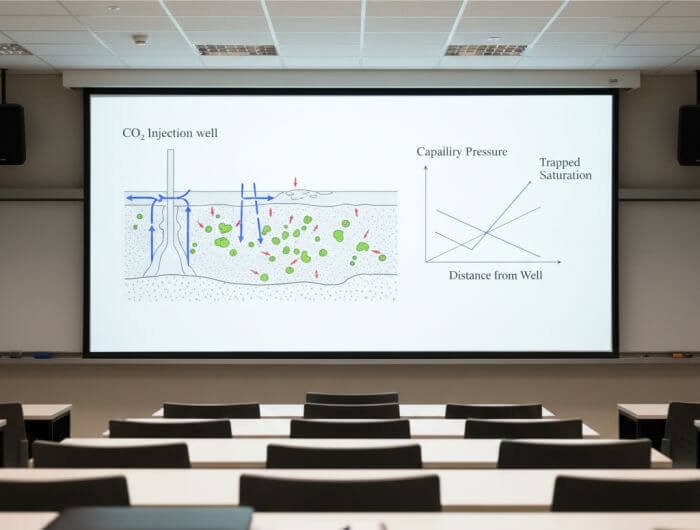
Residual trapping is a mechanism where injected CO2 becomes immobilized in the smallest pores of a rock formation as buoyant fluid threads break into isolated droplets. Capillary forces hold these droplets in place, preventing large-scale migration even when pressure gradients shift.
It plays a major stabilizing role in geologic carbon handling systems, where the immobilized portion of CO2 supports long-term containment by limiting plume extension and reducing the effective mobile volume.
Because the trapped phase cannot reconnect into a continuous flow path, its behavior reshapes how reservoirs evolve after injection stops.
Example:
Residual trapping limits how far a CO2 plume can travel once immobile droplets occupy pore spaces.
Related Concepts:
- Capillary Trapping
- Solubility Trapping
- Plume Migration
NoSuchDevice is a free archive of machines that do not exist yet but already have a shadow in physics. I research and write every entry alone, with no ads. Take a look around the archive, or help keep it free.