





What Is superconducting coils?
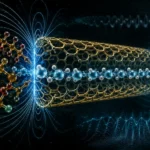
Superconducting coils are electromagnet windings made from materials that carry current with effectively zero electrical resistance below a critical temperature. When cooled into the superconducting state, they can sustain very high currents and generate intense magnetic fields with far lower resistive heating than copper coils. A simple solenoid estimate is B approx mu0 n I, where field strength rises with turn density and current.
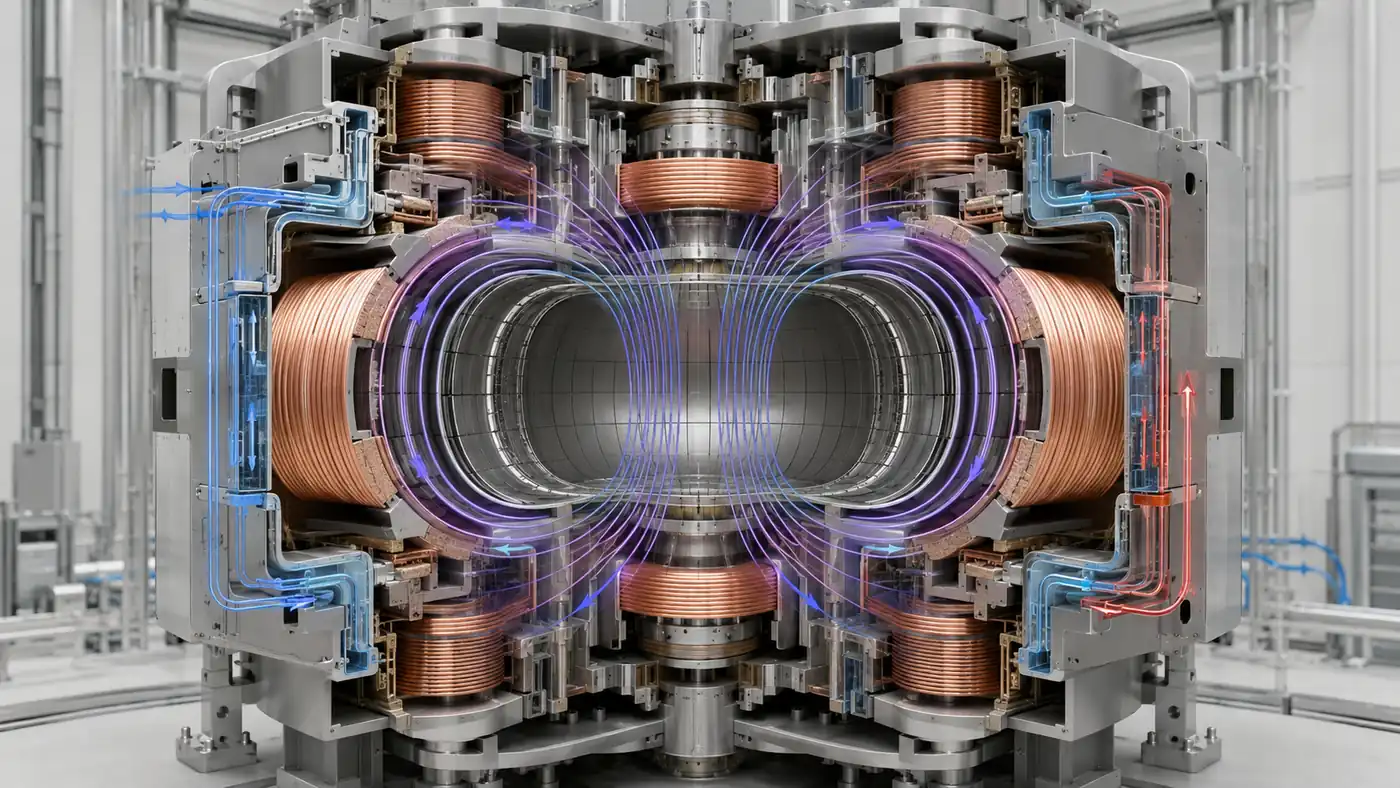
In real systems, superconducting coils must stay below their critical temperature, current, and magnetic field limits. Cryogenic cooling, mechanical support, quench protection, and conductor choice determine reliability. High-temperature superconductors can operate at less extreme cooling conditions than older low-temperature materials. In fusion magnet engineering, these coils make compact high-field plasma confinement possible.
The concept matters because many advanced devices need strong magnetic fields without prohibitive power loss. Superconducting coils concentrate magnetic energy efficiently, but they require careful protection when a local region loses superconductivity under thermal stress.
Used in devices include MRI scanners, particle accelerators, maglev systems, tokamaks, stellarators, and compact fusion cells using strong fields to hold hot plasma inside controlled operating volumes safely today.
Example:
In an MRI scanner, superconducting coils maintain a strong uniform magnetic field that aligns nuclear spins for imaging.
Related Terms:
NoSuchDevice is a free archive of machines that do not exist yet but already have a shadow in physics. I research and write every entry alone, with no ads. Take a look around the archive, or help keep it free.