






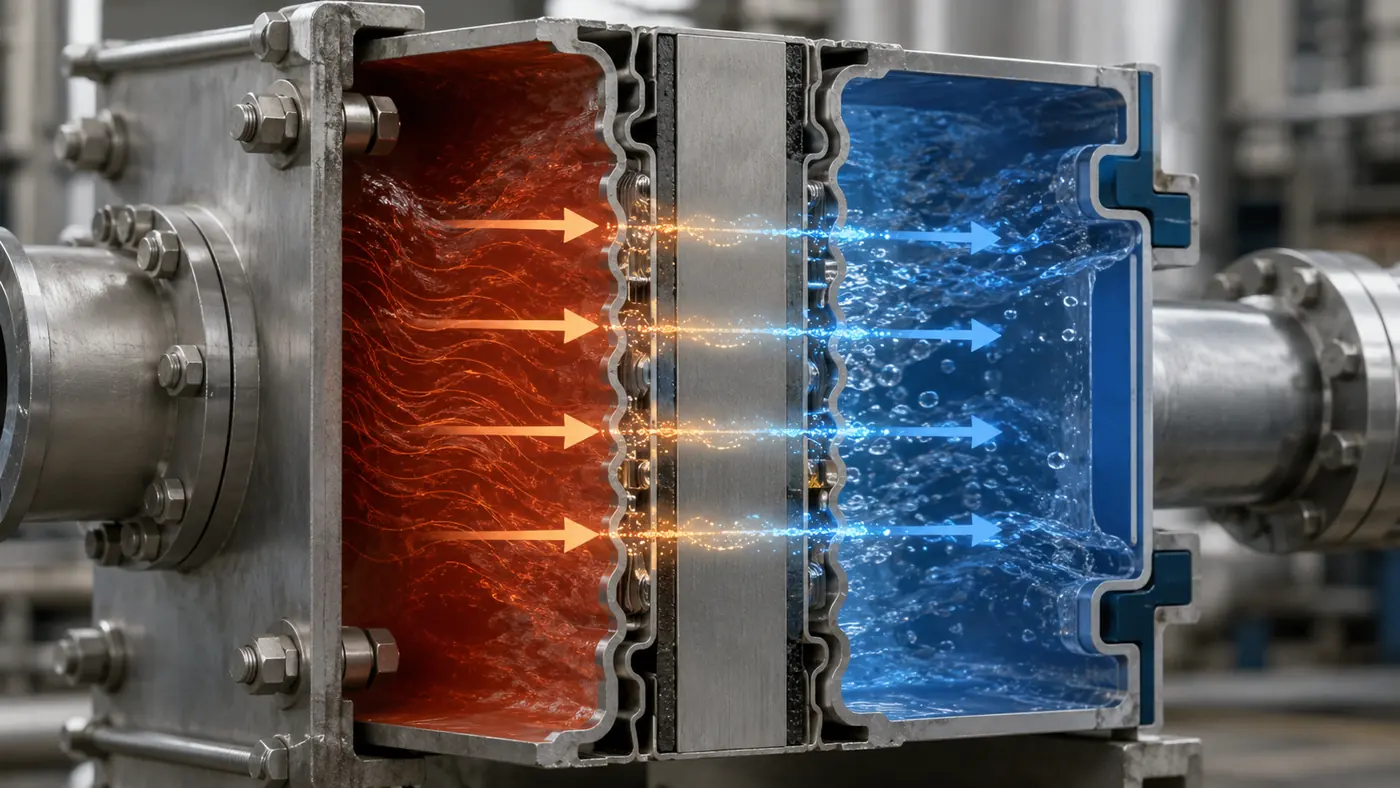
What Is Thermal gradient?
Thermal gradient is the rate at which temperature changes across distance in a material, fluid, or field. It describes the direction and strength of heat imbalance: heat tends to flow from hotter regions toward colder ones. In one dimension, the relation can be written as dT/dx, the change in temperature divided by position.
In real systems, a large thermal gradient can drive conduction through solids, convection in fluids, thermal stress in structures, and phase changes near boundaries. Materials with high thermal conductivity reduce temperature differences more quickly, while insulation preserves them. Used in devices include heat exchangers, thermoelectric generators, cryogenic systems, and ocean thermal converters.
The concept matters because it links temperature distribution to power, efficiency, and durability. In ocean thermal engineering, a usable gradient between warm surface water and cold deep water defines the available heat-engine resource. Similar reasoning governs electronics cooling, geothermal wells, battery packs, and turbine materials.
Engineers measure thermal gradients with thermocouples, infrared imaging, embedded sensors, or numerical models. The result helps locate hot spots, predict heat flux, choose insulation thickness, and avoid cracking caused by unequal expansion across a component.
Example:
A metal rod heated at one end develops a thermal gradient that determines how quickly heat reaches the cooler end.
Related Terms:
NoSuchDevice is a free archive of machines that do not exist yet but already have a shadow in physics. I research and write every entry alone, with no ads. Take a look around the archive, or help keep it free.